Senator Henry Wilder Keyes
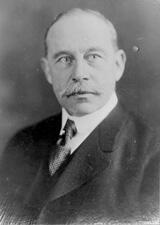
Here you will find contact information for Senator Henry Wilder Keyes, including email address, phone number, and mailing address.
| Name | Henry Wilder Keyes |
| Position | Senator |
| State | New Hampshire |
| Party | Republican |
| Status | Former Representative |
| Term Start | May 19, 1919 |
| Term End | January 3, 1937 |
| Terms Served | 3 |
| Born | May 23, 1863 |
| Gender | Male |
| Bioguide ID | K000161 |
About Senator Henry Wilder Keyes
Henry Wilder Keyes (May 23, 1863 – June 19, 1938) was an American Republican politician from Haverhill, New Hampshire, who served as the fifty‑sixth governor of New Hampshire from 1917 to 1919 and as a United States Senator from 1919 to 1937. Over three terms in the Senate, he contributed to the legislative process during a significant period in American history, representing the interests of his New Hampshire constituents as a member of the Republican Party.
Keyes was born in Newbury, Vermont, on May 23, 1863. He was raised across the Connecticut River in New Hampshire, where his father was a prominent farmer, merchant, and railroad investor, providing him early exposure to both agriculture and business. He attended Adams Academy in Quincy, Massachusetts, and then Harvard University, from which he graduated in 1887. Returning to northern New England after college, he settled in the Haverhill area of New Hampshire, which would remain his home base for the rest of his life.
Following his graduation, Keyes pursued a career as a farmer and cattle breeder. He became particularly noted for initiating the raising of the Holstein‑Friesian breed of dairy cattle in the United States, helping to introduce and popularize this highly productive breed in American agriculture. In addition to his agricultural pursuits, he was active in local finance. He was a founder of the Woodsville National Bank in Woodsville, New Hampshire, and served as its president, reinforcing his standing as a leading figure in the economic life of his community and region.
Keyes entered public service in the New Hampshire House of Representatives, where he served from 1891 to 1895. After several years focused on his business and agricultural interests, he returned to state government as a member of the New Hampshire State Senate from 1903 to 1905. During this period he also assumed important administrative responsibilities in state regulatory bodies. He served as treasurer of the State license commission from 1903 to 1915, overseeing financial aspects of the state’s licensing system, and then as chairman of the State excise commission from 1915 to 1917. Concurrently, from 1915 to 1917, he again served in the New Hampshire House of Representatives, combining legislative duties with his regulatory work.
In 1916, Keyes was elected governor of New Hampshire. He served one term as the state’s fifty‑sixth governor from 1917 to 1919, a period that coincided with the United States’ entry into World War I. As governor, he was responsible for guiding New Hampshire’s mobilization and wartime adjustments, including support for military recruitment, war finance measures, and coordination of state resources to meet national needs. His performance in the governorship enhanced his statewide reputation and positioned him for national office.
Keyes ran successfully for the United States Senate in the 1918 election and took his seat on March 4, 1919. He was reelected in 1924 and 1930 and served continuously until January 3, 1937, choosing not to seek another term in the 1936 election. His Senate career thus spanned the post–World War I era, the Roaring Twenties, and the early years of the Great Depression. Although he was known for his reticence on the Senate floor—he was widely noted for almost never speaking in debate and was said to cast his votes by nodding or shaking his head “aye” or “nay”—he did break this pattern on at least one notable occasion, when he rose to move adjournment during an extended speech by Senate Finance Committee Chairman Pat Harrison. During his Senate tenure, Keyes held several important committee chairmanships: he chaired the Committee on Expenditures in the Post Office Department in the Sixty‑sixth Congress; the Committee to Audit and Control the Contingent Expenses of the Senate in the Sixty‑eighth and Sixty‑ninth Congresses; and the Committee on Public Buildings and Grounds in the Seventieth through Seventy‑second Congresses. Through these roles he exercised influence over federal expenditures, internal Senate administration, and the planning and oversight of federal buildings and infrastructure.
In his personal life, Keyes married Frances Parkinson Wheeler in 1904. He was forty years old at the time of their marriage, and she was eighteen. Under her married name, Frances Parkinson Keyes became a prolific and widely read author, known for her novels and nonfiction works that often drew on political and diplomatic settings. The couple had three sons: Henry Wilder Keyes, Jr., John Parkinson Keyes, and Francis Keyes. Keyes’s prominence in public affairs was complemented by recognition from academic institutions: he received an honorary Master of Arts degree from Dartmouth College, and honorary Bachelor of Science and Doctor of Laws (LL.D.) degrees from the New Hampshire College of Agriculture and the Mechanic Arts, the institution that later became the University of New Hampshire.
Henry Wilder Keyes died on June 19, 1938, in North Haverhill, New Hampshire, a community within the town where he had long resided and from which he had conducted much of his public and private life. He was buried across the state line at Oxbow Cemetery in his birthplace of Newbury, Vermont, symbolically linking his final resting place to the region in which he had been born, raised, and to which he had devoted his long career in agriculture, business, and public service.