Representative Henry Lee
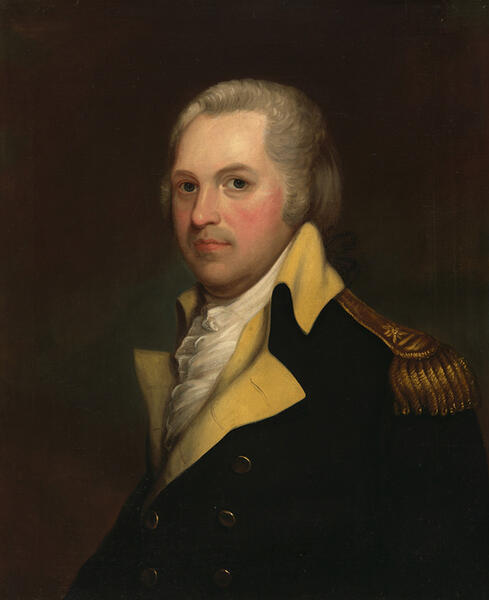
Here you will find contact information for Representative Henry Lee, including email address, phone number, and mailing address.
| Name | Henry Lee |
| Position | Representative |
| State | Virginia |
| District | 19 |
| Party | Federalist |
| Status | Former Representative |
| Term Start | December 2, 1799 |
| Term End | March 3, 1801 |
| Terms Served | 1 |
| Born | January 29, 1756 |
| Gender | Male |
| Bioguide ID | L000195 |
About Representative Henry Lee
Henry Lee III (January 29, 1756 – March 25, 1818), widely known as “Light-Horse Harry” Lee, was an early American patriot, soldier, and politician who served as the ninth Governor of Virginia and as a Representative from Virginia in the United States Congress from 1799 to 1801. A member of the Federalist Party, he served one term in the House of Representatives and contributed to the legislative process during a formative period in the early republic. His distinguished cavalry service in the Continental Army during the American Revolutionary War earned him national renown and the sobriquet by which he is best remembered. He was the father of Confederate General Robert E. Lee, who later commanded the Army of Northern Virginia during the American Civil War.
Lee was born at Leesylvania Plantation in Prince William County in the Colony of Virginia, into one of the colony’s most prominent families. He was the son of Col. Henry Lee II (1730–1787) of “Leesylvania” and Lucy Grymes Lee (1734–1792). Through both parents he was connected to leading Virginia families and to several figures of national significance. His father was a first cousin of Richard Henry Lee, twelfth President of the Continental Congress. His mother was an aunt of the wife of Virginia Governor Thomas Nelson Jr. His great-grandmother Mary Bland was a grand aunt of Thomas Jefferson, making Lee part of the extended kinship network that linked the Bland, Randolph, and Lee families. He was the grandson of Henry Lee I (1691–1747), a great-grandson of Richard Bland, and a great-great-grandson of William Randolph, and was also descended from Theodorick Bland of Westover and Governor Richard Bennett. Raised in this milieu of landed gentry and public service, Lee received a classical education and was prepared from an early age for leadership in war and politics.
Lee attended the College of New Jersey (now Princeton University), from which he graduated in 1773. He initially began to pursue a legal career, but the outbreak of the American Revolutionary War in 1775 redirected his path from law to arms. Following the Battles of Lexington and Concord, he became a captain in a dragoon detachment in the Colony of Virginia, which was attached to the 1st Continental Light Dragoons. His skill as a horseman and his aptitude for mobile warfare soon distinguished him among the Continental officers.
In 1778, Lee was promoted to major and given command of a mixed corps of cavalry and infantry that became known as “Lee’s Legion.” With this unit he gained a reputation as a highly capable leader of light troops. Light cavalry and light infantry formations such as his played a crucial role in reconnaissance, screening, raiding, and disrupting enemy communications and supply lines—tactics that would now be associated with guerrilla and maneuver warfare. On August 19, 1779, he led a daring raid on the British fort at Paulus Hook, New Jersey, in which about 50 enemy soldiers were killed or wounded and 158 captured, at a cost to his command of only two killed, three wounded, and seven captured. Despite the success of the operation, some fellow officers brought eight charges against him, leading to a court-martial over the objections of General George Washington; Lee was acquitted on all counts. In September 1779 he commanded a unit of dragoons that defeated a Hessian regiment at the Battle of Edgar’s Lane. For his conduct at Paulus Hook, the Continental Congress on September 22, 1779, voted to present Lee with a gold medal, an honor accorded to no other officer below the rank of general. During this period he earned the nickname “Light-Horse Harry” for his horsemanship and aggressive leadership.
Promoted to lieutenant colonel, Lee and his Legion were transferred to the southern theater of the war, where they played a prominent role in the campaigns of 1780–1781. In January 1781, Lee’s Legion joined General Francis Marion in attacking the British outpost at Georgetown, South Carolina, and in the following month helped screen the British Army in its race to the Dan River. In the spring of 1781, Lee cooperated with Marion and General Andrew Pickens in a series of operations that resulted in the capture of several British posts in South Carolina and Georgia, including Fort Watson, Fort Motte, Fort Granby, Fort Galphin, Fort Grierson, and Fort Cornwallis. His command also fought at the Battle of Guilford Court House, took part in the Siege of Ninety-Six, and served at the Battle of Eutaw Springs. Lee was present at the surrender of British General Charles Cornwallis at Yorktown in October 1781. Shortly thereafter, he left the Continental Army, citing fatigue and dissatisfaction with his treatment by some fellow officers. He was an Original Member of the Virginia Society of the Cincinnati, reflecting his standing among Revolutionary War veterans.
Following the war, Lee embarked on a political career in the new nation. From 1786 to 1788 he served as a delegate to the Congress of the Confederation, participating in the final years of the national government under the Articles of Confederation. In 1788 he was a member of the Virginia ratifying convention, where he supported adoption of the United States Constitution. He subsequently served in the Virginia General Assembly from 1789 to 1791. In 1791 he was elected the ninth Governor of Virginia, serving until 1794. During his governorship, a new county in Virginia was named in his honor, reflecting his prominence in state affairs. In 1794 President George Washington called upon Lee to command the militia forces assembled to suppress the Whiskey Rebellion in western Pennsylvania. As commander of approximately 12,950 militiamen, Lee oversaw the federal response; the show of force led to a peaceful surrender without major fighting. In 1798, amid rising tensions with France during the Quasi-War, he was appointed a major general in the United States Army in anticipation of possible broader conflict.
Lee’s national stature was further underscored at the death of George Washington. On December 26, 1799, at Washington’s funeral, Lee delivered a celebrated eulogy before a crowd of about 4,000 mourners, in which he memorably described the first President as “first in war, first in peace, and first in the hearts of his countrymen.” That same year he entered the United States House of Representatives as a Federalist. From 1799 to 1801 he served as a Representative from Virginia in the Sixth Congress. His term in Congress coincided with the closing years of the Federalist ascendancy and the contentious election of 1800. As a member of the House of Representatives, Henry Lee participated in the democratic process, represented the interests of his Virginia constituents, and contributed to the legislative deliberations of the early republic. After completing his single term in 1801, he retired from public office and returned to private life.
In retirement, Lee resided with his family at Stratford Hall in Westmoreland County, Virginia, where he attempted, with limited success, to manage his plantation and extensive landholdings. His financial position deteriorated significantly, owing in part to the broader economic disruptions associated with the Panic of 1796–1797 and the bankruptcy of financier Robert Morris, in whose ventures Lee had invested. In 1808 President Thomas Jefferson recommissioned him as a major general to organize the Virginia militia when war with Great Britain appeared imminent, though full-scale conflict did not break out until the War of 1812. By 1809 Lee was bankrupt and spent about a year in debtors’ prison in Montross, Virginia; at that time his son Robert E. Lee was two years old. After his release, Lee moved his family to Alexandria, Virginia, in an effort to rebuild his fortunes.
Lee’s private life reflected his continued ties to Virginia’s leading families. Between April 8 and 13, 1782, at Stratford Hall, he married his second cousin Matilda Ludwell Lee (1764–1790), known as “the Divine Matilda,” daughter of Philip Ludwell Lee Sr. and Elizabeth Steptoe. The couple had three children before Matilda’s death in 1790: Philip Ludwell Lee (1784–1794), Lucy Grymes Lee (1786–1860), and Henry Lee IV (1787–1837). Henry Lee IV became a historian and author and served as a speechwriter for John C. Calhoun and for presidential candidate Andrew Jackson, assisting Jackson in drafting his inaugural address. On June 18, 1793, Lee married Anne Hill Carter (1773–1829) at Shirley Plantation, the daughter of Charles Carter of Shirley and his second wife Ann Butler Moore, whose ancestry traced to Sir Thomas More and to Virginia Governor Alexander Spotswood, a great-grandson of Scottish and royal lines through David Lindsay, 1st Earl of Crawford, and Elizabeth Stewart, daughter of King Robert II of Scotland. Henry and Anne Lee had six children: Algernon Sidney Lee (1795–1796), who died in infancy at Sully Plantation; Charles Carter Lee (1798–1871); Anne Kinloch Lee (1800–1864); Sydney Smith Lee (1802–1869); Robert Edward Lee (1807–1870), later Confederate general-in-chief during the Civil War; and Mildred Lee (1811–1856). Through these descendants, Henry and Anne Lee were among the ancestors of Helen Keller.
As the War of 1812 approached, Lee sought to return to active military service. He requested a commission from President James Madison at the onset of the conflict, but his request was not granted. In 1812 he published his Memoirs of the War in the Southern Department of the United States, an important firsthand account of the Revolutionary War in the South that drew on his experiences commanding Lee’s Legion. That same year, during civil unrest in Baltimore, Maryland, Lee suffered injuries that effectively ended his active public life. On July 27, 1812, he joined his friend Alexander Contee Hanson, editor of the Federalist newspaper The Federal Republican, and about two dozen other Federalists in defending the paper’s offices against a Democratic-Republican mob angered by its opposition to the War of 1812. After the group surrendered to city officials, they were jailed for their protection, but a mob led by laborer George Woolslager broke into the jail, removed the Federalists, and subjected them to a prolonged beating and torture. One Federalist, James Lingan, died of his injuries. Lee suffered severe internal injuries and wounds to his head and face that affected his speech and left him with symptoms consistent with what is now recognized as post-traumatic stress disorder.
Lee’s health never fully recovered from the Baltimore attack. After attempts at recuperation at home proved unsuccessful, he sailed to the West Indies seeking a more favorable climate. On his return voyage to Virginia, he stopped at Dungeness, the Cumberland Island, Georgia, estate of the family of his old comrade General Nathanael Greene. There, under the care of Greene’s daughter Louisa, Henry Lee died on March 25, 1818. He was buried with full military honors provided by an American naval squadron stationed near St. Marys, Georgia, in a small cemetery at Dungeness. In 1913 his remains were reinterred in the Lee family crypt at the University Chapel on the campus of Washington and Lee University in Lexington, Virginia. Over time, his Revolutionary War exploits and public career have continued to attract attention in historical scholarship and popular culture; among other references, the fictional Colonel Harry Burwell in the 2000 film “The Patriot” was inspired in part by his military record, and his famous sobriquet is invoked in the 1969 musical “1776” in the song “The Lees of Old Virginia.”