Senator Henry Frederick Lippitt
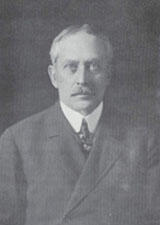
Here you will find contact information for Senator Henry Frederick Lippitt, including email address, phone number, and mailing address.
| Name | Henry Frederick Lippitt |
| Position | Senator |
| State | Rhode Island |
| Party | Republican |
| Status | Former Representative |
| Term Start | April 4, 1911 |
| Term End | March 3, 1917 |
| Terms Served | 1 |
| Born | October 12, 1856 |
| Gender | Male |
| Bioguide ID | L000343 |
About Senator Henry Frederick Lippitt
Henry Frederick Lippitt (October 12, 1856 – December 28, 1933) was a Republican United States Senator from Rhode Island who served one term in the Senate from 1911 to 1917. A member of the prominent Lippitt family, which made its fortune in the textile business, he was closely connected to a political dynasty that included two Rhode Island governors and, in later generations, additional governors and U.S. senators. During his tenure in Congress, he contributed to the legislative process in a significant period of American history and represented the interests of his Rhode Island constituents.
Lippitt was born in Providence, Rhode Island, on October 12, 1856, the son of Henry Lippitt and Mary Ann (Balch) Lippitt. His father, Henry Lippitt, served as governor of Rhode Island, and his brother, Charles W. Lippitt, also became governor of the state, underscoring the family’s influence in both business and politics. He was educated at Mowry & Goff’s, a private school in Providence, before entering Brown University. At Brown, he distinguished himself academically and socially, serving as president of his graduating class and gaining election to Phi Beta Kappa. He received his Bachelor of Arts degree in 1878 and was also a member of the Psi Upsilon fraternity, remaining associated with its Sigma chapter as noted in later memorials.
After graduating from Brown University in 1878, Lippitt entered the family’s cotton textile manufacturing business, reflecting the Lippitt family’s central role in New England’s industrial economy. He rose to prominence in the textile field and related financial enterprises. He served as a director of the Slater Trust Company of Pawtucket and of several mill insurance companies, positions that placed him at the intersection of manufacturing and finance. He was vice president of the People’s Savings Bank of Providence and a director of the Mechanics National Bank, further consolidating his standing in Rhode Island’s business community. In 1888–1889 he served on the governor’s staff with the rank of colonel, and in 1889 he became president of the New England Cotton Manufacturers’ Association (now the National Textile Association), a leading regional industry organization.
Lippitt’s personal life reflected alliances among prominent industrial families. In 1881 he married Mary Louise Bowen, a member of another family deeply involved in Rhode Island’s textile manufacturing business. They had four children: Louise, Henry, Frances, and John Bowen Lippitt. After the death of his first wife, he married Lucy Herron Laughlin in 1915. She was a sister of former First Lady Helen Herron Taft and the widow of Thomas K. Laughlin of Pittsburgh. Henry and Lucy Lippitt had two children: Frederick Lippitt, who became a Rhode Island politician and philanthropist, and Mary Ann Lippitt, who gained recognition as an aviator. Through his extended family, Henry F. Lippitt was a great-uncle of John H. Chafee and a great-great-uncle of Lincoln D. Chafee, both of whom served as governors of Rhode Island and as United States Senators, continuing the family’s long-standing political legacy.
Lippitt’s prominence in business and civic life led to his election to the United States Senate as a Republican. Chosen by the Rhode Island state legislature, he began his Senate service on March 4, 1911, and served until March 3, 1917, completing one full term. His service in Congress occurred during a significant period in American history, marked by the Progressive Era’s reforms and the approach of World War I. As a member of the Senate, Henry Frederick Lippitt participated in the democratic process, contributed to the legislative work of the chamber, and represented the interests of his Rhode Island constituents. During the Sixty-second Congress he served as chairman of the Committee on Expenditures in the Department of Agriculture, overseeing aspects of federal spending in that department. Following the ratification of the Seventeenth Amendment, which required that U.S. Senators be elected by popular vote rather than by state legislatures, Lippitt stood for reelection in 1916 but was unsuccessful, bringing his Senate career to a close in March 1917.
After leaving the Senate, Lippitt returned to the textile industry and resumed an active role in business affairs. He became chairman of the board of the Manville-Jenckes tire fabric company of Pawtucket, remaining influential in an evolving sector of textile production tied to the growing automobile industry. Beyond his formal business positions, he was deeply involved in social and professional organizations. He belonged to the Squantum Association, the Hope Club, the Agawam Hunt Club, the Rhode Island Yacht Club, the New York Yacht Club, the Larchmont Yacht Club, and the University Club of New York. He maintained his long-standing connection to the New England Cotton Manufacturers’ Association and, in 1892, joined the Rhode Island Society of the Sons of the American Revolution, reflecting both his professional identity and his interest in heritage and civic life.
Henry Frederick Lippitt died in Providence on December 28, 1933. He was interred in the Lippitt family plot at Swan Point Cemetery in Providence, a resting place for many members of his distinguished family. His life spanned the transformation of Rhode Island from a center of 19th-century textile manufacturing to a modern industrial state, and his career linked the worlds of business, politics, and public service that defined the Lippitt family’s enduring role in the history of Rhode Island and the United States.