Representative Henry Lowndes Muldrow
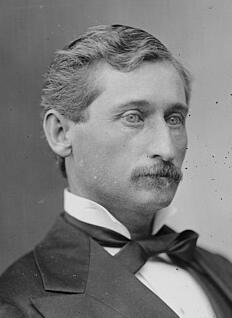
Here you will find contact information for Representative Henry Lowndes Muldrow, including email address, phone number, and mailing address.
| Name | Henry Lowndes Muldrow |
| Position | Representative |
| State | Mississippi |
| District | 1 |
| Party | Democratic |
| Status | Former Representative |
| Term Start | October 15, 1877 |
| Term End | March 3, 1885 |
| Terms Served | 4 |
| Born | February 8, 1837 |
| Gender | Male |
| Bioguide ID | M001068 |
About Representative Henry Lowndes Muldrow
Henry Lowndes Muldrow (February 8, 1837 – March 1, 1905) was an American politician, lawyer, and Confederate military officer who represented Mississippi’s 1st congressional district in the United States House of Representatives from March 4, 1877, to March 3, 1885. A member of the Democratic Party, he later served as First Assistant Secretary of the Interior in the first administration of President Grover Cleveland. Over the course of his public career he held a series of influential state and federal positions and played a significant role in the post–Civil War political realignment and the entrenchment of white supremacist rule in Mississippi. He was also “Grand Cyclops” of the Oktibbeha County Ku Klux Klan den.
Muldrow was born in Lowndes County, Mississippi, on February 8, 1837, the sixth child of Simon Connell Muldrow (1809–1868) and Louisa Adaline Cannon Muldrow (1798–1853). Raised in the antebellum South, he was educated in Mississippi and entered the University of Mississippi, from which he graduated in 1858. He continued at the same institution’s law department, completing his legal studies in 1859. After being admitted to the bar, he commenced the practice of law in Starkville, Mississippi, where he quickly became involved in local legal and political affairs.
With the outbreak of the American Civil War, Muldrow entered Confederate service. In 1861 he was appointed second lieutenant in Company C of the 14th Mississippi Infantry Regiment. Over the course of the conflict he transferred to the cavalry and ultimately attained the rank of lieutenant colonel in the 11th Mississippi Cavalry Regiment, serving in the Western Theater of the war. After the Confederacy’s defeat, he returned to Mississippi and resumed his legal career, becoming attorney for the sixth judicial district of Mississippi. During this period of Reconstruction, while serving as district attorney, he was a member of the Oktibbeha County Ku Klux Klan den and served as its “Grand Cyclops.” Contemporary and later accounts describe three Klan dens operating in Oktibbeha County, led and, when necessary, defended in court by Muldrow. His leadership in the Klan and his public oratory helped persuade many white Democrats that Klansmen were their champions in what they portrayed as a life-or-death struggle to preserve southern society.
Muldrow’s prominence in local politics grew as Reconstruction waned. In 1875 he was elected to the Mississippi House of Representatives. His election campaign and victory were closely tied to the intimidation of Black voters, including threats and acts of violence that helped suppress the Republican vote. Commentators at the time noted that Oktibbeha County voters sent Ku Klux leader Henry Muldrow to the state legislature “as a check upon the ignorant negroes in that body.” From 1876 to 1898 he served as a trustee of the University of Mississippi, his alma mater, reflecting his continued influence in state educational and civic affairs.
In 1876 Muldrow was elected as a Democrat to the Forty-fifth Congress and was subsequently reelected to the Forty-sixth, Forty-seventh, and Forty-eighth Congresses, serving from March 4, 1877, to March 3, 1885, as the representative of Mississippi’s 1st congressional district. His four consecutive terms in the House of Representatives placed him at the center of national legislative debates during a critical period in the post-Reconstruction era. While in Congress he served as chairman of the Committee on Territories during the Forty-sixth Congress and as a member of the Committee on Private Land Claims during the Forty-eighth Congress. Among his legislative activities, he helped to introduce a bill proposing that the United States adopt a modified version of the metric system for coinage. Throughout his tenure he participated in the democratic process on behalf of his constituents in Mississippi, contributing to the legislative work of the House during eight years of service.
At the conclusion of his congressional service, Muldrow was appointed First Assistant Secretary of the Interior in the first administration of President Grover Cleveland. He held this federal executive post from 1885 until his resignation in 1889. In that capacity he assisted in overseeing the broad portfolio of the Department of the Interior, which included public lands, Native American affairs, and other domestic matters. After leaving the Interior Department, he returned to Mississippi and resumed the practice of law, remaining an influential figure in state Democratic politics.
Muldrow continued to shape Mississippi’s political and legal framework in the late nineteenth century. He served as a delegate to the Mississippi Constitutional Convention of 1890, which produced a new state constitution designed to restrict the political power of African Americans and many poor whites. The convention’s final product, imposed on Mississippi without a popular vote, established a two-dollar poll tax, mandated two years’ residency in the state and one year in the voter’s district, and denied the ballot to convicted felons and tax defaulters. Section 244 further required that any voter be able to read any section of the state constitution, or understand it when read, or give a “reasonable interpretation” of it—provisions that were administered in a racially discriminatory manner. By 1892 these measures had removed approximately 138,400 Black voters and 52,000 white voters from the state’s electoral rolls. The official record of the 1890 convention stated that “It is the manifest intention of this Convention to secure to the State of Mississippi ‘white supremacy,’” a goal in which Muldrow and other delegates played a part.
In September 1899 Muldrow was appointed chancellor of the first judicial district of Mississippi, a position he held until his death in 1905. As chancellor he presided over equity cases and continued to exert considerable influence within the state’s legal system. He remained active in public life until his final illness. Henry Lowndes Muldrow died on March 1, 1905, of heart and organ failure. His legacy is reflected in several place names, including the town of Muldrow, Oklahoma, and Colonel Muldrow Avenue in Starkville, Mississippi, both named in his honor.