Senator Henry Lee Myers
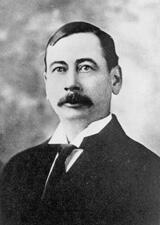
Here you will find contact information for Senator Henry Lee Myers, including email address, phone number, and mailing address.
| Name | Henry Lee Myers |
| Position | Senator |
| State | Montana |
| Party | Democratic |
| Status | Former Representative |
| Term Start | April 4, 1911 |
| Term End | March 3, 1923 |
| Terms Served | 2 |
| Born | October 9, 1862 |
| Gender | Male |
| Bioguide ID | M001129 |
About Senator Henry Lee Myers
Henry Lee Myers (October 9, 1862 – November 11, 1943) was a Democratic United States senator from Montana who served in the U.S. Senate from 1911 to 1923. His twelve years in Congress spanned a significant period in American history, including the Progressive Era and World War I, during which he participated in the legislative process and represented the interests of his Montana constituents.
Myers was born near Boonville, Cooper County, Missouri, on October 9, 1862. He was educated in local private institutions, attending Cooper Institute and Boonville Academy in Boonville. After completing his preparatory studies, he read law and pursued legal training in Missouri, preparing for admission to the bar in the early 1880s.
In 1884, Myers was admitted to the Missouri bar and commenced the practice of law in Boonville. Seeking new opportunities in the growing West, he moved to Hamilton, Ravalli County, Montana, in 1893, where he continued his legal career. His abilities as a lawyer and his growing reputation in the community led to his election as prosecuting attorney of Ravalli County, a position he held from 1895 to 1899. Building on this local prominence, he entered state politics and served as a member of the Montana Senate from 1899 to 1903. He subsequently joined the judiciary, becoming district judge of the fourth judicial district of Montana, a post he held from 1907 until 1911.
Myers’s judicial and legislative experience in Montana positioned him for national office. A member of the Democratic Party, he was elected to the United States Senate in 1910 and took his seat on March 4, 1911. He was reelected in 1916, serving two full terms and remaining in office until March 3, 1923. During his Senate career, he contributed to the legislative process at a time of major domestic reform and international conflict. He declined to be a candidate for renomination in 1922, thereby concluding his congressional service after twelve years.
While in the Senate, Myers held several important committee assignments that reflected the concerns of a Western state. He served as chairman of the Committee on Irrigation and Reclamation of Arid Lands during the Sixty-third Congress, where he was involved in issues related to water development and agricultural settlement in the arid West. He was also a member of the Committee on Public Lands from the Sixty-third through the Sixty-fifth Congresses, participating in the oversight and disposition of federal lands, and he served on the Committee on Indian Depredations during the Sixty-sixth Congress. Through these roles, he was closely engaged with policies affecting land use, natural resources, and Native American claims.
After leaving the Senate in 1923, Myers moved to Billings, Yellowstone County, Montana, where he resumed the practice of law. His legal and judicial expertise led to his appointment as an associate justice of the Supreme Court of Montana in 1927. He served on the state’s highest court for approximately two years before resigning in 1929, at which time he again returned to private legal practice in Billings.
Henry Lee Myers died in Billings, Montana, on November 11, 1943. He was interred in Riverview Cemetery in Hamilton, Montana, the community where he had first established himself in the state and from which his long public career in law and politics had begun.