Representative Henry Zenas Osborne
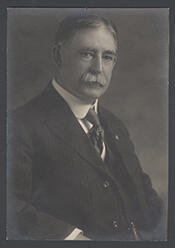
Here you will find contact information for Representative Henry Zenas Osborne, including email address, phone number, and mailing address.
| Name | Henry Zenas Osborne |
| Position | Representative |
| State | California |
| District | -1 |
| Party | Republican |
| Status | Former Representative |
| Term Start | April 2, 1917 |
| Term End | March 3, 1925 |
| Terms Served | 4 |
| Born | October 4, 1848 |
| Gender | Male |
| Bioguide ID | O000112 |
About Representative Henry Zenas Osborne
Henry Zenas Osborne (October 4, 1848 – February 8, 1923) was an American newspaperman and Republican politician who served as a Representative from California in the United States House of Representatives during a significant period in American history. Over the course of four terms in office, he contributed to the legislative process and represented the interests of his constituents as a member of the Republican Party.
Osborne was born in New Lebanon, New York, on October 4, 1848. Little is recorded about his early childhood, but his later professional pursuits indicate an early interest in public affairs, communication, and civic life. Growing up in the mid-nineteenth century in upstate New York, he came of age during the Civil War and Reconstruction, developments that would have shaped the political and social environment in which his views were formed.
By the early 1870s, Osborne had embarked on a career in journalism. In 1873 he worked for The New York Times, an experience that placed him at the center of national news and political reporting. His work as a newspaperman helped establish his reputation as a communicator and observer of public affairs, skills that would later support his transition into political life. Through journalism he gained familiarity with the workings of government, political parties, and public opinion, laying the groundwork for his later service as an elected official.
Osborne eventually moved west and became identified with the state of California, where he continued his involvement in public life and aligned himself with the Republican Party. His journalistic background and growing prominence in civic and political circles in California led to his selection as a candidate for national office. By the mid-1910s, he had become a recognized Republican figure in the state, prepared to carry California’s interests to the federal level.
Henry Zenas Osborne was elected to the United States House of Representatives from California and entered Congress on March 4, 1917. His service in Congress extended from March 4, 1917, until his death on February 8, 1923. During these four terms, he served in the House of Representatives at a time marked by World War I, the immediate postwar period, and significant domestic and international adjustments for the United States. As a member of the House, Osborne participated in the democratic process, contributed to the legislative work of the chamber, and represented the concerns and priorities of his California constituents within the broader national debate.
Osborne’s congressional tenure coincided with major issues such as wartime mobilization, veterans’ affairs, economic readjustment, and evolving questions of national policy in the early twentieth century. As a Republican, he took part in shaping the party’s legislative responses to these challenges, working within the institutional framework of the House to advance measures affecting both California and the nation. His combined experience in journalism and politics informed his approach to public service, emphasizing communication, public accountability, and engagement with national issues.
Henry Zenas Osborne died in office on February 8, 1923, at the age of 74, in Los Angeles, California, bringing to a close more than half a decade of continuous congressional service. His death placed him among the members of the United States Congress who died in office in the first half of the twentieth century. He was interred in Angelus-Rosedale Cemetery in Los Angeles, where his burial marked the final chapter of a career that spanned journalism and national politics and linked his New York origins with his long-standing public service in California.