Representative Henry Kirke Porter
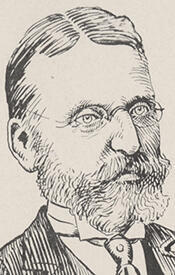
Here you will find contact information for Representative Henry Kirke Porter, including email address, phone number, and mailing address.
| Name | Henry Kirke Porter |
| Position | Representative |
| State | Pennsylvania |
| District | 31 |
| Party | Independent |
| Status | Former Representative |
| Term Start | November 9, 1903 |
| Term End | March 3, 1905 |
| Terms Served | 1 |
| Born | November 24, 1840 |
| Gender | Male |
| Bioguide ID | P000441 |
About Representative Henry Kirke Porter
Henry Kirke Porter (November 24, 1840 – April 10, 1921) was an American businessman and politician who served as a Representative from Pennsylvania in the United States Congress from 1903 to 1905. A member of the Independent Party and identified in contemporary records as an Independent Republican, he represented Pennsylvania’s 31st congressional district in the Fifty-eighth Congress and contributed to the legislative process during his single term in office. His service in Congress occurred during a significant period in American history, and as a member of the House of Representatives he participated in the democratic process and represented the interests of his constituents.
Porter was born in Concord, New Hampshire, on November 24, 1840. He pursued higher education at Brown University in Providence, Rhode Island, graduating in 1860. That same year he helped found a local Young Men’s Christian Association (YMCA), reflecting an early and enduring commitment to religious and civic work. After Brown, he attended the Newton Theological Seminary in Newton Center, Massachusetts, preparing for the ministry before the outbreak of the Civil War altered his course.
With the onset of the Civil War, Porter enlisted in the 45th Regiment, Massachusetts Volunteer Militia in 1862. He served with that unit until he was mustered out in July 1863. Following his military service, he resumed his theological studies at the Rochester Theological Seminary in Rochester, New York. Although he did not ultimately enter the ministry, his theological training and wartime experience helped shape his later engagement in philanthropic, educational, and civic affairs.
In 1866, a gift of $20,000 from his father decisively redirected Porter’s career toward industry and commerce. He invested the funds with a partner, John Y. Smith, to form the Smith & Porter Machine Works. The partners opened a small machine shop in Pittsburgh, Pennsylvania, which specialized in industrial equipment and locomotive production. This enterprise grew steadily and was eventually reorganized as H.K. Porter, Inc., a prominent manufacturer of industrial locomotives. Porter served as president of the company and remained closely involved in its management and expansion, becoming a notable figure in Pittsburgh’s industrial community.
Alongside his business pursuits, Porter was deeply involved in religious and charitable organizations. He served as president of the Pittsburgh YMCA from 1868 to 1887, guiding the organization through a period of growth and increasing social influence in the city. His interest in social welfare extended to work on behalf of people with disabilities; he became president of the Western Pennsylvania Institute for the Blind in 1904, reflecting his broader commitment to educational and benevolent institutions. His standing in business and philanthropy also brought him into elite social circles, and he was a member of the Jekyll Island Club—often known as the “Millionaires Club”—on Jekyll Island, Georgia.
Porter’s prominence in business and civic life led to his election to the United States House of Representatives as an Independent Republican. He represented Pennsylvania’s 31st congressional district in the Fifty-eighth Congress, serving from March 4, 1903, to March 3, 1905. During this one term in office, he sat in the House at a time of rapid industrialization and national expansion, participating in debates and votes that reflected both his independent political alignment and his background as an industrialist and philanthropist. As a member of the House, he took part in the democratic process and worked to represent the interests of his Pittsburgh-area constituents within the broader national legislative agenda.
After leaving Congress in 1905, Porter did not seek a prolonged political career but instead continued to focus on his business and philanthropic activities. He remained president of H.K. Porter, Inc., overseeing its operations and maintaining his role as a leading industrial figure. He continued his association with charitable and civic organizations, sustaining the pattern of public service that had characterized his life before and during his time in Congress.
Henry Kirke Porter continued as president of H.K. Porter, Inc. until his death at age 80 in Washington, D.C., on April 10, 1921. He was buried in Allegheny Cemetery in Pittsburgh, Pennsylvania, a city that had been the center of his business, philanthropic, and political life.