Representative Henry Frazier Reams
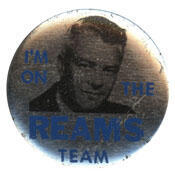
Here you will find contact information for Representative Henry Frazier Reams, including email address, phone number, and mailing address.
| Name | Henry Frazier Reams |
| Position | Representative |
| State | Ohio |
| District | 9 |
| Party | Independent |
| Status | Former Representative |
| Term Start | January 3, 1951 |
| Term End | January 3, 1955 |
| Terms Served | 2 |
| Born | January 15, 1897 |
| Gender | Male |
| Bioguide ID | R000100 |
About Representative Henry Frazier Reams
Henry Frazier Reams Sr. (January 15, 1897 – September 15, 1971) was an American lawyer, broadcaster, and politician from Toledo, Ohio, who served two terms as a Representative from Ohio in the United States Congress from 1951 to 1955. Originally active as a Democrat, he later broke with the local party organization and was elected to Congress as a member of the Independent Party, contributing to the legislative process during a significant period in American history. Over the course of his career, he held numerous public offices at the local, state, and federal levels and played a prominent role in law enforcement, broadcasting, and public welfare administration in Ohio.
Reams was born in Franklin, Tennessee, on January 15, 1897, the son of a Methodist minister. He served in the United States Army during World War I with the 58th Field Artillery in 1918–1919 and was discharged with the rank of lieutenant. After his military service, he resumed his education, completing a bachelor’s degree at the University of Tennessee at Knoxville in 1919. He then pursued legal studies at Vanderbilt University, where he received a law degree in 1922. In 1920, he was licensed to practice law in Tennessee, marking the formal beginning of his legal career.
In 1922, Reams moved to Toledo, Ohio, where his brother Glenn was a medical resident at Toledo Hospital. He was admitted to the Ohio bar and joined the law firm of Tracy, Chapman & Welles, practicing law while becoming increasingly active in Democratic politics. Over the next several decades he was a regular participant in national party affairs, serving as a delegate to the Democratic National Conventions of 1928, 1932, 1936, 1940, 1944, 1948, and later in 1956. His early legal and political work in Toledo laid the foundation for a public career that would span law enforcement, regulatory administration, and elective office.
From 1933 to 1937, Reams served as prosecutor of Lucas County, Ohio. In that role he led a widely publicized campaign to “clean up” Toledo, targeting gangsters and bootleggers who had made the city a center of organized crime. He became best known for his successful prosecution of Thomas “Yonnie” Licavoli, who controlled extensive bootlegging and illegal gambling operations in Detroit, Michigan, and Toledo. Licavoli was sentenced to life in prison and began serving a 37-year term at the Ohio Penitentiary in 1935. Governor Martin L. Davey later appointed Reams to investigate reports of lax prison conditions, and Reams’s inquiry into the special privileges and luxuries afforded to Licavoli at the penitentiary resulted in the dismissal of the prison warden. During his tenure as prosecutor, Reams also engaged in a notable public dispute in 1935 with Lucas County Common Pleas Court Judge Roy R. Stuart, after a grand jury convened by Reams indicted two brothers of Toledo’s Republican mayor, Addison Q. Thacher, on charges related to welfare payments and bank closings. When Judge Stuart ordered the dismissal of the grand jury, Reams filed an “affidavit of prejudice,” which prevented Stuart from hearing any criminal matters until the accusation of prejudice could be resolved. In 1936, Reams sought the Democratic nomination for Ohio Attorney General but was defeated by Herbert S. Duffy. The following year he formed the law firm of Reams, Bretherton & Neipp with Thomas A. Bretherton and Morton Neipp, both of whom had served under him in the prosecutor’s office.
Parallel to his legal and political work, Reams became a significant figure in Ohio broadcasting. In 1938, he founded Toledo’s second radio station, WTOL, and in 1949 he added an FM sister station, WTOL-FM. From 1937 to 1960, he served on the board of the Community Broadcasting Co., operator of WTOL and WCWA radio and later WTOL-TV, which he had originally founded in 1928 as part of his broader broadcasting interests. He expanded into television in 1957, when he signed on Toledo’s second television station, WTOL-TV. Although he sold the television station in 1966, his family retained ownership of the radio stations well into the 1990s. Beyond broadcasting, Reams held several important public appointments: he served on the Toledo Port Commission from 1939 to 1945 and was collector of internal revenue from 1942 to 1944. In 1944, he sought the Democratic nomination for Governor of Ohio, placing fourth in a primary ultimately won by Frank Lausche. After Lausche’s election, the new governor appointed Reams state director of public welfare, a position he held from 1945 to 1946, overseeing welfare programs during the immediate postwar period.
Reams’s break with the Democratic organization in Toledo set the stage for his congressional career. According to his New York Times obituary, he split with the local Democratic leadership around 1950 and ran for Congress as an independent. He was elected as a member of the Independent Party to the U.S. House of Representatives from Ohio’s ninth congressional district and served during the Eighty-second and Eighty-third Congresses, from January 3, 1951, to January 3, 1955. During his two terms in the House of Representatives, he participated in the democratic process and represented the interests of his constituents at a time marked by the early Cold War, the Korean War era, and domestic debates over economic and social policy. While in Congress, he also engaged in international parliamentary work, serving as a delegate to the Council of Europe in 1951 and as a delegate to the Interparliamentary Union Conference in 1953 and 1954. In 1954, Reams sought a third term but was unsuccessful, losing his seat to Democrat Thomas Ludlow Ashley.
Following his congressional service, Reams remained active in public and institutional affairs in Ohio. In 1955, he became one of the founding directors of the Toledo-Lucas County Port Authority, helping to shape the region’s transportation and economic development strategy. From 1948 to 1957, he served as a trustee of Bowling Green State University, contributing to the governance and expansion of the institution during a period of significant growth in higher education. In 1965, he became chairman of the board of Reams Broadcasting Corp., a position he held until his death, continuing his long-standing involvement in radio and television enterprises.
In his later years, Reams retired from active political life and relocated to California. He moved to San Mateo, California, and continued to oversee his broadcasting interests from a distance. Henry Frazier Reams Sr. died in Oakland, California, on September 15, 1971. He was buried in Woodlawn Cemetery in Toledo, Ohio, reflecting his enduring ties to the city where he had built his legal, political, and broadcasting career. His family remained involved in public life; his son, Frazier Reams Jr., became the Democratic nominee for governor of Ohio in 1966, extending the Reams family’s engagement in the state’s political affairs.