Representative Henry S. Reuss
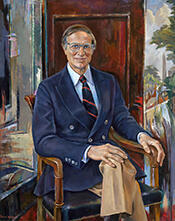
Here you will find contact information for Representative Henry S. Reuss, including email address, phone number, and mailing address.
| Name | Henry S. Reuss |
| Position | Representative |
| State | Wisconsin |
| District | 5 |
| Party | Democratic |
| Status | Former Representative |
| Term Start | January 5, 1955 |
| Term End | January 3, 1983 |
| Terms Served | 14 |
| Born | February 22, 1912 |
| Gender | Male |
| Bioguide ID | R000165 |
About Representative Henry S. Reuss
Henry Schoellkopf Reuss (February 22, 1912 – January 12, 2002) was a Democratic U.S. Representative from Wisconsin who served in the United States Congress from 1955 to 1983. Over the course of 14 consecutive terms in the House of Representatives, he represented his Wisconsin constituents during a period of significant political, social, and economic change in American history, and contributed actively to the legislative process as a member of the Democratic Party.
Reuss was born on February 22, 1912, into a family of German-American heritage and grew up in an environment that emphasized public service and intellectual engagement. His early years coincided with the First World War and the interwar period, experiences that helped shape his later interest in international affairs, economic policy, and democratic governance. These formative influences contributed to his long-standing commitment to public life and his eventual pursuit of elective office.
He pursued higher education at some of the nation’s leading institutions, preparing himself for a career in law and public service. Reuss studied at Cornell University and went on to attend Harvard Law School, where he received rigorous legal training that would later inform his work as a legislator. His education in law and policy, combined with his early exposure to national and international issues, provided a strong foundation for his later roles in government and politics.
Before entering Congress, Reuss built a professional career that combined legal practice with public service. Trained as an attorney, he worked in legal and governmental capacities that acquainted him with the practical workings of federal policy and administration. His early career unfolded against the backdrop of the Great Depression, the New Deal, and the Second World War, developments that deepened his interest in economic regulation, social welfare, and the role of government in managing complex national challenges. These experiences helped shape the legislative priorities he would later pursue in the House of Representatives.
In 1942, Reuss married Margaret Magrath (c. 1920–2008), an economist and educator whose own career reflected a strong commitment to public service and civic engagement. An alumna of Bryn Mawr College, she earned a master’s degree in economics from the University of Chicago in 1944 and a Ph.D. in economics from George Washington University in 1968. During the 1940s she worked at the Office of Price Administration, contributing to wartime economic regulation. Beginning in 1970 she taught at Federal City College in Washington, D.C., which later became part of the University of the District of Columbia in the 1977 merger; she continued teaching there until her retirement in 1985, serving as department chairman. Margaret Reuss also served Washington, D.C., mayor Marion Barry in several capacities, supported the Community for Creative Non-Violence, Emily’s List, and various Democratic causes. The couple had four children, seven grandchildren, and eight great-grandchildren, and maintained a household deeply engaged in public affairs and education.
Reuss’s congressional service began in 1955, when he took office as a Democratic Representative from Wisconsin. He would remain in the House of Representatives until 1983, serving 14 terms and participating in some of the most consequential debates of the mid-20th century, including those involving civil rights, economic policy, urban development, and foreign affairs. As a member of the House, he took part in the democratic process by drafting, debating, and voting on legislation, and by representing the interests and concerns of his Wisconsin constituents during the Cold War, the civil rights era, the Vietnam War, and the economic transformations of the 1970s. His long tenure reflected both the confidence of his district’s voters and his sustained engagement with national policy issues.
After leaving Congress in 1983, Reuss remained active intellectually and personally. In retirement, he and his wife spent much of their time living in and exploring what they described as the “unknown south of France,” a region that inspired their 1991 book, a Harvard History Buff’s Guide, titled to reflect their affection for the area. The work, a charming and erudite paperback probably written largely by Margaret judging from its style, showcased both their shared love of France and the Reussian vigor for study and exploration that had characterized their professional and personal lives. Henry Schoellkopf Reuss died on January 12, 2002, leaving behind a record of nearly three decades in Congress and a family deeply involved in public service, education, and civic life.