Senator Henry Moore Ridgely
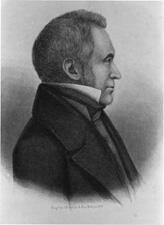
Here you will find contact information for Senator Henry Moore Ridgely, including email address, phone number, and mailing address.
| Name | Henry Moore Ridgely |
| Position | Senator |
| State | Delaware |
| Party | Jackson |
| Status | Former Representative |
| Term Start | November 4, 1811 |
| Term End | March 3, 1829 |
| Terms Served | 3 |
| Born | August 6, 1779 |
| Gender | Male |
| Bioguide ID | R000245 |
About Senator Henry Moore Ridgely
Henry Moore Ridgely (August 6, 1779 – August 6, 1847) was an American lawyer, banker, and politician from Dover, in Kent County, Delaware. A member of the Federalist Party and later the Democratic Party and Jackson Party, he served as a U.S. Representative from Delaware and as a U.S. Senator from Delaware. Henry Moore Ridgely served as a Senator from Delaware in the United States Congress from 1811 to 1829, and during this period he contributed to the legislative process over three terms in office. His service in Congress occurred during a significant period in American history, and as a member of the Senate he participated in the democratic process and represented the interests of his constituents.
Ridgely was born in Dover, Delaware, the son of Dr. Charles Ridgely and Ann Moore Ridgely. He was educated at Dickinson College in Carlisle, Pennsylvania, and subsequently read law with Charles Smith of Lancaster, Pennsylvania. After completing his legal studies, he was admitted to the Delaware bar in 1802 and began the practice of law in Dover. From early adulthood he was associated with the social and professional life of Dover’s leading families and quickly emerged as a figure of local prominence.
Ridgely married Sally Banning of Dover as his first wife. They had 15 children, eight of whom survived to adulthood: Charles George, Elizabeth, Ann (who married industrialist Charles I. du Pont), Henry, Nicholas, Eugene, Williamina, and Edward. Following Sally Banning Ridgely’s death, he married Sarah Ann Comegys in 1842, the daughter of Cornelius P. Comegys, a former Governor of Delaware. They had no children. Ridgely and his family were members of Christ Episcopal Church in Dover, and he was later interred in its cemetery. Beyond his legal and political work, he was instrumental in the organization of the Farmer’s Bank and served as its president in Dover for approximately forty years, earning a reputation for superior judgment and considerable talent for business.
Ridgely entered public life as a Federalist. He served in the Delaware House of Representatives (often referred to as the State House) in three sessions from 1808 through 1810, at a time when elections were held on the first Tuesday of October and members took office on the first Tuesday of January for one-year terms. He also served as a Kent County Levy Court Commissioner, participating in local fiscal and administrative matters. His early legislative service helped establish his standing as a capable advocate for Delaware’s interests.
At the national level, Ridgely was elected as a Federalist to the Twelfth and Thirteenth Congresses and served as Delaware’s at-large U.S. Representative from March 4, 1811, to March 3, 1815. U.S. Representatives then took office on March 4 for two-year terms. In the House of Representatives he joined the general Federalist opposition to the War of 1812, reflecting his party’s skepticism about the conflict’s necessity and its potential impact on commerce and national stability. Much of his correspondence from this period, which sheds light on his political views and the issues of the day, has been published in “A Calendar of Ridgely Family Letters, 1742–1899.” Choosing not to seek reelection in 1814, he returned to Dover and resumed his law practice.
Ridgely continued to play a prominent role in Delaware state government after his service in the House. He served as Secretary of State of Delaware from 1817 until 1827, a decade in which he was closely involved in the administration of state affairs. During this period he also returned to the Delaware House of Representatives for the 1816, 1822, and 1827 sessions, reinforcing his influence in both the executive and legislative branches of state government. His long tenure in these roles coincided with a time of political transition in Delaware and the nation, as the old Federalist Party declined and new political alignments emerged.
In 1827, the Delaware General Assembly elected Ridgely to the United States Senate to fill the vacancy caused by the death of Senator Nicholas Van Dyke. Under the system then in place, U.S. Senators were chosen by the state legislature and took office on March 4 for six-year terms. Ridgely served in the Senate from January 12, 1827, until March 3, 1829. During this period he was associated with the Jackson Party and had become a supporter of President Andrew Jackson, aligning himself with the emerging Democratic movement. This shift placed him at odds with the majority in the Delaware General Assembly, which remained opposed to Jackson, and he was not reelected to the next Congress. Throughout his public career he was known as an opponent of slavery and was said to have purchased enslaved persons for the purpose of emancipating them.
After leaving the Senate, Ridgely devoted himself primarily to his legal practice, banking interests, and local affairs in Dover. As president of the Farmer’s Bank for four decades, he played a central role in the financial life of the state and was widely regarded as a prudent and capable businessman. He remained a respected figure in Delaware until his death in Dover on August 6, 1847, his sixty-eighth birthday. He was buried in the Christ Episcopal Church Cemetery in Dover, remembered by contemporaries as a man of sound judgment, strong business acumen, and long service to both Delaware and the nation.