Representative Henry Clay Snodgrass
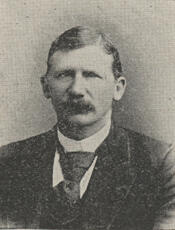
Here you will find contact information for Representative Henry Clay Snodgrass, including email address, phone number, and mailing address.
| Name | Henry Clay Snodgrass |
| Position | Representative |
| State | Tennessee |
| District | 3 |
| Party | Democratic |
| Status | Former Representative |
| Term Start | December 7, 1891 |
| Term End | March 3, 1895 |
| Terms Served | 2 |
| Born | March 29, 1848 |
| Gender | Male |
| Bioguide ID | S000655 |
About Representative Henry Clay Snodgrass
Henry Clay Snodgrass (March 29, 1848 – April 22, 1931) was an American politician, lawyer, and farmer who served as a Democratic Representative from Tennessee in the United States Congress from 1891 to 1895. He represented Tennessee’s 3rd congressional district in the House of Representatives for two consecutive terms during a significant period in American political and economic history.
Snodgrass was born on March 29, 1848, near Sparta, in White County, Tennessee. He was educated locally and attended Sparta Academy, a regional institution that prepared many young men for professional careers. Growing up in the rural Upper Cumberland region, he was exposed early to both agricultural life and the legal and political issues that shaped post–Civil War Tennessee.
During the American Civil War, Snodgrass served as a private in the Confederate Army, entering military service as a young man. After the war, he pursued formal legal training and studied law at Cumberland University in Lebanon, Tennessee, an important Southern law school of the era. He was admitted to the bar in 1870 and commenced the practice of law in Sparta, Tennessee, while also engaging in agricultural pursuits, reflecting the dual professional and agrarian character of many Southern lawyers of his generation.
Snodgrass’s public career advanced when he was appointed or elected attorney general of the fifth judicial circuit of Tennessee, a position he held from 1878 to 1884. In this capacity, he was responsible for prosecuting criminal cases and representing the state in legal matters within the circuit, gaining experience and prominence in the state’s legal and political circles. His work as attorney general helped establish his reputation and laid the groundwork for his subsequent election to national office.
A member of the Democratic Party, Snodgrass was elected to the United States House of Representatives as a Democrat to the Fifty-second and Fifty-third Congresses. He served from March 4, 1891, to March 3, 1895, representing the 3rd congressional district of Tennessee. During his two terms in office, he contributed to the legislative process and participated in the democratic governance of the nation, representing the interests of his constituents from East Tennessee at a time marked by debates over tariffs, monetary policy, and economic reform. Although he sought to continue his service, he was not a successful candidate for re-election to the Fifty-fourth Congress.
After leaving Congress in 1895, Snodgrass remained active in Democratic Party affairs and served as a delegate to the Democratic National Convention in 1896, a pivotal convention dominated by the free silver and monetary policy debates. He resumed the practice of law in Sparta, Tennessee, in White County and continued his involvement in agricultural pursuits, maintaining his ties to the legal profession and to the rural community from which he had emerged.
Later in life, Snodgrass moved west to Gould, Oklahoma, where he again engaged in agricultural pursuits, reflecting his long-standing connection to farming and rural life. He spent his final years in Oklahoma, where he remained until his death. Snodgrass died on April 22, 1931, at the age of 83 years and 24 days, in Altus, Oklahoma. He was interred at Altus Cemetery. His family connections to public service extended beyond his own career; he was the uncle of Charles Edward Snodgrass, who also served as a congressman from Tennessee.