Representative Henry Howard Starkweather
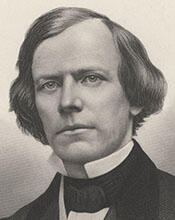
Here you will find contact information for Representative Henry Howard Starkweather, including email address, phone number, and mailing address.
| Name | Henry Howard Starkweather |
| Position | Representative |
| State | Connecticut |
| District | 3 |
| Party | Republican |
| Status | Former Representative |
| Term Start | March 4, 1867 |
| Term End | March 3, 1877 |
| Terms Served | 5 |
| Born | April 29, 1826 |
| Gender | Male |
| Bioguide ID | S000815 |
About Representative Henry Howard Starkweather
Henry Howard Starkweather was an American politician and businessman who represented Connecticut in the United States House of Representatives from 1867 until his death in 1876. He was born on April 29, 1826, in Preston, Connecticut, a community situated within the broader New England region that was deeply connected to the early political and civic traditions of the United States. Growing up in this environment, where public affairs and local self-government were longstanding concerns, he developed an early interest in civic responsibility and political life that would later guide his professional and public career.
Starkweather was educated in the local schools of Connecticut, receiving the practical and classical instruction typical of the mid-19th century. His schooling emphasized reading, writing, arithmetic, and civic knowledge, providing a solid foundation for both commercial and public pursuits. This locally grounded education, combined with his New England upbringing, helped shape his understanding of the concerns of ordinary citizens, the workings of local institutions, and the economic realities of his home state. These formative experiences contributed to his capacity to relate to his constituents and to address the practical issues they faced.
After completing his education, Starkweather embarked on a career in business. He became involved in various commercial enterprises that exposed him to trade, finance, and the broader economic currents of mid-19th-century America. Through this work he gained firsthand experience with the challenges and opportunities confronting merchants, manufacturers, and workers in a period of rapid national growth and industrial development. His reputation for business acumen and his active participation in community affairs helped establish him as a respected figure in Connecticut, laying the groundwork for his eventual entry into politics and shaping the economic perspective he would bring to legislative service.
Starkweather’s transition from business to public office reflected both personal ambition and a strong sense of duty to his community and state. As the United States emerged from the Civil War, Connecticut’s voters sought representatives capable of addressing the complex challenges of Reconstruction, economic adjustment, and national reunification. Aligning himself with the Republican Party, which had led the effort to preserve the Union and was then the principal force behind Reconstruction policies, Starkweather presented himself as an advocate for national recovery, stable economic development, and the protection of Union achievements. His blend of local roots, business experience, and civic engagement made him a compelling candidate in this turbulent era.
Elected as a Republican to the United States House of Representatives in 1866, Starkweather took office on March 4, 1867. He went on to serve five consecutive terms, remaining in Congress until his death in 1876. His decade-long tenure coincided with one of the most transformative periods in American history, as the nation grappled with the aftermath of the Civil War, the status of formerly enslaved people, and the reintegration of the Southern states into the Union. Within this context, he was an active participant in the legislative process, taking part in debates and supporting measures related to civil rights, economic reconstruction, and the evolving relationship between the federal government and the states. His service placed him among the Republican lawmakers who sought to secure the results of Union victory and to shape the constitutional and political order of the postwar nation.
Throughout his congressional service, Starkweather drew heavily upon his business background to address the economic questions facing both Connecticut and the broader United States. Issues such as industrial development, trade policy, and federal fiscal management were central to the postwar agenda, and his understanding of commerce and enterprise informed his approach to these matters. Representing a state with growing manufacturing and commercial interests, he was attentive to the needs of industry and labor, as well as to the financial stability required for sustained national growth. At the same time, as a Republican during Reconstruction, he was part of a party coalition that sought to support the readmission of Southern states under new constitutional conditions and to address the legal and political status of newly freed African Americans, aligning his legislative work with many of the defining questions of the era.
Henry Howard Starkweather remained in office until his untimely death on January 28, 1876, while still serving as a member of the United States Congress. His passing brought an abrupt end to nearly a decade of continuous service in the House of Representatives and marked the close of a significant chapter in Connecticut’s representation during Reconstruction. Remembered as a dedicated public servant who helped guide his state and nation through a pivotal period in American political history, Starkweather’s career illustrates both the opportunities and the challenges faced by Republican lawmakers in the years following the Civil War, and his contributions continue to be noted in the broader narrative of postwar governance and national recovery.