Representative Henry Joseph Steele
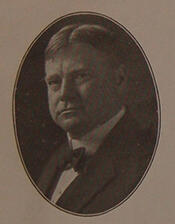
Here you will find contact information for Representative Henry Joseph Steele, including email address, phone number, and mailing address.
| Name | Henry Joseph Steele |
| Position | Representative |
| State | Pennsylvania |
| District | 26 |
| Party | Democratic |
| Status | Former Representative |
| Term Start | December 6, 1915 |
| Term End | March 3, 1921 |
| Terms Served | 3 |
| Born | May 10, 1860 |
| Gender | Male |
| Bioguide ID | S000831 |
About Representative Henry Joseph Steele
Henry Joseph Steele (May 10, 1860 – March 19, 1933) was a Democratic member of the U.S. House of Representatives from Pennsylvania who served three consecutive terms in Congress from 1915 to 1921. Over the course of his public career, he represented the interests of his constituents during a period of major national and international change and contributed to the legislative process as a member of the House of Representatives.
Steele was born on May 10, 1860, and came of age in the decades following the American Civil War, a time marked by rapid industrialization and political realignment in Pennsylvania and across the nation. His early life unfolded against the backdrop of these transformations, which shaped the economic and social environment in which he would later pursue a career in law and politics. Details of his family background and early upbringing are not extensively documented, but his subsequent professional path reflects the opportunities and challenges of this era.
Educated in the public and possibly local private schools of his community, Steele prepared for a professional career at a time when formal legal training was increasingly important for public service. He studied law and was admitted to the bar, entering the legal profession as an attorney. His legal work provided him with experience in statutory interpretation, advocacy, and public affairs, skills that would later inform his legislative activities in Congress. Through his practice, he became familiar with the concerns of individuals, businesses, and local institutions in Pennsylvania.
Steele’s engagement in public life grew out of his legal and community activities, leading him into Democratic Party politics in a state that was often dominated by Republican interests. As a Democrat in Pennsylvania, he aligned himself with a political tradition that emphasized issues such as labor, economic fairness, and responsive government. His reputation as a lawyer and party member helped position him as a viable candidate for national office, and he eventually sought election to the U.S. House of Representatives.
In 1914, Steele was elected as a Democrat to the Sixty-fourth Congress, taking office on March 4, 1915. He was subsequently reelected to the Sixty-fifth and Sixty-sixth Congresses, serving continuously until March 3, 1921. During these three terms, he participated in the democratic process at the federal level, representing the interests of his Pennsylvania constituents in the House of Representatives. His tenure coincided with a significant period in American history that included the Progressive Era’s reform efforts, the First World War, and the immediate postwar transition. As a member of Congress during these years, Steele took part in debates and votes on legislation affecting national defense, economic policy, and domestic reforms, contributing to the broader legislative response to wartime and postwar challenges.
Steele’s congressional service placed him at the center of decisions that reshaped the federal government’s role in American life. While specific committee assignments and sponsored measures are not extensively recorded in the available sources, his participation in the House during this era meant engagement with issues such as mobilization for World War I, wartime finance, veterans’ concerns, and the evolving regulatory framework for industry and labor. As a Democratic representative, he worked within his party’s caucus to advance policies consistent with its priorities while addressing the particular needs of his district in Pennsylvania.
After leaving Congress in 1921, Steele returned to private life, resuming his legal and civic activities. He remained a figure identified with Democratic politics and with the generation of lawmakers who had guided the nation through the upheavals of the 1910s. His later years were spent away from national office but within the same social and political milieu that had shaped his earlier career, maintaining his connections to the community and state he had represented.
Henry Joseph Steele died on March 19, 1933. His life spanned from the immediate post–Civil War period through the onset of the New Deal era, and his three terms in the U.S. House of Representatives from 1915 to 1921 placed him among those legislators who navigated the United States through the First World War and its aftermath. As a Democratic representative from Pennsylvania, he contributed to the legislative work of Congress during a pivotal period in American history and is remembered in the congressional record for his service.