Representative Henry Oscar Talle
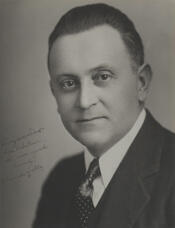
Here you will find contact information for Representative Henry Oscar Talle, including email address, phone number, and mailing address.
| Name | Henry Oscar Talle |
| Position | Representative |
| State | Iowa |
| District | 2 |
| Party | Republican |
| Status | Former Representative |
| Term Start | January 3, 1939 |
| Term End | January 3, 1959 |
| Terms Served | 10 |
| Born | January 12, 1892 |
| Gender | Male |
| Bioguide ID | T000028 |
About Representative Henry Oscar Talle
Henry Oscar Talle (January 12, 1892 – March 14, 1969) was an economics professor and a ten-term Republican U.S. Representative from eastern Iowa. A member of the Republican Party, he served as a Representative from Iowa in the United States Congress for twenty years, from January 3, 1939, to January 3, 1959, contributing to the legislative process during a significant period in American history and representing the interests of his constituents over ten consecutive terms.
Talle was born on a farm near Albert Lea, Freeborn County, Minnesota, where he was educated in rural schools and at Luther Academy in Albert Lea. He first arrived at Luther College in Decorah, Iowa, as a student, receiving his bachelor’s degree in 1917. His early life in a farming community and his education in Lutheran institutions helped shape his interest in economics, public service, and education, which would later define both his academic and political careers.
After completing his undergraduate studies, Talle interrupted his academic pursuits to serve in the United States Navy during the First World War. Following his military service, he embarked on a career in education. In 1919 and 1920 he served as a teacher and superintendent of schools in Rugby and Rolette, North Dakota, and in 1920 and 1921 he taught at Luther Academy in Albert Lea. During this period he also pursued graduate work at several institutions, including the University of Minnesota, Boston University, Emerson College, and the University of Chicago, broadening his expertise in economics and related fields.
In 1921 Talle returned to Decorah and Luther College, where he joined the faculty as a professor of economics. He held this position until his election to Congress in 1938. In addition to his teaching responsibilities, he served as the college’s treasurer from 1932 to 1938, overseeing financial affairs during the challenging years of the Great Depression. His dual role as professor and treasurer established him as a respected figure in the community and provided him with practical experience in finance and administration that would later inform his legislative work, particularly on economic and banking issues.
Talle’s entry into electoral politics came in the context of the New Deal era. During the first six years of the Franklin D. Roosevelt administration, Decorah and the surrounding northwestern Iowa counties in Iowa’s 4th congressional district were represented by Democrat Fred Biermann, a former publisher of The Decorah Journal. Talle first sought to unseat Biermann in 1936 but was unsuccessful. He ran again in 1938, in a year when Republicans recaptured nearly all of the U.S. House seats in Iowa that had been lost in the Democratic landslide of 1932. In that election Talle succeeded in defeating Biermann, an incumbent New Deal Democrat from Talle’s own hometown, and took office on January 3, 1939. He was re-elected from the 4th district in 1940, solidifying his position as a Republican representative from eastern Iowa.
Following the 1940 census, Iowa lost one of its nine seats in the U.S. House of Representatives, and the 1941 Iowa General Assembly was required to redraw congressional district boundaries. Although Republicans controlled both the Assembly and the Governor’s office, Talle was widely regarded as the “goat” most burdened by the reapportionment plan ultimately adopted. The old 4th district was dismantled, and Talle’s home county, along with several others from the former district, was placed in a reconfigured 2nd congressional district. The new 2nd district contained more urban areas, including Cedar Rapids and Clinton, the political base of three-term Democratic incumbent William S. Jacobsen and, previously, his father, three-term Democrat Bernhard M. Jacobsen. In the 1942 election, however, Talle benefited from declining support in Iowa for the national Democratic administration and defeated William Jacobsen by a comfortable margin of more than 15,000 votes. He continued to win re-election from the 2nd district with at least 55 percent of the vote in the next six elections, advancing steadily in seniority within the House Republican caucus.
During his two decades in the House of Representatives, Talle participated actively in the democratic process and in shaping national policy during World War II, the early Cold War, and the postwar economic expansion. By the time of the 1956 elections, in which he prevailed over Democratic challenger Leonard G. Wolf with 52.3 percent of the vote, he had risen to become the ranking Republican on the House Banking and Currency Committee. In that capacity he played a significant role in oversight and legislation related to banking, monetary policy, and housing finance. In the 1958 midterm elections, amid rising farm costs and growing hostility in many rural areas toward Republican economic policies, Talle was defeated by Wolf, ending his ten-term congressional career on January 3, 1959. During his service he supported key civil rights legislation, including voting in favor of the Civil Rights Act of 1957.
After leaving Congress, Talle remained in Washington, D.C., and continued his involvement in public affairs. He joined the Eisenhower administration as assistant administrator for program policy of the U.S. Housing and Home Finance Agency, serving from February 2, 1959, to February 19, 1961. In this role he helped shape federal housing and urban development policies at a time of rapid suburban growth and expanding federal involvement in home finance. He later resided in Chevy Chase, Maryland, maintaining ties to both the Washington policy community and his Iowa and Luther College connections.
Henry Oscar Talle died in Washington, D.C., on March 14, 1969. He was interred in Arlington National Cemetery, reflecting both his military service in World War I and his long tenure in national public office. His legacy is commemorated at Luther College through the Henry O. Talle Scholarship and the Henry O. Talle Award, which honor his contributions as an educator, administrator, and public servant.