Senator Henry Tazewell
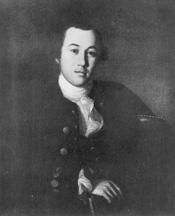
Here you will find contact information for Senator Henry Tazewell, including email address, phone number, and mailing address.
| Name | Henry Tazewell |
| Position | Senator |
| State | Virginia |
| Party | Republican |
| Status | Former Representative |
| Term Start | January 1, 1794 |
| Term End | March 3, 1799 |
| Terms Served | 1 |
| Born | November 27, 1753 |
| Gender | Male |
| Bioguide ID | T000107 |
About Senator Henry Tazewell
Henry Tazewell (November 27, 1753 – January 24, 1799) was an American lawyer, judge, and politician who was instrumental in the early government of Virginia and later served as a United States senator from Virginia. A member of the Republican Party, he served in the U.S. Senate from 1793 until his death in 1799, and was chosen President pro tempore of the Senate in 1795. His career spanned the late colonial, Revolutionary, and early national periods, and several places, including Tazewell County, Virginia, bear his name in recognition of his public service.
Tazewell was born in Brunswick County, Virginia, the son of Mary Gray (1733–1808) and her first husband, Littleton Tazewell (1727–1757), who served as clerk of Brunswick County from 1751 until his death. Through his mother he was descended from Thomas Gray, an “ancient planter” who had emigrated to the Virginia colony before 1616. After his father’s death, his mother married the Rev. William Fanning (1728–1782), who took an active role in the boy’s education. Tazewell graduated from the College of William & Mary at Williamsburg in 1770. He then read law under the guidance of his uncle, John Tazewell, who would later become clerk of the Virginia House of Delegates in its first two sessions in 1776 and 1777.
On January 13, 1774, Tazewell married Dorothea Elizabeth Waller, daughter of prominent Williamsburg lawyer Benjamin Waller. Two of their children survived him and married within the First Families of Virginia. Their son, Littleton Waller Tazewell, was raised largely by his grandfather Waller during the Revolutionary War, graduated from the College of William & Mary in 1791, studied law in Richmond, and began practice in Williamsburg. By 1798, Littleton Waller Tazewell had entered public life in the Virginia House of Delegates and would later become both a United States senator and governor of Virginia. Their daughter, Sophia Ann, also received a legacy from her grandfather Waller. In 1795 she married Benjamin Taliaferro, who was named one of the executors of Henry Tazewell’s will, alongside her brother and Tazewell’s friend Richard Cocke of Isle of Wight County, a substantial landowner in Brunswick County who later moved to Tennessee and became a senator there in 1799. After Taliaferro’s death in 1801, Sophia Ann married Larkin Smith in 1804; Smith had served as a captain during the Revolutionary War and later became speaker of the Virginia House of Delegates.
Tazewell was admitted to the Virginia bar in 1773 and began his legal practice shortly before the outbreak of the American Revolutionary War. During the war he raised and was commissioned captain of a troop of cavalry. In 1775, Brunswick County voters elected him as one of their representatives to the House of Burgesses, where he replaced Thomas Stith and served alongside Frederick Maclin. He and Maclin were also elected to each of the five Virginia Revolutionary Conventions, with Stith joining them in the First Virginia Convention. After independence, Tazewell represented Brunswick County in the first two sessions of the Virginia House of Delegates, though in 1778 Joseph Peebles replaced Maclin as the county’s other delegate. Tazewell was a member of the legislative committee that prepared the Virginia Declaration of Rights and drafted the Commonwealth’s first state constitution, placing him at the center of the creation of Virginia’s new republican government.
During the Revolutionary period, Governor Patrick Henry in 1775 appointed Tazewell and William Langhorne to number in sequence all treasury notes issued by the colony to finance the war, a task undertaken amid widespread fears of counterfeiting. Those fears proved justified: in June 1776, Governor Abner Nash of North Carolina assisted in the capture of counterfeiters circulating bogus notes in both Virginia and North Carolina, and in late 1778 information from an enslaved man named Kitt led to discovery of another counterfeiting ring based in Brunswick and Dinwiddie Counties. Rewards were offered for twelve named men, four from Brunswick County, and in 1779 the General Assembly passed special legislation granting Kitt his freedom. By this time Tazewell had moved to Williamsburg, and from 1779 to 1785 he represented that city in the Virginia House of Delegates, succeeding fellow lawyer George Nicholas, who had earlier succeeded George Wythe when Wythe moved to Richmond. When Tazewell left the House of Delegates in 1785 to join the judiciary, James Innes, former Virginia attorney general and captain of Williamsburg’s volunteers during the war, succeeded him as Williamsburg’s delegate.
In 1785, the Virginia legislature elected Tazewell a judge of the Virginia General Court. Elevated by his colleagues to chief judge, he served in that capacity from 1789 to 1793. When the state reorganized its judiciary in 1793, he became a judge on the newly styled Supreme Court of Appeals, which, after further reorganization, evolved into the modern Supreme Court of Virginia. During these years he also accumulated property and enslaved laborers. Tax records from 1786 show him living in Williamsburg and paying taxes on nine enslaved people (six adults and three children), as well as four horses and a cow. In 1787 he was taxed in Greensville County, between Brunswick County and Williamsburg, for fifteen adult and thirteen teenage enslaved people, seven horses, and twenty-four cattle, with notations indicating that he still resided in Williamsburg. In 1788 he appears as the nonresident owner of ten adult and one teenage enslaved person in York County, just outside Williamsburg, suggesting that he may have leased enslaved laborers as part of his economic activities.
Tazewell entered national politics when the Virginia legislature elected him to the United States Senate in 1794 to fill the vacancy created by the resignation of Senator John Taylor. Although his formal Senate service is often dated from December 29, 1794, he is generally described as serving as a senator from Virginia from 1793 to 1799, completing one full term in office and being re-elected in 1798. As a member of the Republican Party, he represented Virginia during a formative period in American political life, participating in the legislative process and the broader democratic experiment of the early republic. In 1795, his fellow senators selected him President pro tempore of the Senate, placing him in the chamber’s highest leadership position after the vice president. He became particularly noted for leading the opposition to the Jay Treaty with Great Britain, reflecting the strong anti-British and pro-French sentiment prevalent among many Virginia Republicans. During the impeachment proceedings against Tennessee Senator William Blount in 1797, Tazewell cast the lone dissenting vote against Blount’s expulsion from the Senate. He was also one of only four senators to vote against authorizing the use of military force in the undeclared naval conflict with France known as the Quasi-War, underscoring his skepticism toward expansive military measures and his alignment with the more restrained foreign policy favored by many in his party.
Henry Tazewell died in office in Philadelphia, Pennsylvania, on January 24, 1799, while attending the Senate during its session in the nation’s then-capital. He was interred at Christ Church Burial Ground in Philadelphia. He had written his last will and testament in 1797, and it was admitted to probate in James City County, one of the two counties in which Williamsburg is situated. Although James City County’s original records were later destroyed, a copy of his will survives in the Library of Virginia. His legacy endures in the institutions he helped shape in Virginia and in the United States Senate, as well as in the places named in his honor, including Tazewell County, Virginia; the town of Tazewell, Virginia; Tazewell and New Tazewell in Tennessee; and possibly Tazewell County, Illinois.