Representative Henry Wilson Temple
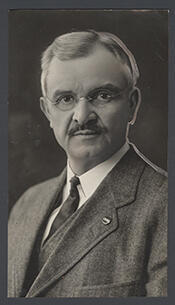
Here you will find contact information for Representative Henry Wilson Temple, including email address, phone number, and mailing address.
| Name | Henry Wilson Temple |
| Position | Representative |
| State | Pennsylvania |
| District | 25 |
| Party | Republican |
| Status | Former Representative |
| Term Start | April 7, 1913 |
| Term End | March 3, 1933 |
| Terms Served | 10 |
| Born | March 31, 1864 |
| Gender | Male |
| Bioguide ID | T000119 |
About Representative Henry Wilson Temple
Henry Wilson Temple served as a Representative from Pennsylvania in the United States Congress from 1913 to 1933. A member of the Republican Party, Henry Wilson Temple contributed to the legislative process during 10 terms in office.
Henry Wilson Temple’s service in Congress occurred during a significant period in American history. As a member of the House of Representatives, Henry Wilson Temple participated in the democratic process and represented the interests of constituents.
Henry Wilson Temple (March 31, 1864 – January 11, 1955) was a Progressive and a Republican member of the U.S. House of Representatives from Pennsylvania. Temple was born in Belle Center, Ohio. He graduated from Geneva College in Beaver Falls, Pennsylvania, in 1883, and from the Reformed Presbyterian Theological Seminary in Allegheny, Pennsylvania, in 1887. Before his ordination to the ministry, he worked at Reformed Presbyterian congregations in and around Mankato, Kansas. After his ordination, he served as the pastor of churches in Jefferson County, Leechburg, and Washington, Pennsylvania. He worked as professor of political science at Washington and Jefferson College in Washington, Pennsylvania, from 1898 to 1913. Temple was elected as a Progressive to the Sixty-third Congress. He was an unsuccessful candidate for reelection to succeed himself in 1914. However, he was soon after elected to the seat as a Republican in the special election to the Sixty-fourth Congress to fill the vacancy caused by the death of Representative-elect William Brown (who had defeated him in the 1914 general election). He was reelected to the Sixty-fifth and to the seven succeeding Congresses. He was an unsuccessful candidate for reelection in 1932. He worked as professor of international relations in Washington and Jefferson College from 1933 until his retirement in 1947. He died in Washington, Pennsylvania, and is buried in Washington Cemetery.