Representative Henry Franklin Thomas
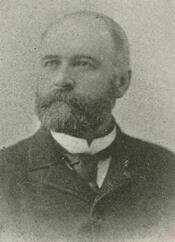
Here you will find contact information for Representative Henry Franklin Thomas, including email address, phone number, and mailing address.
| Name | Henry Franklin Thomas |
| Position | Representative |
| State | Michigan |
| District | 4 |
| Party | Republican |
| Status | Former Representative |
| Term Start | August 7, 1893 |
| Term End | March 3, 1897 |
| Terms Served | 2 |
| Born | December 17, 1843 |
| Gender | Male |
| Bioguide ID | T000168 |
About Representative Henry Franklin Thomas
Henry Franklin Thomas (December 17, 1843 – April 16, 1912) was an American physician and politician from the U.S. state of Michigan who served as a Republican Representative in the United States Congress from 1893 to 1897. Over the course of two terms in the House of Representatives, he contributed to the legislative process during a significant period in American history and represented the interests of his Michigan constituents within the broader national debates of the late nineteenth century.
Born on December 17, 1843, Thomas came of age in the antebellum era and reached adulthood during the Civil War period, experiences that shaped the generation of political leaders to which he belonged. Although detailed records of his early childhood are limited, his later professional and political achievements indicate that he benefited from the expanding educational and civic opportunities available in the Midwest in the decades following Michigan’s admission to the Union. His decision to pursue medicine placed him within a growing professional class that played an increasingly important role in public life after the Civil War.
Thomas trained as a physician at a time when medical education in the United States was undergoing gradual reform and professionalization. By entering the medical profession, he joined a field that was central to the health and welfare of rapidly growing communities in Michigan. His work as a physician not only established his reputation for service but also provided him with insight into public health, local conditions, and the needs of ordinary citizens—experience that later informed his approach to public policy and legislative questions.
Before his election to Congress, Thomas built a career that combined medical practice with civic engagement and political involvement. As a physician in Michigan, he would have been closely connected to local institutions and community affairs, and his standing in the community helped pave the way for his entry into elective office. Aligning himself with the Republican Party, which dominated Michigan politics in the post–Civil War era, he became part of a political tradition that emphasized Union loyalty, economic development, and, increasingly, industrial and agricultural interests.
Thomas was elected as a Republican to the United States House of Representatives and served two consecutive terms from 1893 to 1897. His tenure in Congress coincided with the Fifty-third and Fifty-fourth Congresses, a period marked by economic turbulence, including the Panic of 1893, and intense national debates over monetary policy, tariffs, and the role of the federal government in regulating commerce and supporting economic recovery. As a member of the House of Representatives, Henry Franklin Thomas participated in the democratic process, contributed to the legislative work of the chamber, and represented the interests of his Michigan constituents during these contentious years.
During his congressional service, Thomas took part in deliberations that reflected both regional concerns and national priorities. Representing a state with significant agricultural, industrial, and commercial activity, he was situated at the intersection of issues such as transportation, trade, and the evolving relationship between rural communities and growing urban centers. His background as a physician gave him a practical perspective on matters affecting public welfare, and his work in Congress formed part of the broader Republican effort to navigate the challenges of economic dislocation and political realignment in the 1890s.
After leaving Congress in 1897, Thomas returned to private life and to the professional and civic pursuits that had defined his earlier career. Like many former members of the House in that era, he remained a figure of local and regional prominence, his congressional service adding to his stature as a community leader. He continued to be identified with the Republican Party and with the generation of public servants who had guided Michigan and the nation through the transition from the post–Civil War period into the modern industrial age.
Henry Franklin Thomas died on April 16, 1912. His life spanned from the pre–Civil War years through the dawn of the Progressive Era, and his dual career as a physician and legislator reflected the close connection between professional service and public office in nineteenth-century American politics. His two terms in the United States House of Representatives from 1893 to 1897 placed him at the center of important national debates, and his work as a Republican Representative from Michigan contributed to the legislative history of the period.