Representative Henry Smith Van Eaton
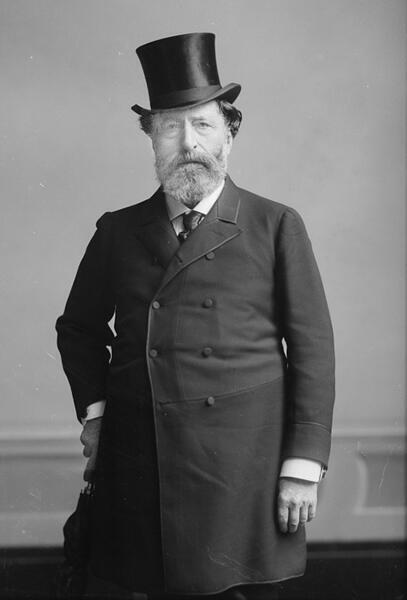
Here you will find contact information for Representative Henry Smith Van Eaton, including email address, phone number, and mailing address.
| Name | Henry Smith Van Eaton |
| Position | Representative |
| State | Mississippi |
| District | 6 |
| Party | Democratic |
| Status | Former Representative |
| Term Start | December 3, 1883 |
| Term End | March 3, 1887 |
| Terms Served | 2 |
| Born | September 14, 1826 |
| Gender | Male |
| Bioguide ID | V000038 |
About Representative Henry Smith Van Eaton
Henry Smith Van Eaton (September 14, 1826 – May 30, 1898) was an American attorney, politician, and military officer who served as a Democratic Representative from Mississippi in the United States Congress from 1883 to 1887. Elected from Mississippi’s 6th congressional district, he served two terms in the House of Representatives during a significant period in American history, contributing to the legislative process and representing the interests of his constituents.
Van Eaton was born and raised in Anderson Township, Ohio, on September 14, 1826. He pursued higher education in the Midwest and enrolled at Illinois College in Jacksonville, Illinois. He graduated in 1848, having studied law while a student there. During his college years he was a founding member of the Phi Alpha Literary Society, in which he was an active participant and held offices including president and recording secretary, reflecting an early engagement with debate, public speaking, and organizational leadership.
In 1848, at the age of twenty-two, Van Eaton moved south to Woodville, Mississippi, in Wilkinson County. He initially worked as a schoolteacher, a common path for educated young men of the period. While teaching, he continued his legal studies and, in 1855, was admitted to the bar. He then commenced the practice of law in Woodville, establishing himself professionally in the community and laying the groundwork for a career in public life.
Van Eaton’s entry into elective office came soon thereafter. In 1857, he was elected district attorney, a position that placed him at the center of local legal affairs. Two years later, in 1859, he advanced to state-level office as a member of the Mississippi House of Representatives. His legislative service in the state house provided him with experience in lawmaking and public policy on the eve of the American Civil War.
With the outbreak of the Civil War, Van Eaton enlisted in the Confederate States Army. He served throughout the conflict and rose to the rank of captain, reflecting both his commitment to the Southern cause and his leadership within the military. Following the conclusion of the war in 1865, he returned to Woodville and resumed the practice of law, rebuilding his professional life in the Reconstruction-era South.
Van Eaton’s judicial and political career advanced further in the postwar period. In 1880, he was appointed chancellor of the tenth Mississippi district, a significant judicial position that underscored his standing in the state’s legal community. Two years later, in 1882, he successfully sought national office and, running as a Democrat, defeated a fusion candidate to win election to the Forty-eighth Congress. He was subsequently reelected to the Forty-ninth Congress, serving from March 4, 1883, to March 3, 1887. During his tenure in the U.S. House of Representatives, Van Eaton participated in the democratic process at the federal level, contributing to the legislative work of Congress and representing Mississippi during a period marked by ongoing debates over Reconstruction’s legacy, economic development, and regional interests.
After leaving Congress in 1887, Van Eaton continued to receive federal appointments that reflected the confidence of national leaders in his judgment and experience. In 1887, President Grover Cleveland appointed him to the Board of Visitors to the United States Naval Academy at Annapolis, a body charged with overseeing and reporting on the institution’s condition and needs. The following year, in 1888, he was named to a commission to examine and report upon the last completed portion of the Northern Pacific Railroad, a patronage position that involved oversight of a major national transportation project.
In his later years, Van Eaton returned to Mississippi and resumed the practice of law in Woodville, maintaining his professional activities until the end of his life. He died in Woodville on May 30, 1898. Henry Smith Van Eaton was interred in Evergreen Cemetery, leaving behind a record of service as an educator, lawyer, state legislator, Confederate officer, judge, and member of the United States Congress.