Representative Henry Waldron
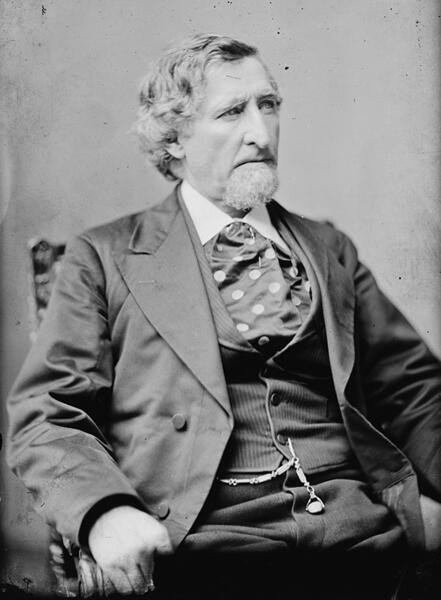
Here you will find contact information for Representative Henry Waldron, including email address, phone number, and mailing address.
| Name | Henry Waldron |
| Position | Representative |
| State | Michigan |
| District | 2 |
| Party | Republican |
| Status | Former Representative |
| Term Start | December 3, 1855 |
| Term End | March 3, 1877 |
| Terms Served | 6 |
| Born | October 11, 1819 |
| Gender | Male |
| Bioguide ID | W000041 |
About Representative Henry Waldron
Henry Waldron (October 11, 1819 – September 13, 1880) was an American politician and a United States Representative from the state of Michigan. Over the course of six terms in the U.S. House of Representatives between 1855 and 1877, he served as a member of the Republican Party and participated actively in the legislative process during a formative period in American history, representing the interests of his Michigan constituents.
Waldron was born in Albany, New York, on October 11, 1819. He attended the Albany Academy, a prominent preparatory school in his native city, and went on to Rutgers College in New Brunswick, New Jersey, from which he graduated in 1836. Shortly after completing his education, he moved west to Michigan in 1837, part of the broader movement of young professionals seeking opportunity in the developing states of the Old Northwest. In Michigan he was employed as a civil engineer in railroad work, gaining experience in a field that was central to the state’s economic growth. In 1839 he settled permanently in Hillsdale, Michigan, which would remain his home and the base of his political and business activities for the rest of his life.
Waldron’s early public career developed in tandem with his involvement in transportation and local affairs. In 1843 he was elected to the Michigan House of Representatives, where he represented the Hillsdale County district. At the same time, he became closely associated with the emerging railroad network in southern Michigan. He served as a director of the Michigan Southern Railroad from 1846 to 1848, and he was active in promoting the construction of the Detroit, Hillsdale and South Western Railroad, on which he served as the first president. His political alignment in this period was with the Whig Party, and in 1848 he served as a presidential elector on the Whig ticket, participating in the Electoral College in that capacity.
With the decline of the Whig Party and the rise of the Republican Party in the 1850s, Waldron joined the new Republican coalition. In 1854 he defeated incumbent Democrat David A. Noble to be elected as a Republican from Michigan’s 2nd congressional district to the Thirty-fourth Congress. He was subsequently re-elected to the Thirty-fifth and Thirty-sixth Congresses, serving continuously from March 4, 1855, to March 3, 1861. During this first period of congressional service, which coincided with the mounting sectional crisis that preceded the Civil War, Waldron served as chairman of the Committee on Expenditures in the Department of the Treasury in the Thirty-fourth Congress. He contributed to the legislative process as a Republican representative during these critical years, though he chose not to be a candidate for renomination in 1860 and left Congress at the close of the Thirty-sixth Congress.
After a decade away from national office, Waldron returned to Congress as the political landscape of Reconstruction-era America took shape. In 1870 he was elected to represent Michigan’s 1st congressional district in the Forty-second Congress and took his seat on March 4, 1871. He was then re-elected to represent Michigan’s 2nd congressional district in the Forty-third and Forty-fourth Congresses, serving from March 4, 1871, to March 3, 1877. During this second span of service, he again held a committee chairmanship, serving as chairman of the Committee on Mines and Mining in the Forty-second Congress. Waldron thus played a role in shaping legislation related both to federal expenditures and to the rapidly expanding mining sector. At the conclusion of his sixth term, he declined to be a candidate for renomination, ending his congressional career in 1877.
In his later years, Waldron remained a prominent figure in Hillsdale’s civic and economic life. In 1876 he was elected president of the First National Bank of Hillsdale, a position he held until his death. His leadership in banking complemented his earlier work in railroads and public service, reflecting his long-standing involvement in the development of southern Michigan’s infrastructure and financial institutions. Waldron died in Hillsdale, Hillsdale County, Michigan, on September 13, 1880, at the age of 60 years and 338 days. He was interred at Oak Grove Cemetery in Hillsdale. In recognition of his contributions to the region, the village of Waldron, Michigan, was named in his honor.