Representative Henry Dana Washburn
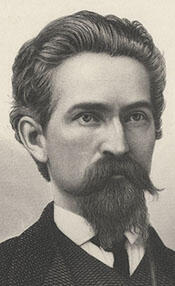
Here you will find contact information for Representative Henry Dana Washburn, including email address, phone number, and mailing address.
| Name | Henry Dana Washburn |
| Position | Representative |
| State | Indiana |
| District | 7 |
| Party | Republican |
| Status | Former Representative |
| Term Start | December 4, 1865 |
| Term End | March 3, 1869 |
| Terms Served | 2 |
| Born | March 28, 1832 |
| Gender | Male |
| Bioguide ID | W000172 |
About Representative Henry Dana Washburn
Henry Dana Washburn (March 28, 1832 – January 26, 1871) was a U.S. Representative from Indiana, a Republican legislator during the Reconstruction era, and a Union Army officer who rose from lieutenant colonel to colonel and was twice brevetted, as brigadier general and major general, for gallant and meritorious service in the American Civil War. He later served as surveyor general of Montana Territory and helped lead one of the earliest official explorations of the Yellowstone region, where Mount Washburn was subsequently named in his honor.
Washburn was born in Woodstock, Vermont, on March 28, 1832, and attended the common schools there. In his youth he learned and practiced the trades of tanner and currier, and he also taught school for several years. Seeking broader opportunities in the developing Midwest, he moved in 1850 to Vermillion County, Indiana. Determined to enter the legal profession, he enrolled in the New York State and National Law School, from which he graduated before being admitted to the bar in 1853. That same year he commenced the practice of law in Newport, Indiana, establishing himself as a young attorney in the community.
Washburn’s legal career quickly drew him into public service and local politics. A member of the emerging Republican Party, he was elected county auditor of Vermillion County, serving from 1854 to 1861. In this role he gained administrative experience and a reputation for diligence in public affairs, laying the groundwork for his later political and military leadership. His work as auditor coincided with the turbulent 1850s, as sectional tensions over slavery and the future of the Union intensified.
With the outbreak of the Civil War, Washburn entered military service on August 16, 1861, enlisting in the Union Army as lieutenant colonel of the 18th Regiment, Indiana Volunteer Infantry. He distinguished himself early in the conflict at the Battle of Pea Ridge in March 1862, where he led the 18th Indiana in a counterattack that recaptured two guns lost from the Peoria battery. For his conduct and leadership, he was promoted to colonel and given command of the regiment on July 15, 1862. During the fall and winter that followed, the 18th Indiana was engaged in garrison duty in Missouri before being attached to Major General Ulysses S. Grant’s army in operations to cross the Mississippi River and seize Vicksburg.
In the Vicksburg Campaign, Washburn and the 18th Indiana saw heavy action at Port Gibson and Champion Hill and took part in the siege operations around Vicksburg in 1863. Washburn commanded a brigade that was commended for valorous actions during the initial assault on the Confederate fortifications in May 1863. After the successful conclusion of the Vicksburg operation, his brigade remained with the XIII Army Corps in operations along the Teche River in Louisiana, contributing to the capture of several Confederate forts. In January 1864, the 18th Indiana was transferred to Virginia, where it participated in a series of sharp skirmishes. By August 1864, the regiment was attached to the 4th Brigade, 2nd Division (Grover), of Major General William H. Emory’s XIX Army Corps.
During Major General Philip Sheridan’s campaign to clear the Shenandoah Valley in 1864, Washburn commanded the 4th Brigade in heavy fighting at the battles of Opequon (Third Winchester), Fisher’s Hill, and Cedar Creek. His leadership in these engagements earned him further recognition. On December 12, 1864, President Abraham Lincoln nominated him for appointment as brevet brigadier general of volunteers, to rank from December 15, 1864; the United States Senate confirmed the appointment on February 14, 1865. In the winter of 1864–1865, the XIX Corps garrisoned the Savannah, Georgia, area while conducting raids into Confederate-held territory. Washburn mustered out of volunteer service on August 26, 1865. For his overall gallant and meritorious service during the war, President Andrew Johnson nominated him on May 4, 1866, for the brevet rank of major general of volunteers, to rank from March 13, 1865, and the Senate confirmed this second brevet on May 18, 1866.
Following the war, Washburn resumed the practice of law and returned to politics in Indiana. A member of the Republican Party, he successfully contested the election of Democrat Daniel W. Voorhees to the Thirty-ninth Congress. Seated after this contest, he represented Indiana in the U.S. House of Representatives from February 23, 1866, to March 3, 1869. He was reelected to the Fortieth Congress and thus served two consecutive terms during a critical period of Reconstruction, participating in the legislative process and representing the interests of his Indiana constituents as the nation grappled with the political, legal, and social consequences of the Civil War. He did not seek renomination in 1868 to the Forty-first Congress.
After leaving Congress, Washburn received a federal appointment that took him to the western territories. In 1869 he was appointed surveyor general of Montana Territory, a position he held until his death. In this capacity he oversaw important surveying and mapping work in a region undergoing rapid settlement and development. In 1870 he headed the Washburn–Langford–Doane Expedition, an exploratory party that traveled through the area that would soon become Yellowstone National Park. The expedition’s observations and reports contributed to growing public and governmental interest in preserving the Yellowstone region, and in recognition of his role, Mount Washburn within the park was named for him.
Washburn later returned to Indiana, settling again in Clinton, Vermillion County. He died there on January 26, 1871. His remains were interred in Riverside Cemetery in Clinton. His career encompassed service as a local official, Civil War officer, Republican congressman, and territorial surveyor, and his name endures in the geographic and historical record of both the Civil War and the American West.