Representative Henry Winfield Watson
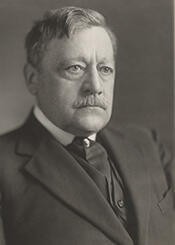
Here you will find contact information for Representative Henry Winfield Watson, including email address, phone number, and mailing address.
| Name | Henry Winfield Watson |
| Position | Representative |
| State | Pennsylvania |
| District | 9 |
| Party | Republican |
| Status | Former Representative |
| Term Start | December 6, 1915 |
| Term End | January 3, 1935 |
| Terms Served | 10 |
| Born | June 24, 1856 |
| Gender | Male |
| Bioguide ID | W000201 |
About Representative Henry Winfield Watson
Henry Winfield Watson (June 24, 1856 – August 27, 1933) was an American lawyer, banker, and Republican politician who served as a member of the United States House of Representatives from Pennsylvania. Representing Pennsylvania’s 8th congressional district, he served in Congress from 1915 to 1935, completing ten consecutive terms and contributing to the legislative process during a period of profound political, economic, and social change in the United States.
Watson was born on June 24, 1856, in Pennsylvania, where he spent his early years before embarking on a professional career that would combine law, finance, and public service. Details of his family background and early upbringing are sparse in the public record, but his subsequent professional and political achievements indicate a trajectory shaped by the educational and civic opportunities available in post–Civil War Pennsylvania. His early life unfolded against the backdrop of Reconstruction and the rapid industrialization of the state, developments that would later inform his understanding of economic and political issues.
Educated in the schools of Pennsylvania, Watson pursued legal studies and was admitted to the bar, establishing himself as an attorney. In addition to his legal practice, he became involved in banking, a field that was expanding in importance as Pennsylvania’s economy grew in the late nineteenth and early twentieth centuries. His dual experience in law and finance provided him with a practical grasp of commercial and regulatory matters, which later proved valuable in his legislative work. Through these professions, he developed a reputation for competence and reliability that helped propel him into public life.
Before his election to Congress, Watson’s career reflected the pattern of many Republican professionals of his era who moved from local prominence into national politics. His engagement with civic affairs and the Republican Party in Pennsylvania positioned him as a credible candidate for federal office. By the time he sought a seat in the U.S. House of Representatives, he had established himself as a figure attuned to the concerns of his community, particularly in matters relating to business, infrastructure, and governance.
Watson entered the United States House of Representatives as a Republican from Pennsylvania’s 8th congressional district in 1915. His service in Congress extended over ten terms, lasting until 1935, and encompassed some of the most consequential decades in modern American history. During his tenure, he participated in the democratic process and represented the interests of his constituents through World War I, the postwar adjustments of the 1920s, and the onset of the Great Depression. As a member of the House of Representatives, he contributed to debates and legislation that addressed wartime mobilization, veterans’ issues, economic policy, and evolving federal responsibilities in an era of expanding national government.
Serving as a Republican, Watson aligned with a party that, during his years in office, alternated between majority and minority status in the House. His long incumbency reflected sustained electoral support in the 8th district and suggested a close connection with local priorities in Pennsylvania, including industrial development, transportation, and financial stability. While specific committee assignments and sponsored measures are not detailed in the surviving summary records, his decade-spanning presence in Congress indicates that he was a steady participant in the legislative process and a consistent representative of his district’s interests.
Henry Winfield Watson died on August 27, 1933, while still within the broader period of his congressional era, which formally extended to 1935. His death occurred before the completion of the full span of service attributed to his long tenure, marking the end of a public career that had bridged the Gilded Age, the Progressive Era, and the early New Deal period. Remembered primarily as a Republican member of the U.S. House of Representatives from Pennsylvania’s 8th congressional district, he left a record of sustained legislative service during a transformative period in American history.