Representative Henry Wynkoop
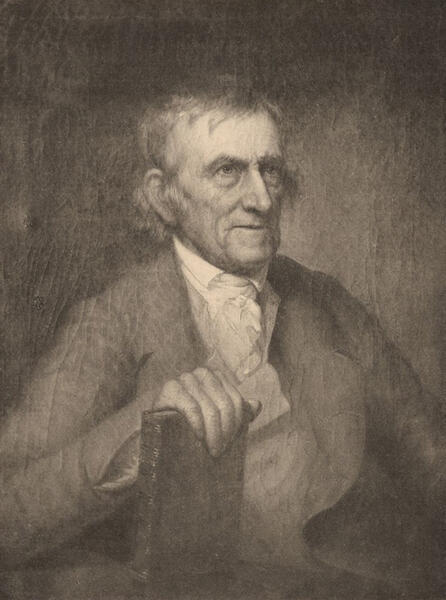
Here you will find contact information for Representative Henry Wynkoop, including email address, phone number, and mailing address.
| Name | Henry Wynkoop |
| Position | Representative |
| State | Pennsylvania |
| District | -1 |
| Party | Unknown |
| Status | Former Representative |
| Term Start | March 4, 1789 |
| Term End | March 3, 1791 |
| Terms Served | 1 |
| Born | March 2, 1737 |
| Gender | Male |
| Bioguide ID | W000783 |
About Representative Henry Wynkoop
Henry Wynkoop (March 2, 1737 – March 25, 1816) was an American politician who served as a member of the Continental Congress beginning in 1779 and later as a United States Representative from Pennsylvania during the First United States Congress from 1789 to 1791. A member of the House of Representatives for one term, he participated in the early legislative work of the new federal government and represented the interests of his Pennsylvania constituents during a formative period in American history.
Wynkoop was born on March 2, 1737, in Northampton Township in the Province of Pennsylvania. He was raised on his family’s 153-acre farm in Newtown, Pennsylvania. His father operated the farm through the practice of chattel slavery, and Wynkoop grew up in a household that held enslaved people. In 1759, upon the death of his father, he inherited both the farm and the people his father had enslaved, continuing to benefit financially from the institution of slavery as a Pennsylvania farm owner.
For his education, Wynkoop was admitted to the College of New Jersey (now Princeton University). He did not complete his studies there, choosing instead to leave before graduation and return to Pennsylvania, where he entered into local affairs and began a career in public service. His decision to forgo a degree in favor of political and legal engagement reflected the opportunities available to landholding men in the mid-eighteenth-century colonies and set the stage for his later judicial and legislative roles.
Wynkoop’s public career developed first at the local and state level. During the Revolutionary era, he emerged as a figure in Pennsylvania politics and was chosen as a member of the Continental Congress, beginning his service there in 1779. In this capacity he took part in the national deliberations of the revolutionary government as the colonies transitioned toward independence and the formation of the United States. His experience in the Continental Congress helped establish his reputation as a public official and prepared him for later federal service under the new Constitution.
Following the ratification of the Constitution, Wynkoop was elected as a Representative from Pennsylvania to the First United States Congress. He served in the House of Representatives from 1789 to 1791, completing one term in office. During this period he contributed to the legislative process as the new federal government organized its departments, established fiscal policies, and defined the scope of federal authority. Although his specific party affiliation is not clearly recorded and is often listed as unknown, his role in the First Congress placed him among the initial group of legislators responsible for implementing the constitutional framework and participating in the early democratic processes of the United States.
In addition to his congressional service, Wynkoop held significant judicial positions in Pennsylvania. Prior to his term as a United States Representative, he served as a justice of the Court of Common Pleas and of the orphan’s court in Kingston, Pennsylvania, from 1780 to 1789. These courts handled civil matters and issues relating to estates and guardianships, giving him substantial influence in local legal affairs. After completing his term in Congress, he was appointed an associate judge in Bucks County, Pennsylvania, a position he held from the early 1790s until his death in 1816, thereby maintaining a long-standing role in the administration of justice at the county level.
Wynkoop’s personal life was marked by three marriages and a large family. In 1761 he married Susannah Wanshaer; she died in 1776. The following year, in 1777, he married Maria Cummings, who died in 1781. He subsequently married his third wife, Sarah Newkirk, who remained with him until her death in 1813. Over the course of these marriages, Wynkoop had eight children. His household and farm operations continued to rely on enslaved labor for many years, reflecting the persistence of slavery in parts of Pennsylvania even as gradual abolition laws were introduced.
In his later years, Wynkoop addressed the status of the people he enslaved through the provisions of his will. He decreed that upon his death they were to be freed by manumission. This manumission took effect on March 25, 1816, when he died in Bucks County, Pennsylvania. Some of the individuals who were freed chose to remain and continue working for the Wynkoop family, transitioning from enslaved labor to other forms of service and employment. Following his death, Henry Wynkoop was interred in the graveyard of the Low Dutch Reformed Church in Richboro, Pennsylvania, closing a life that spanned the colonial, revolutionary, and early national periods of American history.