Representative Herbert H. Bateman
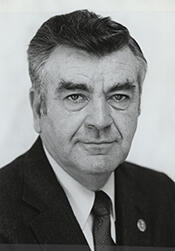
Here you will find contact information for Representative Herbert H. Bateman, including email address, phone number, and mailing address.
| Name | Herbert H. Bateman |
| Position | Representative |
| State | Virginia |
| District | 1 |
| Party | Republican |
| Status | Former Representative |
| Term Start | January 3, 1983 |
| Term End | January 3, 2001 |
| Terms Served | 9 |
| Born | August 7, 1928 |
| Gender | Male |
| Bioguide ID | B000229 |
About Representative Herbert H. Bateman
Herbert Harvell Bateman (August 7, 1928 – September 11, 2000) was an American politician from Virginia who served as a Representative from Virginia in the United States Congress from 1983 to 2000. A member of the Republican Party for the entirety of his congressional tenure, he was a nine-term member of the United States House of Representatives, serving from 1983 until his death. Over nine terms in office, Herbert H. Bateman contributed to the legislative process during a significant period in American history, participating in the democratic process and representing the interests of his constituents in Virginia’s 1st Congressional District.
Bateman was born in Elizabeth City, North Carolina, on August 7, 1928, but spent most of his life in Newport News, Virginia. He graduated from Newport News High School in 1945 and subsequently attended the College of William & Mary, where he earned a bachelor’s degree. After completing his undergraduate studies, he briefly pursued a career in education, teaching at Hampton High School from 1949 to 1951. His early professional years in the classroom were followed by military service during the Korean War.
In 1951 Bateman was commissioned in the United States Air Force as a first lieutenant. During his service he was assigned as a special agent with the U.S. Air Force Office of Special Investigations (AFOSI or OSI), serving in that capacity until 1953. Following his return to civilian life, he enrolled in the Law Center at Georgetown University in Washington, D.C., where he earned his law degree in 1956. After law school, he served for a short time as a clerk for the United States Court of Appeals in Washington, D.C., gaining experience in federal appellate practice before returning to Virginia to enter private law practice.
Bateman established his legal career in Newport News, practicing law privately there from 1968 to 1983. During this period he worked to build a political base through extensive community activism and civic engagement. He became active in the Virginia Jaycees, serving as president of the organization, and later as national legal counsel for the United States Junior Chamber of Commerce. He also participated in local charitable and civic organizations, including the Peninsula United Way and the Red Cross Blood Donor Program, strengthening his ties to the community he would later represent in elected office.
Bateman’s formal political career began in the Virginia General Assembly. He was elected to the Senate of Virginia, where he served for 14 years representing a portion of Newport News. Initially a Democrat, he changed his party affiliation and became a Republican in 1976, reflecting the broader political realignments occurring in Virginia and the South during that era. His years in the state senate helped establish his reputation as a legislator and positioned him for national office.
In 1982 Bateman was elected to the United States House of Representatives to succeed Paul S. Trible Jr. as the representative for Virginia’s 1st Congressional District. In his first congressional race he defeated Democrat John McGlennon with 55 percent of the vote. He was reelected eight times, often by comfortable margins. In 1984 he was reelected with 59 percent of the vote over Democrat John McGlennon and Independent E. J. Green; in 1986 he won 56 percent against Democrat Robert Cortez Scott; in 1988 he secured 73 percent against Democrat James S. Ellenson; and in 1990 he faced one of his closest contests, winning 51 percent of the vote over Democrat Andrew H. Fox. After the 1990 Census, redistricting moved most of his Black constituents in Hampton and Newport News into the newly created 3rd District, which allowed Bateman to consolidate his hold on the 1st District. He was reelected in 1992 with 58 percent of the vote over Democrat Andrew H. Fox and Independent Donald L. Macleay; in 1994 with 74 percent over Democrat Mary F. Sinclair and Independent Matt B. Voorhees; in 1996 he ran unopposed; and in 1998 he was reelected with 76 percent of the vote over Independents Josh Billings and Bradford L. Phillips.
During his years in Congress, Bateman developed a reputation as a relatively moderate Southern Republican. He held a lifetime rating of 79 from the American Conservative Union, reflecting a generally conservative voting record with occasional departures from party orthodoxy. Notably, he diverged from many of his contemporaries in supporting certain gun control measures. He was a strong advocate of controlling government spending, yet was particularly active and assertive on defense issues. Representing a district anchored in Newport News, a major center for shipbuilding and military-related industries, he strongly supported robust military spending. He served for nearly all of his congressional career on the House Armed Services Committee and the Committee on Transportation and Infrastructure. Within these assignments he chaired the House Armed Services Subcommittee on Military Readiness and the House Merchant Marine Panel, positions that allowed him to influence defense policy, military preparedness, and maritime affairs in ways that directly affected his district and the nation.
In the final decade of his life, Bateman contended with a series of serious health challenges even as he continued to serve in Congress. In 1990 he was diagnosed with lung and prostate cancer. He suffered a heart attack in 1995 but recovered sufficiently to resume his duties. In 1998 he underwent surgery to remove cancer from his right lung, and in 1999 he had a partial blockage of a major artery removed. In January 2000 he was diagnosed with a cancerous lymph node, a development that led him to decide not to seek reelection to a tenth term in the House of Representatives.
On September 10, 2000, Bateman traveled to Loudoun County, Virginia, to participate in a golf tournament. He and his wife stayed overnight at a local hotel following the event. On the morning of September 11, 2000, he could not be awakened and was taken to a hospital in nearby Leesburg, where he was pronounced dead at the age of 72. He died in office while still serving as a member of the United States Congress and is interred at Peninsula Memorial Park in Newport News, Virginia.
Bateman married Laura Bateman, and the couple had two children, a son and a daughter. His son, Herbert H. Bateman Jr., was elected to the Newport News City Council and served as vice mayor as well as on the Peninsula Airport Commission. His daughter, Laura Margaret Bateman, became principal of Bateman Consulting, a government and public affairs consulting firm. His legislative and political legacy is preserved in part through his papers from his time as a state senator and as a member of Congress, which are held in the Special Collections Research Center at the College of William & Mary.