Representative Herbert Seely Bigelow
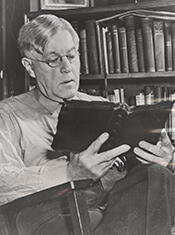
Here you will find contact information for Representative Herbert Seely Bigelow, including email address, phone number, and mailing address.
| Name | Herbert Seely Bigelow |
| Position | Representative |
| State | Ohio |
| District | 2 |
| Party | Democratic |
| Status | Former Representative |
| Term Start | January 5, 1937 |
| Term End | January 3, 1939 |
| Terms Served | 1 |
| Born | January 4, 1870 |
| Gender | Male |
| Bioguide ID | B000454 |
About Representative Herbert Seely Bigelow
Herbert Seely Bigelow (January 4, 1870 – November 11, 1951) was an American clergyman, civic reformer, and Democratic politician who served one term as a U.S. Representative from Ohio from 1937 to 1939. Born in Elkhart, Indiana, he attended the public schools there before pursuing higher education in Ohio. He studied at Oberlin College in Oberlin, Ohio, and subsequently enrolled at Western Reserve University in Cleveland, from which he was graduated in 1894. Shortly thereafter, he moved to Cincinnati, Ohio, where he undertook theological studies at Lane Theological Seminary, preparing for a career in the ministry that would shape much of his public life.
In 1895 Bigelow was ordained as a Congregational minister and became pastor of the Vine Street Congregational Church in Cincinnati. Under his leadership the congregation, later widely known as the People’s Church, became a center for progressive religious thought and social activism. Bigelow’s ministry emphasized social justice, pacifism, and civic responsibility, and he gained prominence in Cincinnati as a reform-minded religious leader. His engagement with public issues soon drew him into electoral politics. In 1902 he was the Democratic candidate for Ohio Secretary of State, though he was unsuccessful in that campaign, an early indication of his willingness to seek public office in support of his reform ideals.
Bigelow’s influence in Ohio public affairs expanded significantly in the early twentieth century. He served as a delegate to the fourth constitutional convention of Ohio in 1912 and was chosen president of that convention, playing a leading role in debates over state governance and democratic reforms. He then served as a member of the Ohio House of Representatives in 1913 and 1914, where he continued to advocate progressive measures. During this period he remained active in religious and civic circles, blending his pastoral work with a strong commitment to political and social reform.
His outspoken pacifism and association with progressive and socialist causes made him a controversial figure during World War I. According to a news report in the Chicago Tribune on October 30, 1917, Herbert S. Bigelow, described as a pacifist, Socialist, head of the People’s Church of Cincinnati, and a member of the People’s Council, was seized and horsewhipped near Florence, Kentucky, by a group of men disguised in Ku Klux–style garb. The treating physician reported that Bigelow had received at least forty lashes. Bigelow later remarked that “an experience of this kind shakes one’s faith in the doctrine of non-resistance. It has converted me, at least temporarily, to the gospel of preparedness,” underscoring the personal cost of his public stance and the intense opposition he faced.
Bigelow remained active in local politics and civic life in the interwar years. He served on the Cincinnati City Council in 1936, further solidifying his reputation as a reform-oriented public servant. His long-standing involvement in community affairs and his prominence as a minister and civic leader helped pave the way for his election to national office. A member of the Democratic Party, Herbert Seely Bigelow was elected to the Seventy-fifth Congress as a Representative from Ohio, serving from January 3, 1937, to January 3, 1939. His service in Congress occurred during a significant period in American history, amid the New Deal era, when the federal government was deeply engaged in responding to the economic and social challenges of the Great Depression. As a member of the House of Representatives, he participated in the legislative process and represented the interests of his Ohio constituents during his single term in office.
In 1938 Bigelow was an unsuccessful candidate for reelection to the Seventy-sixth Congress, bringing his congressional career to a close after one term. He returned to municipal politics and again served as a member of the Cincinnati City Council in 1940 and 1941. Throughout these years he continued to be identified with Democratic Party politics and with efforts to advance social welfare and democratic participation at the local and national levels.
After his formal political career waned, Bigelow resumed his full pastoral duties at the Vine Street Congregational Church, also known as the People’s Church, in Cincinnati. There he continued to preach, write, and advocate for social reform, maintaining his role as a prominent religious and civic voice in the community. Herbert Seely Bigelow died in Cincinnati on November 11, 1951. His remains were cremated, and his ashes were scattered over his farm near Forestville, Ohio, symbolically returning him to the region where he had spent the greater part of his life in ministry, public service, and political engagement.