Representative Herbert Covington Bonner
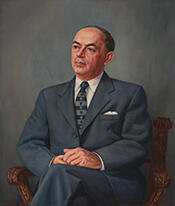
Here you will find contact information for Representative Herbert Covington Bonner, including email address, phone number, and mailing address.
| Name | Herbert Covington Bonner |
| Position | Representative |
| State | North Carolina |
| District | 1 |
| Party | Democratic |
| Status | Former Representative |
| Term Start | January 3, 1939 |
| Term End | January 3, 1967 |
| Terms Served | 14 |
| Born | May 16, 1891 |
| Gender | Male |
| Bioguide ID | B000621 |
About Representative Herbert Covington Bonner
Herbert Covington Bonner (May 16, 1891 – November 7, 1965) was a Democratic U.S. Representative from North Carolina who served in the United States Congress from 1939 to 1967, and more specifically between 1940 and 1965, during a significant period in American history. Born in Washington, Beaufort County, North Carolina, he spent his early years in eastern North Carolina and attended school in Warrenton. His upbringing in this largely rural region helped shape his understanding of the agricultural and maritime concerns that would later figure prominently in his congressional career.
Bonner’s formal education took place in the public schools of Warrenton, North Carolina. After leaving school, he entered the workforce in a variety of capacities that reflected the economic life of his home state in the early twentieth century. He worked as a salesman and as a farmer, gaining firsthand experience with the commercial and agricultural interests of his region. These early occupations provided him with practical knowledge of the challenges facing small businesses and rural communities, experience that would inform his later legislative priorities.
During World War I, Bonner served in the United States Army, joining the ranks of many young Americans who entered military service during the conflict. His wartime service contributed to his familiarity with military affairs and veterans’ issues, which would remain important concerns for Congress in the decades following the war. After returning to civilian life, he resumed work in private pursuits before beginning a long association with federal public service.
In 1924, Bonner became secretary to Congressman Lindsay C. Warren of North Carolina, a position he held until 1940. In this role, he gained extensive experience in the operations of a congressional office, legislative procedure, and the representation of a largely rural constituency. Over these sixteen years, he developed a detailed understanding of federal programs, constituent services, and the legislative process, positioning him as a natural successor when Warren left the House of Representatives.
Upon Lindsay Warren’s resignation from Congress in 1940 to accept appointment as Comptroller General of the United States, Bonner was elected simultaneously to complete Warren’s unexpired term and to a full term in the 77th Congress. He thus entered the House on November 5, 1940, and went on to serve twelve full terms, remaining in office until his death on November 7, 1965. Over the course of fourteen terms in Congress, he participated actively in the democratic process and represented the interests of his North Carolina constituents through the Great Depression’s aftermath, World War II, the early Cold War, and the beginnings of the civil rights era.
During his long tenure in the House of Representatives, Bonner held several important committee leadership positions. In the 79th Congress, he served as chairman of the Committee on Election of President, Vice President, and Representatives in Congress, a panel concerned with federal election procedures and contested elections. Later, in the 84th through the 89th Congresses, he chaired the Committee on Merchant Marine and Fisheries. In that capacity, he played a central role in legislation affecting maritime commerce, shipping, and the fishing industry—issues of particular importance to his coastal North Carolina district and to the national economy. His committee leadership reflected both his seniority and his expertise in matters related to transportation and marine resources.
Herbert Covington Bonner remained in office until his death from cancer in Washington, D.C., on November 7, 1965. He died while still serving in the House of Representatives, bringing to a close more than a quarter-century of continuous congressional service. Bonner is buried in Washington, D.C. His long career in Congress, spanning from the late New Deal period through the mid-1960s, marked him as a durable and influential figure in North Carolina’s political history and in the legislative development of mid-twentieth-century America.