Representative Herbert Wesley Cummings
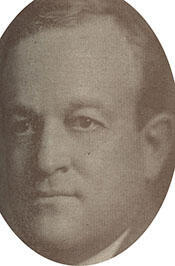
Here you will find contact information for Representative Herbert Wesley Cummings, including email address, phone number, and mailing address.
| Name | Herbert Wesley Cummings |
| Position | Representative |
| State | Pennsylvania |
| District | 17 |
| Party | Democratic |
| Status | Former Representative |
| Term Start | December 3, 1923 |
| Term End | March 3, 1925 |
| Terms Served | 1 |
| Born | July 13, 1873 |
| Gender | Male |
| Bioguide ID | C000987 |
About Representative Herbert Wesley Cummings
Herbert Wesley Cummings (July 13, 1873 – March 4, 1956) was a Democratic member of the U.S. House of Representatives from Pennsylvania who served one term in Congress from 1923 to 1925. Over the course of a long legal and judicial career in Northumberland County, Pennsylvania, he held a series of prominent public offices, including district attorney and president judge of the court of common pleas, before and after his service in the national legislature.
Cummings was born on July 13, 1873, in West Chillisquaque Township, Pennsylvania, a largely rural area of Northumberland County in central Pennsylvania. He was educated in the local public schools and graduated from Lewisburg High School in Lewisburg, Pennsylvania, in 1890. Following his secondary education, he pursued the study of law, reading law in the traditional manner of the period rather than attending a formal law school, and was admitted to the bar of Pennsylvania. After his admission, he commenced the practice of law in Sunbury, the county seat of Northumberland County, which would remain the center of his professional and public life.
Building a reputation as a capable attorney, Cummings entered public service early in his career. He was elected district attorney of Northumberland County in 1901, and after an initial term returned to that office from 1904 to 1908. In this prosecutorial role he was responsible for representing the county in criminal proceedings and enforcing state law at a time of industrial growth and social change in the region. His performance as district attorney helped establish his standing in the local Democratic Party and laid the groundwork for his later judicial and congressional service.
In 1911 Cummings was elected judge of the court of common pleas of Northumberland County, the principal trial court of general jurisdiction for the county. He served as president judge of that court for ten years, presiding over a wide range of civil and criminal matters. His decade on the bench coincided with the Progressive Era and the First World War, periods in which courts faced evolving questions of labor, industry, and public regulation. His judicial service enhanced his public profile and demonstrated his familiarity with both statutory and common law, attributes that would later inform his work as a legislator.
Cummings was elected as a Democrat to the Sixty-eighth Congress and served as a Representative from Pennsylvania from March 4, 1923, to March 3, 1925. His term in the U.S. House of Representatives took place during a significant period in American history, in the early years of the post–World War I era and the administration of President Warren G. Harding and, later, Calvin Coolidge. As a member of the House of Representatives, Herbert Wesley Cummings participated in the legislative process, contributed to the work of the Democratic Party in a Republican-dominated Congress, and represented the interests of his Pennsylvania constituents during debates over economic policy, veterans’ issues, and governmental reform. He was an unsuccessful candidate for reelection in 1924, bringing his congressional service to a close after one term.
After leaving Congress, Cummings returned to Sunbury and resumed the practice of law. He continued in private practice until 1935, when he was again called to the bench and appointed judge of Northumberland County. Subsequently elected to that position, he served as a judge there until 1946, extending his judicial career well into the mid-twentieth century. His later years on the bench spanned the Great Depression and World War II, periods in which local courts addressed the legal consequences of economic hardship, changing social conditions, and wartime measures.
Upon his retirement from the judiciary in 1946, Cummings once more resumed the practice of law in Sunbury, maintaining his professional engagement with the legal community until the final years of his life. He died in Sunbury, Pennsylvania, on March 4, 1956. Herbert Wesley Cummings was interred in Pomfret Manor Cemetery in Sunbury, closing a lifetime of service closely tied to the legal, judicial, and political institutions of Northumberland County and the Commonwealth of Pennsylvania.