Senator Herb Kohl
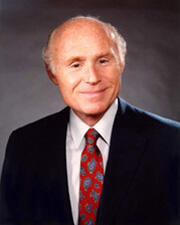
Here you will find contact information for Senator Herb Kohl, including email address, phone number, and mailing address.
| Name | Herb Kohl |
| Position | Senator |
| State | Wisconsin |
| Party | Democratic |
| Status | Former Representative |
| Term Start | January 3, 1989 |
| Term End | January 3, 2013 |
| Terms Served | 12 |
| Born | February 7, 1935 |
| Gender | Male |
| Bioguide ID | K000305 |
About Senator Herb Kohl
Herbert Hiken Kohl (February 7, 1935 – December 27, 2023) was an American businessman, philanthropist, and Democratic politician from Milwaukee, Wisconsin, who served as a United States senator from Wisconsin from January 3, 1989, to January 3, 2013. Over four terms in the Senate, he represented Wisconsin during a significant period in American history, participating actively in the legislative process and contributing to national debates on fiscal policy, health care, education, gun safety, and social issues. Before entering national office, he was a prominent figure in Wisconsin’s business community, chairman of the Wisconsin Democratic Party, and longtime owner of the Milwaukee Bucks of the National Basketball Association.
Kohl was born and raised in Milwaukee, Wisconsin, the son of Mary (née Hiken) and Max Kohl. His father was a Polish Jewish immigrant and his mother a Russian Jewish immigrant who came to the United States in the 1920s, and he grew up in a Jewish household in Milwaukee. He attended Washington High School in Milwaukee and went on to the University of Wisconsin–Madison, where he earned a Bachelor of Science degree in 1956. As an undergraduate he joined the Pi Lambda Phi fraternity and shared a room with Allan “Bud” Selig, who later became Commissioner of Major League Baseball. Kohl continued his education at Harvard Business School, receiving a Master of Business Administration degree in 1958. Between 1958 and 1964, he served in the United States Army Reserve, combining early military service with the beginnings of his business career.
After finishing graduate school, Kohl worked as an investor in real estate and the stock market, eventually creating his own firm, Kohl Investments, to manage his holdings. He and his brother became heirs to the family-owned Kohl’s chain, which by then included about 50 grocery stores as well as several department stores, pharmacies, and liquor stores. In 1970, Kohl was named president of Kohl’s Corporation, his family’s business that owned the Kohl’s department stores chain, and he led the company through a period of expansion and diversification. He served as president from 1970 to 1979, overseeing operations until the corporation was sold to BATUS Inc. (formerly British American Tobacco) in 1978. His success in business made him one of the wealthiest residents of Milwaukee, the richest Jewish American from Wisconsin, and ultimately one of the wealthiest members of the U.S. Senate; in 2016, Forbes estimated his net worth at $630 million.
Kohl’s prominence in business led naturally to a role in Wisconsin politics. In the early 1970s he became an important donor and fundraiser for Patrick Lucey, who was elected governor of Wisconsin in 1970 and reelected in 1974. After Lucey’s second inauguration, at which Kohl served as master of ceremonies, the chairman of the Democratic Party of Wisconsin, Bill Gerrard, resigned. At Lucey’s urging, Kohl sought the party chairmanship and was named interim chairman at an emergency session on April 12, 1975. He was subsequently elected chairman by the party’s state convention delegates later that summer. Under Kohl’s leadership, Wisconsin Democrats achieved historic victories in the 1976 elections, winning a supermajority in both chambers of the state legislature for the first time since the creation of the Republican Party and delivering Wisconsin’s electoral votes to the Democratic presidential candidate for the first time since 1964. Wisconsin’s Democratic primary also emerged as a pivotal contest in the 1976 presidential nominating process. Kohl announced after the 1976 election that he believed he had accomplished his main goals as chairman and was ready to step down, but he remained in office until the state party convention in June 1977.
Kohl also became a major figure in professional sports in Wisconsin. In 1985, he purchased the Milwaukee Bucks of the National Basketball Association from Jim Fitzgerald for $18 million, explicitly to prevent the team from relocating out of Milwaukee and to ensure the franchise remained a civic asset. Over the course of his ownership, the Bucks went through six head coaches, beginning with Don Nelson, who resigned in 1987 after his relationship with Kohl deteriorated. The team never reached the NBA Finals during Kohl’s tenure as owner. In 2003, he considered an offer to sell the team for $170 million to former NBA star Michael Jordan but ultimately decided to retain ownership. In 2013, as he prepared to transition away from ownership, Kohl began to bring in new partners committed to keeping the team in Milwaukee. On April 16, 2014, he agreed to sell the Bucks to New York–based investors Wes Edens and Marc Lasry for $550 million, with provisions intended to secure the team’s future in the city. His longstanding support for Wisconsin athletics was also reflected in a major philanthropic gift: he donated $25 million to the University of Wisconsin–Madison for construction of a new sports arena, which was named the Kohl Center in his honor.
Kohl entered electoral politics at the federal level in 1988, when incumbent Democratic Senator William Proxmire chose not to seek reelection. Kohl ran for the open U.S. Senate seat as a Democrat and faced Tony Earl, Ed Garvey, and Doug La Follette in the primary. He won the Democratic nomination and went on to defeat Republican Susan Engeleiter in the general election. A member of the Democratic Party, he took office on January 3, 1989, beginning a Senate career that would span 24 years and four terms. He was reelected in 1994, defeating Republican Robert Welch; in 2000, defeating Republican John Gillespie; and in 2006, defeating Republican Robert Lorge. Kohl was often described as a populist-leaning liberal and a moderate Democrat, combining support for social liberalism and consumer protections with a reputation for fiscal caution and business-friendly positions. On May 13, 2011, he announced that he would not run for reelection in 2012, stating, “The office doesn’t belong to me. It belongs to the people of Wisconsin, and there is something to be said for not staying in office too long.” He left the Senate at the conclusion of his term on January 3, 2013.
During his Senate service, Kohl held a number of influential committee assignments. He served on the Committee on Appropriations, where he sat on several subcommittees, including Agriculture, Rural Development, Food and Drug Administration, and Related Agencies (which he chaired); Commerce, Justice, Science, and Related Agencies; Defense; Interior, Environment, and Related Agencies; Labor, Health and Human Services, Education, and Related Agencies; and Transportation, Housing and Urban Development, and Related Agencies. He was a member of the Committee on Banking, Housing, and Urban Affairs, serving on its Subcommittees on Housing, Transportation, and Community Development; Financial Institutions; and Security and International Trade and Finance. On the Committee on the Judiciary, where he served as vice chairman, he focused on antitrust and consumer protection issues and chaired the Subcommittee on Antitrust, Competition Policy and Consumer Rights, while also serving on the Subcommittees on Crime and Drugs and on Terrorism, Technology and Homeland Security. In addition, he chaired the Senate Special Committee on Aging, reflecting his interest in issues affecting older Americans. Through these roles, Kohl contributed to legislation on appropriations, financial regulation, judicial nominations, competition policy, and elder care.
Kohl’s voting record reflected a blend of fiscal restraint, social liberalism, and pragmatic centrism. He supported President Barack Obama’s health care reform, voting for the Patient Protection and Affordable Care Act in December 2009 and the Health Care and Education Reconciliation Act of 2010. He voted in favor of many lawsuit reform measures and supported tightening personal bankruptcy rules. He long favored a balanced-budget amendment to the U.S. Constitution and was one of the few Democrats to vote for the 2001 tax cut; he also supported eliminating the “marriage penalty.” At the same time, he was generally supportive of progressive taxation and, like many moderate Democrats, voted for welfare reform legislation in the mid-1990s. He was open to the creation of individual, private savings accounts to supplement Social Security. Kohl maintained a generally pro-environmental record and was an outspoken advocate of American energy independence, supporting increased development of hydrogen-powered vehicles, a federal goal of reducing oil consumption by 40 percent, and restrictions on oil speculation in protected areas, though he voted against some corporate average fuel economy standards. He was rated highly by organizations favoring universal health care, supported expanding Medicare and the State Children’s Health Insurance Program (SCHIP), and favored including prescription drugs under federal health coverage. During his 2006 reelection campaign, he called for greater scrutiny of health maintenance organizations (HMOs) to ensure they were effectively delivering care.
On social issues, Kohl supported abortion rights and opposed the death penalty. He favored affirmative action and backed setting aside funds for women and minorities. Although he voted for the Defense of Marriage Act in 1996, he later opposed efforts to amend the U.S. Constitution to define marriage exclusively as between one man and one woman and supported measures to prohibit discrimination based on sexual orientation. He consistently voted against the Flag Desecration Amendment. Gun safety was one of his signature concerns: in 2005 he secured passage of an amendment requiring that handguns be sold with child safety locks, which was attached to the Protection of Lawful Commerce in Arms Act and passed with support from every Democrat and many Republicans. Earlier, he had helped push the Gun-Free Schools Act, which the U.S. Supreme Court overturned in 1995, and he continued to submit related amendments to promote gun-free educational environments. A strong supporter of public education, he opposed school vouchers but voted to allow the establishment of educational savings accounts. On economic and trade policy, he voted against several major free trade agreements, including the North American Free Trade Agreement (NAFTA) and the Central America Free Trade Agreement (CAFTA), and opposed the Freedom to Farm Act of 1996, while supporting fast-tracked trade normalization with the People’s Republic of China and free trade with some developing countries. In foreign and defense policy, he voted against authorizing the Gulf War in 1990 but voted in 2002 to authorize the use of military force in Iraq. He often joined more liberal Democrats in efforts to restrain defense spending, voting against certain defense appropriations increases in the mid-1990s and supporting vetoes of funding for new military projects. Although he was among the 98 senators who voted for the USA PATRIOT Act after the September 11 attacks, he later opposed aspects of the law and supported requiring warrants for wiretapping and for the detention of prisoners.
Beyond his formal offices, Kohl was widely recognized for his philanthropy and civic engagement in Wisconsin. In 1990, he established the Herb Kohl Educational Foundation Achievement Award Program, which provides annual grants totaling $400,000 to 200 graduating high school seniors, 100 teachers, and 100 schools across Wisconsin, reflecting his commitment to public education and community development. In 2016, he donated $1.5 million to the Robert M. La Follette School of Public Affairs at the University of Wisconsin–Madison to create the Herb Kohl Public Service Research Competition, designed to promote public policy research. His contributions to athletics and civic life were acknowledged when he was elected to the Wisconsin Athletic Hall of Fame in 2007. After the Bucks won the NBA championship in 2021, Kohl was honored as a key figure in the lead car of the team’s championship parade in Milwaukee on July 22, 2021; he described the celebration as “one of the big days of my life.” He attended the Bucks’ 2021–22 season opener at Fiserv Forum, where he was presented with a championship ring in recognition of his decades-long role in keeping the franchise in Milwaukee.
Herb Kohl died at his home in Milwaukee on December 27, 2023, at the age of 88, following a brief illness. In recognition of his long service to the state and his impact on its political, civic, and sporting life, Wisconsin Governor Tony Evers ordered flags flown at half-staff until Kohl’s funeral. Kohl’s life and career have placed him among notable Harvard-educated politicians, Jewish members of the United States Congress, and the ranks of the richest American politicians, while his legacy in Wisconsin endures through his public service, philanthropy, and enduring contributions to education and athletics.