Senator Herbert Romulus O’Conor
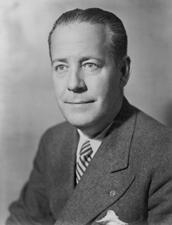
Here you will find contact information for Senator Herbert Romulus O’Conor, including email address, phone number, and mailing address.
| Name | Herbert Romulus O’Conor |
| Position | Senator |
| State | Maryland |
| Party | Democratic |
| Status | Former Representative |
| Term Start | January 3, 1947 |
| Term End | January 3, 1953 |
| Terms Served | 1 |
| Born | November 17, 1896 |
| Gender | Male |
| Bioguide ID | O000032 |
About Senator Herbert Romulus O’Conor
Herbert Romulus O’Conor (November 17, 1896 – March 4, 1960) was an American lawyer, governor, and United States senator who played a prominent role in Maryland and national politics in the mid-twentieth century. A member of the Democratic Party, he served as the 51st Governor of Maryland from 1939 to 1947 and as a United States Senator from Maryland from 1947 to 1953, completing one term in the Senate. His congressional service occurred during a significant period in American history, spanning the early Cold War and the immediate post–World War II era, during which he participated in the legislative process and represented the interests of his Maryland constituents.
O’Conor was born in Baltimore, Maryland, to James P. A. O’Conor and Mary Ann (Galvin) O’Conor. Raised in a Roman Catholic family of Irish descent, he was educated in local schools before attending Loyola College in Baltimore, where he received his Bachelor of Arts degree. He then studied law at the University of Maryland School of Law, graduating in 1920. While completing his education, O’Conor worked as a reporter for the Baltimore Sun and the Baltimore Evening Sun from 1919 to 1920, gaining early exposure to public affairs and the workings of government. On November 24, 1920, he married Mary Eugenia Byrnes (1896–1971); the couple had five children: Herbert R. O’Conor Jr., Eugene F. O’Conor, James Patrick O’Conor, Robert O’Conor, and Mary Patricia O’Conor.
Following his admission to the bar, O’Conor quickly entered public service. From 1921 to 1922 he served as assistant state’s attorney of Baltimore. In 1923 he was elected State’s Attorney of Baltimore City, a position he held for more than a decade, building a reputation as a capable prosecutor and public official. His career advanced further when he was elected Attorney General of Maryland in 1934. As attorney general, he became active in national legal and governmental circles and served in the National Association of Attorneys General in 1937. During this period, he was personally affected by tragedy when his secretary, Camilla Conroy, died in the burning of the luxury liner SS Morro Castle in 1934; O’Conor identified her body, which was found floating face down near the wreck site.
O’Conor’s statewide prominence led to his election as Governor of Maryland in 1938, when he defeated the incumbent Republican governor, Harry W. Nice. In assuming office in January 1939, he became the first Roman Catholic of Irish descent to serve as governor of Maryland. His administration coincided with World War II, and he established the Maryland Council of Defense to coordinate the state’s wartime preparedness and civil defense activities. As governor, he pursued an ambitious program of infrastructure improvement, working to modernize the state transportation system and promoting the construction of new bridges over the Susquehanna and Potomac Rivers to facilitate commerce and regional connectivity. He also sought to foster cooperation among the states, serving as chairman of the Governor’s Conference in 1941 and as president of the Council of State Governments in 1943, roles that reflected his influence in intergovernmental affairs.
Near the end of World War II, O’Conor turned his attention to the challenges of peace and economic transition. He founded the Commission on Post War Reconstruction and Development to address the impact of the war on Maryland’s economy and communities and to plan for postwar growth and employment. His administration also worked to improve the state’s health care system, reflecting broader New Deal–era concerns with public welfare and social services. O’Conor was reelected governor and served until 1947, when his second term concluded and he moved directly into federal legislative service.
In 1946, O’Conor was elected to the United States Senate as a Democrat from Maryland and took office on January 3, 1947. He served one full term, from 1947 to 1953, during the Eightieth, Eighty-first, and Eighty-second Congresses, and chose not to run for re-election in 1952. His Senate tenure coincided with the early Cold War, the beginning of the Korean War, and major debates over domestic security and organized crime. During the Eighty-first Congress, from May to September 1951, he served as chairman of the Special Committee on Organized Crime in Interstate Commerce, a high-profile investigative body that examined the operations and influence of organized crime across state lines. In this capacity, O’Conor played a visible role in the national effort to expose and curb criminal syndicates, contributing to the development of federal policy on law enforcement and interstate commerce.
After leaving the Senate in January 1953, O’Conor returned to private life while remaining active in the legal profession. He resumed the practice of law in Baltimore and Washington, D.C., drawing on his long experience in state and federal government. His stature in Maryland public life was later recognized in the naming of the Herbert R. O’Conor State Building in Baltimore, a project associated with an early redevelopment effort led by James Rouse and Guy T. O. Hollyday that utilized funds from the 1947 Federal Redevelopment Act to subsidize development and resale for profit. O’Conor continued his professional activities until his death in Baltimore on March 4, 1960. He was interred in New Cathedral Cemetery in Baltimore, leaving a legacy as a journalist-turned-lawyer, prosecutor, attorney general, wartime governor, and United States senator who helped shape Maryland’s mid-twentieth-century political and institutional development.