Representative Herbert Parsons
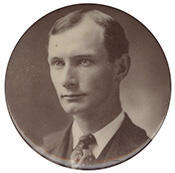
Here you will find contact information for Representative Herbert Parsons, including email address, phone number, and mailing address.
| Name | Herbert Parsons |
| Position | Representative |
| State | New York |
| District | 13 |
| Party | Republican |
| Status | Former Representative |
| Term Start | December 4, 1905 |
| Term End | March 3, 1911 |
| Terms Served | 3 |
| Born | October 28, 1869 |
| Gender | Male |
| Bioguide ID | P000088 |
About Representative Herbert Parsons
Herbert Parsons was a Republican representative from New York who served as a Member of the United States House of Representatives from 1905 to 1911. A member of the Republican Party, he contributed to the legislative process during three consecutive terms in office, representing the interests of his constituents in a period of significant political and social change in the United States. His congressional service placed him among a number of contemporaries named Herbert Parsons active in public life across the English-speaking world during the late nineteenth and early twentieth centuries, including Sir Herbert Parsons, 1st Baronet (1870–1940), a British businessman and politician; Herbert Angas Parsons (1872–1945), a South Australian lawyer, politician, and judge; Herbert Parsons (1875–1937), an Australian cricketer for Victoria; and John Herbert Parsons (1863–1957), a British ophthalmologist.
Born Herbert Parsons in 1869, he came of age at a time when the United States was undergoing rapid industrialization, urbanization, and political realignment in the decades following the Civil War. Growing up in this transformative era, he would have been exposed to the emerging issues of labor, immigration, and economic regulation that increasingly defined public debate in New York and across the nation. This environment helped shape his interest in public affairs and the Republican Party, which, in the late nineteenth century, was closely associated with economic development, protective tariffs, and a strong national government.
Parsons’s education prepared him for a career in public life and the law, as was typical for many Republican officeholders of his generation. His formative academic training likely included study of history, government, and legal principles, laying the groundwork for his later participation in legislative work. By the time he entered professional life, New York had become a center of finance, commerce, and immigration, and the state’s political institutions offered ambitious young Republicans a pathway into public service.
Before his election to Congress, Parsons established himself within New York’s Republican political organization and public affairs. He built a reputation that enabled him to secure his party’s nomination for the United States House of Representatives, reflecting both his standing within the Republican ranks and the confidence of local leaders in his ability to represent the district. His early career would have involved close engagement with the concerns of New York’s urban and suburban communities, including infrastructure, economic development, and the administration of local government.
Herbert Parsons served in the United States Congress from 1905 to 1911, a period that spanned the Fifty-ninth, Sixtieth, and Sixty-first Congresses. During these three terms, he participated in the democratic process as a member of the House of Representatives, contributing to debates and legislation at a time when the federal government was increasingly active in regulating commerce, addressing corporate power, and responding to the social issues of the Progressive Era. As a representative from New York, he was positioned at the intersection of national policy and the interests of one of the country’s most populous and economically important states, and he worked within the Republican caucus to advance the priorities of his constituents.
Parsons’s congressional service coincided with a significant period in American history, marked by the presidencies of Theodore Roosevelt and William Howard Taft, the rise of progressive reform movements, and growing public concern over issues such as antitrust enforcement, labor conditions, and political corruption. Within this context, his role as a Republican representative from New York required balancing national party positions with the specific needs of his district, including matters related to trade, finance, and urban governance. His six years in office reflected both the stability of his electoral support and his ability to navigate the evolving political landscape of the early twentieth century.
After leaving Congress in 1911, Parsons remained identified with the Republican Party and the broader world of public affairs shaped by his years in the House of Representatives. His post-congressional life unfolded against the backdrop of World War I, the interwar period, and significant changes in both New York and national politics. Herbert Parsons died in 1925, closing a career that had placed him among the notable Republican representatives of his era and among a wider cohort of public figures sharing the Parsons name who were active in politics, law, medicine, and sport across the English-speaking world.