Representative Herbert Claiborne Pell
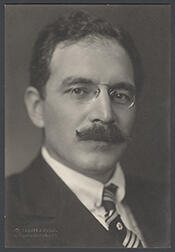
Here you will find contact information for Representative Herbert Claiborne Pell, including email address, phone number, and mailing address.
| Name | Herbert Claiborne Pell |
| Position | Representative |
| State | New York |
| District | 17 |
| Party | Democratic |
| Status | Former Representative |
| Term Start | May 19, 1919 |
| Term End | March 3, 1921 |
| Terms Served | 1 |
| Born | February 16, 1884 |
| Gender | Male |
| Bioguide ID | P000194 |
About Representative Herbert Claiborne Pell
Herbert Claiborne Pell Jr. (February 16, 1884 – July 17, 1961) was a United States Representative from New York, U.S. Minister to Portugal, U.S. Minister to Hungary, and a creator and member of the United Nations War Crimes Commission. A native of New York City, he was born into the prominent and wealthy Lorillard and Claiborne families, whose social and economic standing placed him within the traditional Northeastern elite. Despite these patrician origins, he developed a reputation as a political progressive and internationalist, often at odds with the generally conservative and isolationist tendencies of his class.
Pell was educated at the Pomfret School in Pomfret, Connecticut, an independent preparatory school that drew many students from established East Coast families. He went on to attend Harvard University, Columbia University, and New York University, though he did not take a conventional professional path and instead gravitated toward public affairs and writing. Originally active in politics as a member of the Progressive movement, he later aligned himself with the Democratic Party, reflecting his evolving commitment to reform-oriented and internationalist policies. His early political and intellectual activities helped establish him as a critic of isolationism and an advocate of a more engaged American role in world affairs.
Herbert Claiborne Pell entered national politics during World War I and its immediate aftermath. In 1918 he was elected as a Democrat to the United States House of Representatives from New York, serving one term in the Sixty-sixth Congress from 1919 to 1921. As a Representative from New York, he participated in the legislative process during a significant period in American history marked by postwar adjustment, debates over the League of Nations, and domestic social and economic change. A member of the Democratic Party, he represented the interests of his constituents while contributing to national discussions on foreign and domestic policy. He was an unsuccessful candidate for reelection in 1920, ending his formal congressional service after a single term, but he remained an influential figure within Democratic politics.
Following his departure from Congress, Pell continued an active political career within the Democratic Party. He served as chairman of the New York State Democratic Committee from 1921 to 1926, playing a key role in party organization and strategy during a period when Democrats sought to expand their appeal in a rapidly changing electorate. He was a delegate to the 1924 Democratic National Convention, participating in the contentious nomination battles of that year, and later served as vice chairman of the Democratic National Campaign Committee for the 1936 elections, when Franklin D. Roosevelt and the New Deal coalition secured a sweeping national victory. In addition to his party work, Pell wrote on foreign policy and national security, including the article “Preparing for the Next War,” published in the American Mercury in August 1931, which reflected his concern with the international order and the dangers of future conflict.
Pell’s prominence in Democratic circles and his strong internationalist views led to his appointment to important diplomatic posts during the administration of President Franklin D. Roosevelt. In 1937 he was appointed U.S. Minister to Portugal, serving from May 27, 1937, until February 11, 1941. During his tenure in Lisbon, he represented American interests in a strategically located neutral country on the eve of and in the early years of World War II, a period marked by complex diplomatic maneuvering in Europe. On February 11, 1941, he was appointed U.S. Minister to Hungary. In December 1941, after the United States entered World War II, Pell received Hungary’s declaration of war against the United States, closed the American legation in Budapest, and returned to the United States. He formally resigned his post in November 1942, concluding his direct diplomatic service in Europe.
From 1942 to 1945, Herbert Claiborne Pell served as the United States representative on the United Nations War Crimes Commission, an international body created during World War II to investigate and document atrocities and to lay the groundwork for the prosecution of those responsible. Pell was widely recognized as an internationalist on foreign policy and a progressive voice despite his wealthy and conservative social background. He emerged as a leading American figure seeking to build awareness of the plight of European Jews in the 1930s and 1940s and to prevent the Holocaust, pressing for stronger action by the United States and its allies. As the principal U.S. sponsor of, and U.S. representative to, the War Crimes Commission, he played a significant role in ensuring that evidence of war crimes was collected and that mechanisms were put in place to hold perpetrators accountable in the postwar period.
In his personal life, Pell was connected to several notable American families through birth and marriage. He married Olive Bigelow Pell (1886–1980), a portraitist, in Paris in June 1927, two weeks after his former wife, Matilda, married Hugo W. Koehler (1886–1941), a commander in the United States Navy who had served as a naval and State Department special agent in Russia during its civil war in 1920. Olive Bigelow was the daughter of writer and journalist Poultney Bigelow (1855–1954) and the granddaughter of John Bigelow (1817–1911), who had served as U.S. Minister (often styled Ambassador) to France under Presidents Abraham Lincoln and Andrew Johnson. Herbert and Olive Pell’s son, Claiborne de Borda Pell (1918–2009), later became a U.S. Senator from Rhode Island, serving for 36 years from 1961 until 1997 and further extending the family’s long involvement in American public life.
Herbert Claiborne Pell died on July 17, 1961, in Munich, West Germany, at the age of 77, while touring Europe with his grandson, Herbert Pell III. His funeral was held at Trinity Church in Newport, Rhode Island, where a memorial plaque honors his service and contributions. His remains were cremated, and his ashes were committed to the Atlantic Ocean off Beavertail in Jamestown, Rhode Island, a region closely associated with his family. His career as legislator, party leader, diplomat, and advocate for international justice left a record that has been examined in subsequent historical and biographical works, including Leonard Baker’s “Brahmin in Revolt,” Michael S. Blayney’s study of his diplomatic career, and later scholarship on his role in seeking justice for the crimes of the Holocaust.