Representative Herman Carl Andersen
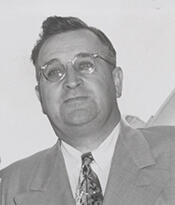
Here you will find contact information for Representative Herman Carl Andersen, including email address, phone number, and mailing address.
| Name | Herman Carl Andersen |
| Position | Representative |
| State | Minnesota |
| District | 7 |
| Party | Republican |
| Status | Former Representative |
| Term Start | January 3, 1939 |
| Term End | January 3, 1963 |
| Terms Served | 12 |
| Born | January 27, 1897 |
| Gender | Male |
| Bioguide ID | A000179 |
About Representative Herman Carl Andersen
Herman Carl Andersen (January 27, 1897 – July 26, 1978) was a U.S. Representative from Minnesota who served in the United States Congress from 1939 to 1963. A member of the Republican Party, he held his seat for 12 consecutive terms, becoming one of the longer-serving members of the Minnesota delegation during the mid-twentieth century. Over the course of his tenure, he contributed to the legislative process during a period marked by the Great Depression’s aftermath, World War II, the early Cold War, and the beginnings of the modern civil rights era.
Born on January 27, 1897, Andersen grew up in the Upper Midwest, a region whose agricultural and small-town character would shape his later political concerns. His early life unfolded against the backdrop of rapid economic and social change in rural America, and he was exposed from a young age to the issues facing farmers, local businesses, and small communities. These formative experiences helped to inform his later emphasis on constituent service and attention to the practical effects of federal policy on everyday life in Minnesota.
Andersen’s education prepared him for public service in an era when higher learning was becoming increasingly important for political leadership. He pursued his studies with the aim of entering professional and civic life, gaining the skills and knowledge that would later support his work in Congress. His educational background, combined with his Midwestern upbringing, positioned him to understand both the technical aspects of legislation and the practical needs of his constituents.
Before his election to Congress, Andersen embarked on a career that reflected the economic and social structure of his home state. He became familiar with the concerns of rural communities, agricultural producers, and local institutions, building a reputation as a reliable advocate for regional interests. This early career experience provided him with a base of support and a detailed understanding of the issues that would dominate his later legislative agenda, including economic development, infrastructure, and the well-being of small towns and farming communities.
Andersen entered national politics as a Republican and was first elected to the U.S. House of Representatives from Minnesota in 1938, taking office on January 3, 1939. His service in Congress extended through 12 terms, ending on January 3, 1963. During these years, he participated in the democratic process as a member of the House of Representatives, representing the interests of his Minnesota constituents while the nation confronted war, postwar reconstruction, and domestic transformation. He took part in debates over federal spending, national defense, and social policy, and worked within the committee system that shaped much of the detailed legislative work of the House.
Throughout his congressional service, Andersen’s role was that of a steady, long-serving legislator who provided continuity for his district. He was part of the Republican contingent that often had to navigate periods of both majority and minority status in the House, requiring collaboration and negotiation across party lines. His extended tenure allowed him to gain seniority and influence within the institution, and he became a familiar figure in the Capitol as he advocated for Minnesota’s needs in areas such as agriculture, transportation, and regional development.
After leaving Congress in 1963, Andersen withdrew from national office but remained identified with the generation of lawmakers who had guided the United States through mid-century upheavals. His later years were spent away from the daily pressures of legislative life, as he witnessed the continued evolution of the political and social issues that had occupied his time in Washington. Herman Carl Andersen died on July 26, 1978, closing the life of a long-serving Republican representative who had devoted nearly a quarter-century to the U.S. House of Representatives and to the representation of Minnesota in the federal government.