Representative Herman Badillo
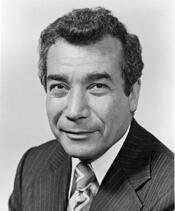
Here you will find contact information for Representative Herman Badillo, including email address, phone number, and mailing address.
| Name | Herman Badillo |
| Position | Representative |
| State | New York |
| District | 21 |
| Party | Democratic |
| Status | Former Representative |
| Term Start | January 21, 1971 |
| Term End | January 3, 1979 |
| Terms Served | 4 |
| Born | August 21, 1929 |
| Gender | Male |
| Bioguide ID | B000025 |
About Representative Herman Badillo
Herman Badillo (bah-DEE-yoh, Spanish: [baˈðiʝo]; August 21, 1929 – December 3, 2014) was an American lawyer, certified public accountant, and politician who served as borough president of The Bronx and as a United States Representative from New York from 1971 to 1979. A member of the Democratic Party for much of his career before later becoming a Republican, he was the first Puerto Rican elected Bronx borough president, the first Puerto Rican elected to the U.S. House of Representatives from the continental United States, and the first Puerto Rican mayoral candidate in a major city in the continental United States. Over four terms in Congress he contributed to the legislative process during a significant period in American history, participating in the democratic process and representing the interests of his South Bronx constituents.
Badillo was born in Caguas, Puerto Rico, on August 21, 1929. When he was 11 years old, both of his parents died of tuberculosis, and he was sent to live with an aunt in New York City. Growing up in the city’s public school system, he attended Haaren High School in Manhattan. He then enrolled at the City College of New York, where he earned a Bachelor in Business Administration in 1951. Pursuing a legal career, he attended Brooklyn Law School, receiving an LL.B. in 1954 and graduating first in his class. He was admitted to the New York State Bar in 1955, and in 1956 he also qualified as a certified public accountant, an unusual combination of professional credentials that helped shape his later work in public finance and urban policy.
Badillo became active in Democratic politics in New York in the late 1950s, joining the Caribe Democratic Club in 1958. He rose through the ranks of city and state government, holding various offices. He served as New York City Commissioner of Housing Preservation and Development, gaining prominence on issues of housing, urban renewal, and neighborhood stabilization. In January 1966 he assumed office as Bronx borough president, again breaking ground as the first Puerto Rican to hold that post. His tenure coincided with controversy over the fate of Bronx Borough Hall. The building had been granted landmark status in October 1965 by the Landmarks Preservation Commission after efforts led by his predecessor, Joseph F. Periconi, and several historians. During the 90-day review by the New York City Board of Estimate, the board voted on January 27, 1966, the last day of the review period, to revoke the landmark designation, deferring to the new borough president’s view. In 1968 a mysterious fire damaged part of the interior, and although the structure was still repairable, it was demolished in 1969. During this period Badillo also emerged as a citywide figure, seeking the Democratic nomination for mayor of New York City in 1969, the first of several mayoral bids.
In 1970 Badillo was elected to the United States House of Representatives from New York’s 21st District in the South Bronx, becoming the first Puerto Rican to serve in the U.S. House from the continental United States. A member of the Democratic Party at the time, he was re-elected for three subsequent consecutive terms, serving from 1971 to 1979. In Congress he served on the Committee on Education and Labor, where he played a central role in shaping urban and education policy, and on the Committee on Banking, Finance and Urban Affairs and the Small Business Committee, including a seat on the Minority Enterprise and General Oversight Subcommittee. He was a strong advocate for federal investment in urban centers and was instrumental in including job training for unemployed non‑English‑speaking citizens in the Comprehensive Manpower Act of 1973. During his tenure he supported legislation to counteract various forms of employment discrimination, including discrimination based on age and marital status. Although he would later become a vocal opponent of bilingual education, as a congressman he was one of the earliest champions of federal funding for bilingual education programs and was a key figure in the reauthorization of the Voting Rights Act, particularly in securing language-access provisions for minority voters. In 1976 he faced a primary challenge from South Bronx Councilman Ramon Velez for the Democratic nomination in the 21st District, but Badillo was renominated easily with approximately 75 percent of the vote. In December 1976 he joined four other Latino members of Congress in establishing the Congressional Hispanic Caucus, reflecting his growing national role as a spokesperson for Hispanic and urban issues.
Badillo’s congressional service overlapped with his repeated efforts to become mayor of New York City. He sought the Democratic nomination for mayor in 1969, 1973, 1977, 1981, and 1985. His strongest showing came in the 1973 Democratic primary, the first New York City mayoral election to include a primary runoff. In that race he finished second in the initial primary with 29 percent of the vote, behind City Comptroller Abraham Beame, who received 34 percent, and ahead of Representative Mario Biaggi with 21 percent and Assemblyman Albert H. Blumenthal with 16 percent. Badillo then lost to Beame in the runoff. In 1981 and 1985 he explored mayoral campaigns but withdrew before the primaries when his efforts failed to generate sufficient support. Later, after changing parties, he would again seek the mayoralty, this time as a Republican in 2001, but he lost in a landslide primary defeat to Michael Bloomberg, a businessman and political newcomer who went on to win the general election.
On December 31, 1977, Badillo resigned from Congress to become a deputy mayor of New York City under Mayor Edward I. Koch. He was one of seven deputy mayors appointed at the outset of Koch’s administration and served alongside figures such as Basil Paterson. In this capacity he was responsible for labor relations and community outreach, and he sought to advance an ambitious program to revitalize the South Bronx. His tenure was marked by a major public disagreement with Koch over the level of support and resources devoted to that revitalization effort. Frustrated by what he viewed as inadequate backing for his South Bronx agenda, Badillo resigned as deputy mayor in September 1979. Many observers later argued that he had made a significant career mistake in giving up a secure congressional seat for an appointed municipal post.
After leaving City Hall, Badillo returned to the practice of law in New York City while remaining active in state and national politics. In the 1982 Democratic gubernatorial primary he supported Mario Cuomo over incumbent Mayor Koch, who was also seeking the governorship. Following Cuomo’s victory, the new governor appointed Badillo in late 1983 as chairman of the State of New York Mortgage Agency, where Badillo worked on housing finance and mortgage issues. In 1985 he again considered challenging Koch for mayor in the Democratic primary, a contest that helped shape the city’s political landscape for the remainder of the decade. The following year, 1986, he was the Democratic nominee for New York State Comptroller but was defeated by the Republican incumbent, Edward Regan. During this period Badillo was also active in presidential politics, supporting Senator Alan Cranston for the Democratic presidential nomination in 1984 and Governor Michael Dukakis in 1988.
In the early 1990s Badillo increasingly aligned himself with New York’s emerging Republican and fusion coalitions. In 1993, though still formally a Democrat, he ran for New York City comptroller on a fusion ticket in tandem with Republican mayoral candidate Rudolph W. Giuliani. He simultaneously sought the Democratic nomination for comptroller but finished third in the primary behind Alan Hevesi and incumbent Elizabeth Holtzman. In the general election, Giuliani was elected mayor, while Badillo, running on the Republican and Liberal Party lines, lost to Hevesi. That same year, Eric Adams, then president of the Grand Council of Guardians, publicly accused Badillo of betraying his Hispanic heritage by being married to a white Jewish woman, Irma, his wife of 32 years who was suffering from Alzheimer’s disease, instead of a Latina. Badillo responded that voting on the basis of race was “the definition of racism” and had no place in a civilized multiracial society, adding that he would not apologize for the fact that his wife was Jewish.
During Giuliani’s mayoralty, Badillo held several influential positions. He served as the mayor’s special counsel on education policy and as chairman of the board of trustees of the City University of New York (CUNY). In these roles he advocated greater mayoral control over the public school system, a more rigorous curriculum, and reforms intended to improve academic standards, and he acted as Giuliani’s liaison to the city’s Board of Education. These positions and his increasingly conservative stances, particularly his later opposition to bilingual education despite his earlier support for it in Congress, earned him support among some conservatives but alienated him from much of the Puerto Rican political leadership that had long been his base. In 1999 he drew criticism for remarks about Latino immigrants from the Dominican Republic and Mexico, describing them as “pure Indians — Incas and Mayans who are about, you know, five feet tall with straight hair” and claiming they lacked a “tradition of education.” The comments provoked widespread condemnation, and he issued an apology two days later.
By the late 1990s Badillo had formally joined the Republican Party. He resigned as Giuliani’s education special counsel and as CUNY chairman when he announced his candidacy for mayor in 2001. Despite his longstanding support for Giuliani, his mayoral bid attracted little backing from the outgoing mayor or from Republican Party leaders, and he was decisively defeated in the Republican primary by Michael Bloomberg, who had only recently switched his own party registration to Republican. After this final mayoral campaign, Badillo continued to work in law and public policy. In 2005 he became “of counsel” to the New York City law firm Sullivan Papain Block McGrath & Cannavo P.C. The following year, 2006, he joined the conservative Manhattan Institute for Policy Research as a senior fellow, focusing on issues of education reform and urban policy. In January 2011 he became senior counsel in the New York office of the national personal injury law firm Parker Waichman Alonso.
Herman Badillo died on December 3, 2014, at Weill Cornell Medical Center in Manhattan of congestive heart failure at the age of 85. His career spanned more than half a century of public service and political engagement, during which he played a pioneering role for Puerto Ricans and other Latinos in New York City and national politics, while also provoking controversy for his evolving positions on race, language, and education.