Representative Herman August Metz
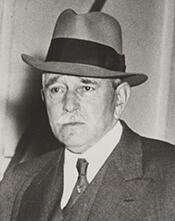
Here you will find contact information for Representative Herman August Metz, including email address, phone number, and mailing address.
| Name | Herman August Metz |
| Position | Representative |
| State | New York |
| District | 10 |
| Party | Democratic |
| Status | Former Representative |
| Term Start | April 7, 1913 |
| Term End | March 3, 1915 |
| Terms Served | 1 |
| Born | October 19, 1867 |
| Gender | Male |
| Bioguide ID | M000677 |
About Representative Herman August Metz
Herman August Metz (October 19, 1867 – May 17, 1934) was an American businessman, military officer, and Democratic politician who served one term as a U.S. Representative from New York from 1913 to 1915 and as New York City Comptroller from 1906 to 1909. Of German descent, he was born in New York City on October 19, 1867, to Edward J. and Frances K. Metz, immigrants from Germany. He attended both private and public schools in New York. Later in life, in recognition of his professional and civic achievements, he was awarded the honorary degree of Doctor of Science (Sc.D.) from Union College and the honorary degree of Doctor of Laws (LL.D.) from Manhattan College.
Metz began his business career at an early age. In 1881, directly from school, he entered the employ of P. Schulze-Berge as an office boy. Remaining with the firm through a series of consolidations and changes, he advanced steadily, becoming its vice president and general manager by 1893. By 1899 he had become the majority stockholder and president of the firm, then known as Victor Koehl & Co., which specialized in pharmaceuticals, chemicals, and dyestuffs. In 1903 the chemical and dyestuff department of the company was separated and incorporated as H. A. Metz & Co., while the manufacture of color and chemicals was organized as the Consolidated Color and Chemical Co., with Metz serving as president of both enterprises. Over the years he expanded his industrial interests, becoming president of H. A. Metz Laboratories, Inc., Ettrick Mills, Textileather Company, and the New York and Hanseatic Corporation. He was a member of numerous chemical and industrial societies and served as a director of several banks. In July 1926 his extensive dyestuff interests were consolidated into the General Dyestuff Corporation, of which he became president; at the time of his death he was chairman of its board of directors.
In addition to his business pursuits, Metz became active in civic and political affairs in New York. He was one of the founders and president of the Kings County Democratic Club in Brooklyn and emerged as a prominent figure in the city’s Democratic organization. He served as a member of the Board of Education of Brooklyn and later of the consolidated City of New York, reflecting his interest in public education. From 1906 to 1910 he held the important municipal office of Comptroller of the City of New York, overseeing the city’s finances during a period of rapid growth and modernization. He was appointed a member of the commission created by Governor Charles Evans Hughes to draft a new charter for New York City in 1907 and 1908, and later served on the charter commission appointed by Governor Nathan L. Miller in 1922. His public service also included membership as a commissioner of the State Board of Charities, directorship of the Interborough Rapid Transit Company, the presidency of the National Civic Club, and service as a governor of the Democratic and Reform Club of New York. He was a delegate to the Democratic National Conventions in 1904, 1908, and 1920, participating in national party deliberations.
Metz’s congressional career arose from his prominence in state and local politics. In 1912 he was the nominee of Kings County for governor of New York, but after the second ballot at the Democratic state convention he withdrew in favor of William Sulzer. Instead, he became the Democratic candidate for Sulzer’s congressional seat. Although the district was predominantly Republican and not one in which he resided, Metz was elected as a Democrat to the Sixty-third Congress and served from March 4, 1913, to March 3, 1915. During his single term in the U.S. House of Representatives, he served on the Committee on Claims and the Committee on Patents, contributing to the legislative process and representing the interests of his constituents during a significant period in American history. As a German-American businessman with extensive ties to German manufacturing interests, he favored American neutrality in the early years of the First World War. He was not a candidate for renomination in 1914 and, after leaving Congress, resumed his former business activities. In 1922 he was an unsuccessful candidate for election to the Sixty-eighth Congress.
Alongside his business and political careers, Metz maintained a long record of military service with the New York National Guard and the United States Army. He served in the Fourteenth Infantry, New York National Guard, rising through the ranks from first lieutenant to captain, lieutenant colonel, and ultimately brigadier general. During World War I he served on the home front as an ordnance officer with the rank of lieutenant colonel in the Twenty-seventh Division. After the war he continued his military association as a colonel in the Ordnance Department of the United States Army Officers’ Reserve Corps. On the eve of his retirement in 1931, he was elevated to the rank of brigadier general, marking the culmination of his military service.
Metz’s personal life included two marriages. In 1891 he married Laura A. Traudt; the marriage lasted until 1915, when the couple divorced. In 1916 he married again, to the former Mrs. Alice M. Norman (née Van Ronk), with whom he remained until his death. He was survived by his second wife, four sons, and a brother.
Herman August Metz died on May 17, 1934, in a hospital in New Rochelle, New York. He was interred in Kensico Cemetery in Westchester County, New York. In the years following his death, his memory was honored in Brooklyn through the naming of Hamilton-Metz Field, a 2.1-acre park in the Wingate neighborhood. Originally part of Alexander Hamilton High School, the field was transferred to the New York City Department of Parks in 1940 and later enlarged by adjoining parcels donated by the Metz family in memory of Metz and his wife, commemorating both his public service and his longstanding connection to the city.