Representative Herman Stump
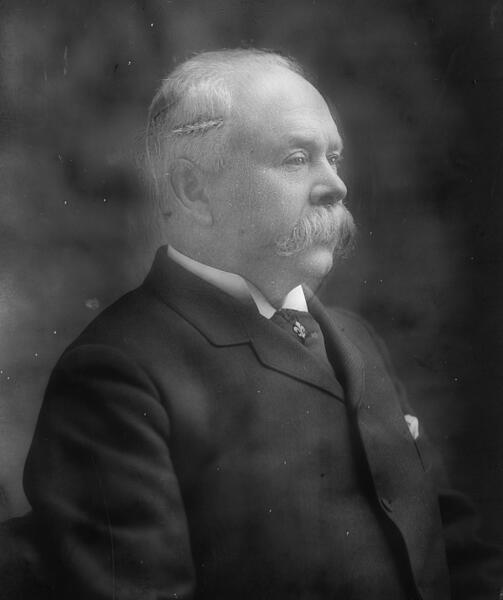
Here you will find contact information for Representative Herman Stump, including email address, phone number, and mailing address.
| Name | Herman Stump |
| Position | Representative |
| State | Maryland |
| District | 2 |
| Party | Democratic |
| Status | Former Representative |
| Term Start | December 2, 1889 |
| Term End | March 3, 1893 |
| Terms Served | 2 |
| Born | August 8, 1837 |
| Gender | Male |
| Bioguide ID | S001043 |
About Representative Herman Stump
Herman Stump Jr. (August 8, 1837 – January 9, 1917) was an American politician and lawyer who served as a Representative from Maryland in the United States Congress from 1889 to 1893. A member of the Democratic Party, he was most notable for his service in the Maryland Senate and as a member of the United States House of Representatives, where he contributed to the legislative process during two terms in office and represented the interests of his constituents during a significant period in American history.
Stump was born on Oakington Farm in Harford County, Maryland, the son of John Wilson Stump and Sarah (née Biays) Stump. He was part of a locally prominent family; his cousin was Judge Frederick Stump. He was educated by private tutors and later attended Delaware College (now the University of Delaware). After leaving Delaware College, he read law under the guidance of his cousin, attorney Henry W. Archer, and prepared for a professional career in the legal field.
On November 11, 1856, Stump was admitted to the bar and commenced the practice of law in Bel Air, Maryland. He quickly gained a reputation as a noted trial attorney and became particularly well known for his defense of several female defendants in prominent murder cases. Among these were cases involving the deaths of William Scott Ketchum and Nicholas McComas, in which his advocacy attracted considerable public attention. In addition to his legal work, Stump became active in the Maryland Militia, in which he attained the rank of colonel, a title by which he was commonly known. He also purchased a plantation near Bel Air known as “Waverly,” where he engaged in farming and livestock raising, establishing himself as both a lawyer and a landowner.
Stump entered public life as a Democrat and was elected to the Maryland State Senate in 1878. He served in the Senate until 1880, during which time he rose to positions of leadership within his party and the chamber. In 1879 he served as chairman of the state Democratic convention, reflecting his growing influence in Maryland politics. In 1880 he was chosen President pro tempore of the Maryland Senate. His tenure in the state legislature ended when he was defeated for re-election in 1881 by Edward M. Allen, but he remained an important figure in Democratic circles in Harford County and the state.
In 1888, Stump was elected as a Democrat to the United States House of Representatives. He served in the Fifty-first and Fifty-second Congresses from March 4, 1889, to March 3, 1893. During these two terms in Congress, he participated in the democratic process at the national level and represented Maryland during a period marked by debates over tariffs, economic policy, and federal authority in the post-Reconstruction era. Although specific committee assignments and legislative initiatives are less fully documented, his service placed him among the Democratic opposition to the Republican majority in the Fifty-first Congress and then within the Democratic majority in the Fifty-second Congress. He chose not to be a candidate for renomination in 1892, thereby concluding his House service after two terms.
Following the completion of his last term in Congress, Stump was appointed by President Grover Cleveland as U.S. Superintendent of Immigration. He held this federal executive post from April 8, 1893, to July 16, 1897. In this capacity he oversaw the administration of federal immigration laws during a period of increasing immigration to the United States and growing public debate over immigration policy. His tenure coincided with the consolidation of federal authority over immigration inspection and enforcement, and he played a role in shaping the early national framework for immigration administration.
After leaving federal office, Stump returned to Bel Air and resumed the practice of law, continuing in active practice until his retirement in 1902. In retirement he remained at his Waverly estate, where he focused on managing his property and agricultural interests. He continued to be regarded as a leading citizen of Harford County and maintained his connections to the legal and political communities, although he no longer held public office.
In 1903, Stump married Mary Fernandez de Velasco (1853–1944) of New York City. The marriage produced no children. He was a member of the Episcopal Church, reflecting his engagement with local religious and community life. Herman Stump Jr. died at his Waverly home near Bel Air on January 9, 1917. He was interred in St. Mary’s Cemetery in Emmorton, Maryland, closing a long career that had encompassed service as a trial lawyer, state legislator, member of Congress, and federal immigration official.