Representative Herman Toll
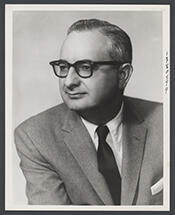
Here you will find contact information for Representative Herman Toll, including email address, phone number, and mailing address.
| Name | Herman Toll |
| Position | Representative |
| State | Pennsylvania |
| District | 4 |
| Party | Democratic |
| Status | Former Representative |
| Term Start | January 7, 1959 |
| Term End | January 3, 1967 |
| Terms Served | 4 |
| Born | March 15, 1907 |
| Gender | Male |
| Bioguide ID | T000297 |
About Representative Herman Toll
Herman Toll (March 15, 1907 – July 26, 1967) was an American politician and attorney who represented Pennsylvania in the United States House of Representatives from 1959 to 1967. A member of the Democratic Party, he supported the civil rights movement and sponsored legislation to create several federal agencies, including the U.S. Department of Urban Affairs and Housing. His four terms in Congress coincided with a significant period in American history, during which he participated in the legislative process and represented the interests of his constituents in the House of Representatives.
Toll was born in Bohuslav, a city about 60 miles (97 km) southeast of Kyiv in the Russian Empire (now in Ukraine), the son of Mechel (Max) Toll, a plaster contractor, and Rifkah (Rebecca) Toll. He immigrated with his family to the United States around 1910, part of the broader wave of Eastern European Jewish immigration in the early twentieth century. The family settled in Philadelphia, Pennsylvania, where Toll was raised in a working-class environment that shaped his later interest in social justice and public service. For most of his life he was a member of Temple Judea in Philadelphia, reflecting a strong connection to his Jewish heritage and community.
Toll pursued legal studies in Philadelphia and graduated from Temple University School of Law without first earning a college degree, which was not a requirement at the time. He was admitted to the bar and began practicing law in 1930. Over the ensuing decades he built a legal career that was closely tied to civic and community affairs. He became active in a range of organizations, including the Pennsylvania Prison Society and the Philadelphia Housing Association, and he was a member of B’nai B’rith. He also served on the board of directors of the Crusader Savings & Loan Association, gaining experience in financial and housing matters that would later inform his legislative interests.
Toll’s formal political career began in the Pennsylvania House of Representatives, to which he was elected in 1950 as a Democrat. In the state legislature he rose to become vice chairman of the Judiciary Committee, where he played a key role in advancing civil rights and labor-related measures. He helped secure passage of Pennsylvania’s first Fair Employment Practices law, an early state-level effort to combat employment discrimination. He was re-elected to the Pennsylvania House in 1952, 1954, and 1956, establishing a reputation as an intelligent, articulate, and hard-working legislator with a strong commitment to fairness and equal opportunity.
In 1958 Toll was elected to the United States Congress, becoming the first Jewish representative of Pennsylvania’s sixth congressional district. A member of the Democratic Party, he entered the House of Representatives at the start of the 86th Congress in January 1959 and would serve four consecutive terms, from 1959 to 1967. He was re-elected three times, with his final two terms representing Pennsylvania’s fourth congressional district following redistricting. In his first term he was appointed to the House Judiciary Committee and its Subcommittee on Immigration and Nationality, positions that allowed him to influence federal policy on civil rights, immigration, and the administration of justice. During his years in Congress he supported the civil rights movement and worked actively for strong federal civil rights legislation. In a February 19, 1964, letter to Dr. Martin Luther King Jr., he pledged to “continue to work for the strongest possible Civil Rights legislation at the earliest possible date,” underscoring his alignment with the national civil rights leadership.
During his time in the U.S. Congress, Toll sponsored legislation to create several federal agencies and initiatives aimed at improving urban life, youth opportunities, and international peace. Among the proposals he advanced were the establishment of Federal Recreation Services, the Youth Conservation Corps, the Department of Urban Affairs and Housing, and the U.S. Disarmament Agency for World Peace. These efforts reflected his interest in urban policy, housing, recreation, and arms control, and they placed him among those legislators seeking to expand the federal government’s role in addressing social and international challenges during the postwar era. Colleagues and contemporaries described him as passionate about politics, deeply engaged in legislative work, and endowed with what one 1959 profile in The Canadian Jewish Chronicle called “the quick, Talmudic mind of his grandfather, a learned rabbi.”
Toll’s dedication to public service was evident in his personal habits and family life. His son Gilbert later recalled that his father “was rarely home… Even when he was home he sometimes would have meetings there. I think he took my brother and me fishing once and to one ballgame. Politics was his life.” It was not unusual for him to conduct meetings during his commute on the train between Philadelphia and Washington, using every available moment to attend to constituent concerns and legislative business. Though not naturally outgoing, he was regarded as articulate and diligent, with a serious, methodical approach to the responsibilities of office.
Toward the end of his third term in Congress, Toll was diagnosed with amyotrophic lateral sclerosis (ALS), commonly known as Lou Gehrig’s disease. The progressive nature of the illness limited his ability to campaign actively for re-election, yet he nevertheless won a fourth term to the House. Because of his deteriorating health, he served that final term in absentia and did not make appearances on the House floor. Recognizing the severity of his condition, he chose not to be a candidate for re-election in 1966. He continued to hold office until shortly before his death, remaining on the rolls of the House until his term concluded in 1967.
Herman Toll died on July 26, 1967, at the age of 60. At the time of his death he was survived by his wife, the former Rose Ornstein, who later carried on the family’s tradition of public service by serving in the Pennsylvania State Legislature from 1970 to 1974. The couple had two sons, Sheldon and Gilbert, both of whom became attorneys. He was also survived by his brother, Albert Toll, whose sons Robert (Bob) Toll and Bruce Toll followed their father into the real estate business and became known as the founders of Toll Brothers, a major homebuilding company. Toll’s life and career placed him among the notable Jewish members of the United States Congress, and his legislative work in civil rights, urban affairs, and social policy left a distinct mark on mid-twentieth-century American public life.