Representative Herschel Millard Hogg
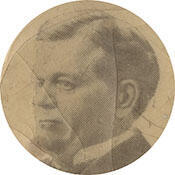
Here you will find contact information for Representative Herschel Millard Hogg, including email address, phone number, and mailing address.
| Name | Herschel Millard Hogg |
| Position | Representative |
| State | Colorado |
| District | 2 |
| Party | Republican |
| Status | Former Representative |
| Term Start | November 9, 1903 |
| Term End | March 3, 1907 |
| Terms Served | 2 |
| Born | November 21, 1853 |
| Gender | Male |
| Bioguide ID | H000703 |
About Representative Herschel Millard Hogg
Herschel Millard Hogg (November 21, 1853 – August 27, 1934) was a Republican U.S. Representative from Colorado who served in the United States Congress from 1903 to 1907. Born in Youngstown, Ohio, he attended the common schools before pursuing higher education in the Midwest. He enrolled at Monmouth College in Monmouth, Illinois, where he received a Bachelor’s degree in June 1876. Continuing his studies at Monmouth, he pursued legal training and earned a Master’s degree in 1879, having been admitted to the bar in Illinois in 1878.
After his admission to the bar, Hogg commenced the practice of law in Indianola, Iowa. His early professional and personal life were rooted there; on June 17, 1880, he married Josephine Houghtaling in Indianola. In 1881 he moved west to Gunnison, Colorado, where he resumed the practice of law and quickly became involved in local public affairs. He served as city attorney of Gunnison in 1882 and 1883, marking the beginning of a long career in public legal service in Colorado.
Hogg’s legal and political influence expanded as he took on more prominent prosecutorial roles. He served as district attorney of the seventh judicial district of Colorado from 1885 to 1893, a period in which he handled legal matters across a broad and developing region of the state. In 1888 he moved to Telluride, Colorado, where he again served in municipal office as city attorney from 1890 to 1898. At the same time, he held the position of county attorney of San Miguel County, Colorado, from 1890 to 1902, consolidating his reputation as a leading legal figure in southwestern Colorado.
Hogg was elected as a Republican to the Fifty-eighth and Fifty-ninth Congresses, serving in the U.S. House of Representatives from March 4, 1903, to March 3, 1907. During his two terms in office, he represented Colorado’s interests in a period of significant national growth and reform and participated actively in the legislative process. Among his notable contributions was the introduction of a bill in 1906 to designate Mesa Verde as a national park, reflecting his engagement with conservation and the protection of cultural resources. A companion bill was introduced in the Senate by Senator Thomas M. Patterson, and the legislation was ultimately signed into law by President Theodore Roosevelt on June 29, 1906, establishing Mesa Verde National Park.
Following the conclusion of his congressional service, Hogg returned to Colorado and resumed the practice of law in Cortez. He remained active in his profession and in regional affairs until he retired from political life in 1915. In addition to his legal and political work, he engaged in mining, an industry central to Colorado’s economy at the time, and later resided in Denver, Colorado.
Hogg’s later years were also marked by his involvement in the development of property and agriculture in the Telluride area. In 1899, he and his wife had built a residence at 123 North Aspen Street in Telluride, known as the Hogg House, where they lived for ten years. He also owned a ranch at Deep Creek Mesa, four miles west of Telluride, commonly referred to as Hogg Ranch. The ranch played an important role in the development of dairy and cattle operations and the cultivation of hay in the region. Both the Hogg House and Hogg Ranch have been recognized for their historic and cultural significance in the Telluride area.
Herschel Millard Hogg died on August 27, 1934, in Denver, Colorado. He was interred in Crown Hill Cemetery, leaving behind a legacy as a lawyer, public servant, and legislator who helped shape both the legal institutions and the physical and cultural landscape of Colorado during a formative period in the state’s history.