Representative Hervey Chittenden Calkin
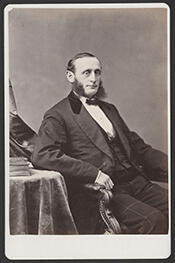
Here you will find contact information for Representative Hervey Chittenden Calkin, including email address, phone number, and mailing address.
| Name | Hervey Chittenden Calkin |
| Position | Representative |
| State | New York |
| District | 7 |
| Party | Democratic |
| Status | Former Representative |
| Term Start | March 4, 1869 |
| Term End | March 3, 1871 |
| Terms Served | 1 |
| Born | March 23, 1828 |
| Gender | Male |
| Bioguide ID | C000047 |
About Representative Hervey Chittenden Calkin
Hervey Chittenden Calkin (March 23, 1828 – April 20, 1913) was an American tradesman and Democratic politician who served one term as a U.S. Representative from New York from 1869 to 1871. His congressional service took place during a significant period in American history, in the years following the Civil War and during Reconstruction, when he participated in the legislative process and represented the interests of his New York constituents in the House of Representatives.
Calkin was born in Malden, New York, on March 23, 1828. He received his early education locally in New York. In 1847 he moved to New York City, where he began building the career in skilled trades that would precede and inform his later political life.
Upon his arrival in New York City, Calkin found employment at the Morgan Iron Works, where he worked for five years. In 1852 he entered business on his own account, commencing work as a plumber and coppersmith in partnership with his brother. Their enterprise expanded beyond plumbing and coppersmithing to include the sale of various metal goods, such as stoves and tinware. Through this work, Calkin became closely associated with the city’s industrial and commercial development. He also emerged as an advocate for the creation of a domestic shipbuilding industry, arguing that the United States should build its own ships rather than rely on vessels purchased from England, a stance that reflected broader mid‑nineteenth‑century debates over American industrial self-sufficiency and maritime strength.
Calkin entered national politics as a member of the Democratic Party. He was elected as a Democrat to the Forty-first Congress and served as a U.S. Representative from New York from March 4, 1869, to March 3, 1871. During this single term in office, he contributed to the legislative process at a time when Congress was addressing issues related to Reconstruction, economic development, and the reintegration of the Southern states into the Union. As a member of the House of Representatives, Hervey Chittenden Calkin participated in the democratic process and represented the interests of his constituents in New York. He was not a candidate for reelection in 1870, thereby concluding his congressional service after one term.
After leaving Congress in 1871, Calkin returned to New York City and resumed his former business pursuits in the plumbing, coppersmithing, and metalware trade. He continued in these activities for more than three decades, remaining part of the city’s commercial life until his retirement in 1904. In addition to his business endeavors, he demonstrated an inventive streak; in 1871 he received a patent for a life raft constructed of two cylindrical metal floats with conical ends and a plank deck, reflecting his ongoing interest in maritime affairs and practical engineering solutions.
Hervey Chittenden Calkin spent his later years in New York. He died in the Bronx on April 20, 1913. He was interred in Woodlawn Cemetery in New York City, a resting place for many prominent figures of his era, thus closing the life of a tradesman-turned-legislator who bridged the worlds of industry and politics during a transformative period in American history.