Representative Hezekiah Bradley Smith
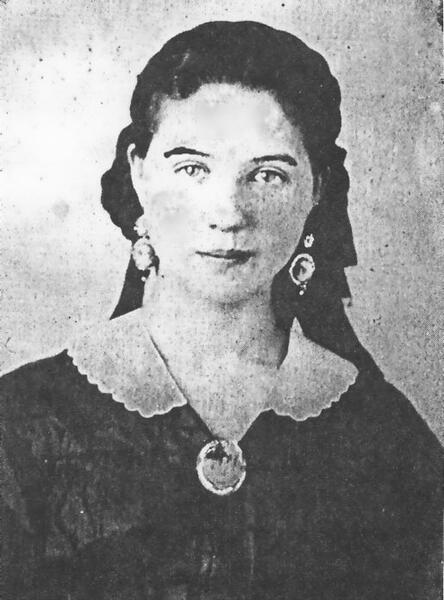
Here you will find contact information for Representative Hezekiah Bradley Smith, including email address, phone number, and mailing address.
| Name | Hezekiah Bradley Smith |
| Position | Representative |
| State | New Jersey |
| District | 2 |
| Party | Democratic |
| Status | Former Representative |
| Term Start | March 18, 1879 |
| Term End | March 3, 1881 |
| Terms Served | 1 |
| Born | July 24, 1816 |
| Gender | Male |
| Bioguide ID | S000549 |
About Representative Hezekiah Bradley Smith
Hezekiah Bradley Smith (July 24, 1816 – November 3, 1887) was an American inventor, industrialist, and Democratic Party politician who represented New Jersey’s 2nd congressional district in the United States House of Representatives for one term from 1879 to 1881. Over the course of his career he secured more than forty United States patents, helped mechanize the woodworking industry, and built a model industrial village at Smithville, New Jersey, while also serving in both the U.S. House of Representatives and the New Jersey Senate.
Smith was born in Bridgewater, Vermont, on July 24, 1816. He received an eighth-grade education before learning the trade of cabinet making, and he established his first shop in a former tannery building in the Woodstock District of Vermont. In May 1846 he left the Woodstock area with Eveline Verona English, whom he married in a civil ceremony in their Boston hotel room. The couple soon moved to Manchester, New Hampshire, where Smith earned a living carving wooden patterns while acquainting himself with the emerging machine business. Their first child, Ella, was born there in July 1846. During a scarlet fever epidemic in the spring of 1847, known locally as “ship fever,” Eveline returned with Ella to Woodstock; the couple would never again live together as husband and wife.
As Smith’s mechanical interests deepened, he moved to Lebanon, New Hampshire, where he began manufacturing items to other people’s specifications, including Howe sewing machines. He brought the first sewing machine ever seen in Woodstock and gave it to Eveline, who was a skilled tailor, thereby helping secure her financial independence. Smith later relocated to Boston, Massachusetts, and then to Lowell, Massachusetts, where he began manufacturing woodworking machinery of his own design. Although he continued to visit Eveline in Woodstock and fathered three sons with her—Elton (born 1848), Eugene V. (born 1851), and Edward A. (born 1853)—their relationship remained effectively separated. In Lowell in the summer of 1854, Smith met Agnes Matilda Gilkerson (1838–1881), a mill worker in a textile factory who lived in a boarding house. Impressed by her abilities, Smith hired her as his confidential secretary and arranged for her to attend Mrs. Rodgers’ finishing school. By 1859 she had persuaded him to support further education, and he sent her to live with the family of the manager of his Philadelphia sales office. There she attended Penn Medical University, graduating in the spring of 1861 with a medical degree and a major in chemistry.
In 1865 Smith traveled to Medford, New Jersey, where he negotiated with Benjamin Shreve, who held a $100,000 investment in his late brother’s business. Smith managed to acquire virtually the entire town of Shreveville in Eastampton Township, Burlington County, for $20,000. Before relocating to this new property, which he soon renamed Smithville, he made a final trip to Woodstock to the home he had purchased in 1861 for Eveline. There he demanded a divorce, which she refused. Smith then demanded the return of all his letters to her since 1847 and burned them in her stove, transferred the house into Eveline’s maiden name at the town clerk’s office, and opened a bank account in that name with a small deposit. At his sister’s house he obtained the family Bible, cut out the entries recording his marriage and children with a pocketknife, and burned the scraps in the stove. Convinced he had effectively severed the marriage, he left Woodstock and never returned. Later in 1865 he and Agnes Gilkerson were married in a civil ceremony in Lowell, and the couple settled in Smithville. There Smith expanded his woodworking machinery enterprise while Agnes practiced medicine, prepared and sold herbal remedies, and edited and wrote for the New Jersey Mechanic, a trade journal published by Smith in which she also advertised her medical products.
Smith’s industrial career was marked by prolific invention and innovation. Over his lifetime he received more than forty patents from the United States Patent Office, and the Smithsonian Institution has credited him with helping move the woodworking trade from reliance on hand tools to mechanized production. In 1878 he incorporated his enterprise as the H.B. Smith Machine Company, centered in Smithville. His patents included a series of improvements in mortising machines (such as U.S. patents 6,343 of April 17, 1849; 10,422 of January 10, 1854; 13,663 of October 9, 1855; 17,701 of June 30, 1857; and 25,221 of August 23, 1859), a balanced head for molding machines (U.S. patent 20,824 of July 6, 1858), improvements in planing machines (U.S. patents 50,178 of September 26, 1865, and 50,637 of October 24, 1865), improvements in tenoning machines (U.S. patent 52,219 of January 23, 1866), and an improved scroll saw (U.S. patent 138,103 of April 22, 1873). Beyond woodworking tools, he developed and manufactured the American Star Bicycle, an unconventional design with a large rear driving wheel carrying the rider and a smaller front steering wheel. Driven by a ratchet mechanism and equipped with a hand brake and sprung leather seat, the Star sold for about $150 at a time when the average annual income was roughly $500. Though not a major commercial success, it was fast and well suited for racing, endurance rides, and stunt exhibitions, and it served as an effective advertisement for the Smith Machine Company. Smith also produced what is regarded as the first steam-driven vehicle operated in New Jersey, though only a single example was built before his death halted further development. A prototype of an autogiro was reportedly on his desk at the time of his death. One of his later patents, U.S. patent 398,548 of February 26, 1889, covered a steam-powered tricycle, reflecting his continued interest in powered transportation.
Smith entered national politics as a Democrat from New Jersey. He was elected to the Forty-sixth United States Congress as the representative of New Jersey’s 2nd congressional district and served one term from March 4, 1879, to March 3, 1881. As a member of the Democratic Party representing New Jersey, he contributed to the legislative process during a significant period in American history, participating in the democratic process and representing the interests of his constituents. During the 1878 campaign it became publicly known that he was a bigamist, owing to his unresolved first marriage to Eveline and his subsequent marriage to Agnes. Although he was seated and served his full term, he was not re-elected to the Forty-seventh Congress. Contemporary observers and later commentators have suggested that his defeat likely reflected broader national political trends, as James A. Garfield’s Republican Party dominated the 1880 elections, rather than a specific electoral repudiation of Smith’s personal life.
After leaving the U.S. House of Representatives, Smith remained active in New Jersey politics. He was elected to the New Jersey Senate and served from 1883 to 1885, continuing to advance the interests of his district while overseeing his industrial operations in Smithville. His wife Agnes continued her medical practice and editorial work until her death from cancer in January 1881. The couple had no children. Following her death, Smith commissioned an Italian marble statue in her likeness and placed it on a brick pedestal under an iron canopy in the formal garden of the Smithville mansion, a prominent memorial that reflected both his personal attachment and his penchant for public display.
Smith died in Smithville, Burlington County, New Jersey, on November 3, 1887. He was buried beside his second wife in the Saint Andrews section of Pine Street Cemetery in Mount Holly, New Jersey. Anticipating possible efforts by his Vermont family to reclaim his remains, he arranged to be interred in an iron coffin enclosed within an iron cage set in concrete. In 1897, upon the death of his mother, his eldest son Elton Smith traveled to Mount Holly in an attempt to remove his father’s body for reburial in Woodstock next to Eveline, but the elaborate burial arrangements made exhumation impossible. Elton then ordered the statue of Agnes in the Smithville garden to be toppled, broken, ground to dust, and scattered along the Rancocas Creek, using workers from the family business. Smith’s papers are preserved in Special Collections and University Archives at Rutgers University Libraries in New Brunswick, New Jersey. His legacy extends into modern public life through his descendants; his great-great-great-grandson is former Congressman Jim Marshall of Georgia.