Representative Hiram Pitt Bennet
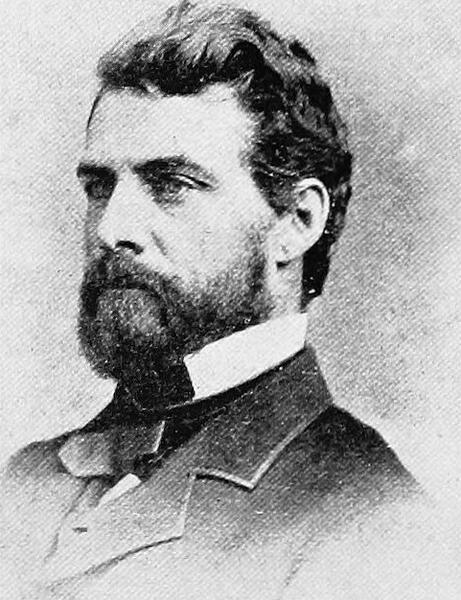
Here you will find contact information for Representative Hiram Pitt Bennet, including email address, phone number, and mailing address.
| Name | Hiram Pitt Bennet |
| Position | Representative |
| State | Colorado |
| District | -1 |
| Party | Conservative Republican |
| Status | Former Representative |
| Term Start | July 4, 1861 |
| Term End | March 3, 1865 |
| Terms Served | 2 |
| Born | September 2, 1826 |
| Gender | Male |
| Bioguide ID | B000369 |
About Representative Hiram Pitt Bennet
Hiram Pitt Bennet (September 2, 1826 – November 11, 1914) was a Congressional delegate from the Territory of Colorado, Colorado Secretary of State, and a prominent early political leader in several western territories. He was born in Carthage, Maine, and in 1831 moved with his parents to Richland County, Ohio, where the family settled permanently. Bennet attended both public and private schools in Ohio and later enrolled at Ohio Wesleyan University in Delaware, Ohio, receiving the education that prepared him for a career in teaching, law, and public service.
In 1850 Bennet moved to northwestern Missouri, where he took a position as a schoolteacher. While engaged in teaching, he studied law and was admitted to the bar in 1851. He began his legal practice in western Iowa and later established himself in Glenwood, Iowa. His abilities were quickly recognized, and in 1852 he was appointed judge of the circuit court of Iowa, an early indication of the trust placed in his legal judgment and public character.
Bennet moved farther west in 1854 to the Nebraska Territory, settling in Nebraska City and continuing the practice of law. He entered territorial politics soon after his arrival. In 1855 he ran as a Republican candidate for the Thirty-fourth Congress, unsuccessfully contesting the election of Bird B. Chapman. Undeterred, he remained active in territorial government, serving as a member of the Territorial Council in 1856. In 1858 he was elected to the Territorial House of Representatives, where he served as speaker, demonstrating his growing influence in the political affairs of the Nebraska Territory. In 1859 Bennet moved again, this time to Denver in what would become the Territory of Colorado, where he continued his legal practice and soon emerged as a leading figure in the new community.
Upon the admission of the Territory of Colorado to representation in Congress, Bennet was elected as a Conservative Republican delegate to the Thirty-seventh Congress. He was the first Territorial Representative for Colorado in 1862 and was reelected to the Thirty-eighth Congress. His service in Congress extended from August 19, 1861, to March 3, 1865, encompassing two terms during a critical period in American history marked by the Civil War. As a member of the Conservative Republican Party representing Colorado, Bennet contributed to the legislative process and participated in the democratic governance of the nation, representing the interests of his constituents in the developing territory. He was not a candidate for renomination in 1864. During his tenure, he played an important role in advancing Colorado’s political status, introducing the first bill for Colorado statehood in 1863 and helping to lay the groundwork for its eventual admission to the Union.
After leaving Congress, Bennet continued to hold important offices in Colorado’s territorial and state governments. He served as Secretary of State of Colorado in 1867, participating in the organization and administration of the territory’s official affairs. On March 26, 1869, he was appointed postmaster of Denver, Colorado, a position he held until May 27, 1874, when a successor was appointed. With Colorado’s transition from territory to statehood, Bennet remained active in public life and served as a member of the first Colorado State Senate in 1876, contributing to the establishment of the state’s initial legislative framework.
In 1888 Bennet was appointed “State Agent” for Colorado, a position in which he served until 1895. In this capacity he was responsible for recovering lands belonging to the State of Colorado that had been wrongfully disposed of, working to protect and restore the state’s public domain and financial interests. His efforts in this role reflected his long-standing commitment to the orderly development and legal integrity of the state’s institutions and resources.
Bennet retired from active public life in 1899 and continued to reside in Denver, Colorado, during his later years. He lived there until his death on November 11, 1914. He is interred in Riverside Cemetery in Denver, a resting place for many of the city’s early leaders. His legacy in Colorado is also commemorated in the naming of the town of Bennett, Colorado, which was named in his honor, reflecting the lasting impact of his service on the state’s early political and civic development.