Senator Hiram Bingham
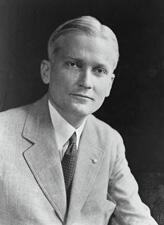
Here you will find contact information for Senator Hiram Bingham, including email address, phone number, and mailing address.
| Name | Hiram Bingham |
| Position | Senator |
| State | Connecticut |
| Party | Republican |
| Status | Former Representative |
| Term Start | January 8, 1925 |
| Term End | March 3, 1933 |
| Terms Served | 2 |
| Born | November 19, 1875 |
| Gender | Male |
| Bioguide ID | B000470 |
About Senator Hiram Bingham
Hiram Bingham III, born on November 19, 1875, in Honolulu in the then-Kingdom of Hawai‘i, was an American academic, explorer, and politician who served as a United States Senator from Connecticut from 1925 to 1933. He was a member of a prominent New England missionary family: his grandfather, Hiram Bingham I (1789–1869), was an American missionary to the Kingdom of Hawai‘i, and his father, Hiram Bingham II (1831–1908), continued that work as a missionary in Hawai‘i as well. This lineage of public and religious service shaped Bingham’s early outlook and later career in exploration and public life. He was also part of a wider family network that included Hiram Bingham IV (1903–1988), who would later serve as U.S. Vice Consul in Marseille, France, during World War II and rescue Jews from the Holocaust, and Harry Payne Bingham (1887–1955), an American financier and philanthropist.
Bingham spent his early years in Hawai‘i before being sent to the mainland United States for schooling. He attended schools in Massachusetts and later enrolled at Phillips Academy in Andover. He went on to Yale University, graduating in 1898. After Yale, he pursued graduate studies at the University of California, Berkeley, and then at Harvard University, where he received a Ph.D. in Latin American history. His academic training, particularly in history and geography, laid the foundation for his later work as an explorer and scholar of South American civilizations.
Bingham began his professional career in academia. He joined the faculty of Princeton University as a lecturer and later became an instructor in history and politics. In 1907 he moved to Yale University, where he taught Latin American history and geography and eventually became a professor. During this period he developed a strong interest in the Andes and pre-Columbian cultures, which led him to organize and lead a series of expeditions to South America. His academic work and field research were closely intertwined, and he became known for combining scholarly inquiry with extensive travel and exploration.
Bingham achieved international fame as an explorer through his expeditions to Peru in the early twentieth century. In 1911, while leading a Yale Peruvian Expedition, he brought to wider attention the Incan site of Machu Picchu, located high in the Andes above the Urubamba River. Although local residents and Peruvian authorities were aware of the site, Bingham’s detailed documentation, photographs, and subsequent publications introduced Machu Picchu to the broader world and to the academic community. He returned to Peru on further expeditions in 1912 and 1914–1915, conducting archaeological and geographical investigations that enhanced understanding of Incan civilization. His accounts, including the widely read book “Lost City of the Incas,” helped cement his reputation as a leading explorer of his era.
During World War I, Bingham served in the United States Army Air Service. He was involved in the training of aviators and rose to the rank of lieutenant colonel. His wartime service broadened his experience beyond academia and exploration and increased his public profile. After the war, he continued to be active in civic and educational affairs in Connecticut, maintaining ties to Yale and to various historical and geographical societies. His growing prominence in public life and his longstanding Republican affiliations led him toward elective office.
Hiram Bingham entered national politics as a member of the Republican Party from Connecticut. In 1924 he was elected to the United States Senate in a special election and then won a full term, serving as a Senator from Connecticut in the United States Congress from 1925 to 1933. His service in Congress occurred during a significant period in American history, spanning the later years of the Roaring Twenties and the onset of the Great Depression. As a member of the Senate, Hiram Bingham participated in the democratic process and represented the interests of his constituents, contributing to the legislative process during two terms in office. He served on several committees, including those dealing with aviation and foreign relations, areas in which his background in exploration and military aviation gave him particular expertise. His tenure included involvement in debates over economic policy, tariff legislation, and the federal government’s response to the emerging economic crisis at the end of the 1920s.
After leaving the Senate in 1933, Bingham returned to private life, remaining active in writing, lecturing, and historical and geographical organizations. He continued to be associated with Yale and with scholarly discussions of Andean archaeology and exploration, and his earlier work on Machu Picchu remained a central part of his public identity. In his later years he divided his time between public speaking, writing memoirs and accounts of his travels, and participating in civic and educational causes in Connecticut and beyond. Hiram Bingham III died on June 6, 1956, in Washington, D.C. His life and career linked the missionary heritage of his forebears in the Kingdom of Hawai‘i with the academic, exploratory, and political currents of the United States in the first half of the twentieth century, and his family’s broader legacy included figures such as Hiram Bingham IV, who rescued Jews from the Holocaust, and Harry Payne Bingham, a noted financier and philanthropist.