Representative Hiram Ypsilanti Smith
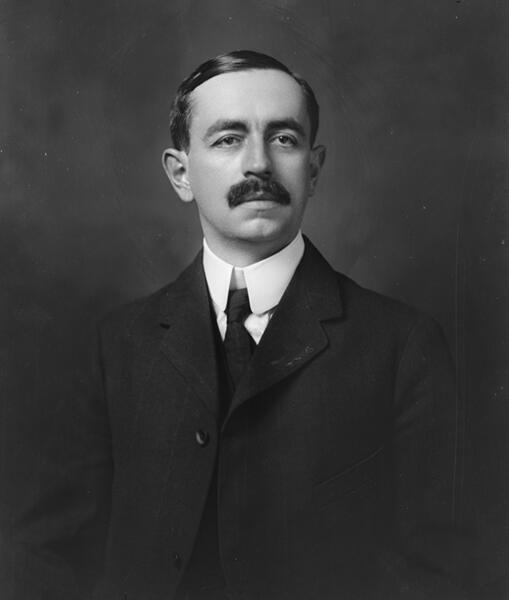
Here you will find contact information for Representative Hiram Ypsilanti Smith, including email address, phone number, and mailing address.
| Name | Hiram Ypsilanti Smith |
| Position | Representative |
| State | Iowa |
| District | 7 |
| Party | Republican |
| Status | Former Representative |
| Term Start | December 3, 1883 |
| Term End | March 3, 1885 |
| Terms Served | 1 |
| Born | March 22, 1843 |
| Gender | Male |
| Bioguide ID | S000550 |
About Representative Hiram Ypsilanti Smith
Hiram Ypsilanti Smith (March 22, 1843 – November 4, 1894) was a nineteenth-century Republican politician, lawyer, and federal clerk who represented Iowa in the United States House of Representatives. A member of the Republican Party, he served one brief term in Congress from 1884 to 1885, during which he represented Iowa’s 7th congressional district and contributed to the legislative process at a significant period in American history. He entered the House after winning a special election to complete the term of Representative John A. Kasson, who had been appointed United States Envoy to Germany.
Smith was born in Piqua, Miami County, Ohio, on March 22, 1843. In 1850, he moved with his parents to Rock Island, Illinois, and in 1854 the family relocated again to Des Moines, Iowa, which would remain his principal home and the center of his professional and political life. He attended the public schools in these communities, receiving the basic education that prepared him for later legal and governmental work. In 1861, at the outset of the Civil War era, he enlisted in the Iowa Militia for service against Native American tribes, reflecting the frontier and security concerns that shaped much of Iowa’s early statehood period.
In 1862, Smith began his federal service when he was appointed a clerk in the Post Office Department in Washington, D.C. He held that position until 1864, when he was transferred to the United States Treasury Department. He continued as a clerk in the Treasury until 1865, gaining experience in federal administration during the closing years of the Civil War. These early clerical posts introduced him to the workings of the national government and provided a foundation for his later legal and political career.
After leaving federal service, Smith pursued formal legal training. He enrolled at Albany Law School in Albany, New York, from which he graduated in 1866. Later that same year he was admitted to the bar and commenced the practice of law in Des Moines, Iowa. Establishing himself as a practicing attorney, he built a professional reputation that led to his appointment and election to public legal offices. From 1875 to 1879, he served as district attorney of the fifth judicial district of Iowa, prosecuting cases and representing the state in significant legal matters. His work as district attorney enhanced his standing within the Republican Party and among the legal community of central Iowa.
Smith’s political career advanced further when he was elected to the Iowa Senate, where he served from 1882 to 1884. As a state senator, he participated in shaping Iowa’s laws during a period of economic growth and political realignment in the post–Civil War Midwest. His legislative experience at the state level positioned him as a viable candidate for national office when a vacancy arose in Iowa’s 7th congressional district. In 1884, with Republican Congressman John A. Kasson retiring from his seat in the U.S. House of Representatives, Smith became a candidate for the Republican nomination to succeed him. Kasson, a former Ambassador to Austria-Hungary, was a prominent figure in Iowa and national politics, and the contest to follow him attracted strong candidates.
During the 1884 election cycle, President Chester A. Arthur selected Kasson as the next United States Envoy to Germany, prompting Kasson to leave Congress early in August 1884. This development created the need for a double election in Iowa’s 7th congressional district in November 1884: one regular election to choose a representative for the upcoming Forty-ninth Congress, and a special election to select a representative to serve out the remainder of Kasson’s term in the Forty-eighth Congress. Smith’s closest competitor within the Republican Party for the congressional succession was Iowa State Treasurer Edwin H. Conger, who had been Smith’s classmate at Albany Law School. By the time of the district nominating convention, the two men agreed to seek different terms: Smith ran only for the shorter, unexpired term, while Conger sought the full term beginning with the Forty-ninth Congress. Both men secured the Republican nominations, and in the November 1884 elections Smith and Conger each defeated their respective opponents.
As a result, Hiram Ypsilanti Smith entered the U.S. House of Representatives as the member from Iowa’s 7th congressional district for the closing months of the Forty-eighth Congress. His service in Congress, often described as lasting three months, extended through the lame-duck session from December 2, 1884, to March 3, 1885. During this period, he participated in the democratic process and represented the interests of his constituents in a Congress grappling with issues of postwar economic policy, veterans’ affairs, and the evolving role of the federal government. Although his tenure was brief and he did not return for the subsequent Congress, his service formed part of the broader Republican ascendancy in Iowa during the late nineteenth century.
After leaving Congress at the expiration of his term in March 1885, Smith resumed the practice of law in Des Moines. He continued his legal career there for the remainder of his life, remaining an active figure in the city’s professional and civic circles. Hiram Ypsilanti Smith died in Des Moines on November 4, 1894. He was interred in Woodland Cemetery in Des Moines, Iowa, closing a career that had encompassed federal clerical service, local and state legal office, membership in the Iowa Senate, and a term in the United States House of Representatives.