Senator Hoke Smith
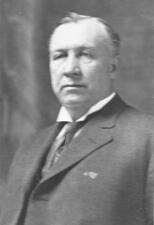
Here you will find contact information for Senator Hoke Smith, including email address, phone number, and mailing address.
| Name | Hoke Smith |
| Position | Senator |
| State | Georgia |
| Party | Democratic |
| Status | Former Representative |
| Term Start | April 4, 1911 |
| Term End | March 3, 1921 |
| Terms Served | 2 |
| Born | September 2, 1855 |
| Gender | Male |
| Bioguide ID | S000551 |
About Senator Hoke Smith
Michael Hoke Smith (September 2, 1855 – November 27, 1931) was an American attorney, newspaper owner, and Democratic politician who served as United States Secretary of the Interior from 1893 to 1896, as the 58th governor of Georgia in 1907–1909 and again in 1911, and as a United States senator from Georgia from 1911 to 1920. A prominent leader of the progressive movement in the South, he was also a white supremacist and segregationist who played a central role in the disenfranchisement of African American voters in Georgia in 1907. His service in Congress, from 1911 to 1921 according to contemporary congressional records, occurred during a significant period in American history, and he participated actively in the legislative process while representing the interests of his Georgia constituents.
Smith was born in Newton, Catawba County, North Carolina, on September 2, 1855, to Hildreth H. Smith, president of Catawba College, and Mary Brent Hoke. When he was two years old, his father accepted a position on the faculty of the University of North Carolina, and the family moved to Chapel Hill. Smith attended Pleasant Retreat Academy and received much of his education under the direct tutelage of his father. Too young to serve in the Civil War, he nonetheless grew up in a family closely connected to the Confederacy; his uncle, Robert Hoke, served as a Confederate general. In 1868, after his father lost his position at the university, the family relocated to Atlanta, Georgia, which would remain Smith’s home for the rest of his life and the principal base for his legal and political career.
Without attending law school, Smith read law in association with an Atlanta law firm and passed the Georgia bar examination in 1873 at the age of seventeen. He opened a small office in the James Building in downtown Atlanta and gradually built a substantial practice, particularly in personal injury litigation. His reputation grew as he successfully argued injury suits, many of them on behalf of railroad workers injured on the job. In 1882 he brought his brother, Burton Smith, into the practice; the two, both regarded as effective jury advocates, worked together for more than a decade. Approximately three-quarters of their cases involved personal injury claims, and they won the bulk of them, providing Smith with both financial security and a public profile that would later support his political ambitions.
Smith soon became active in local Democratic politics and civic affairs. He served as chairman of both the Fulton County and Georgia state Democratic conventions and was president of the Atlanta Board of Education, reflecting his growing influence in Atlanta’s public life. In 1887 he purchased the Atlanta Journal, using the newspaper as a powerful platform to shape public opinion. His strong editorial support for Grover Cleveland in the 1892 presidential election attracted national attention and helped secure him a high-level patronage appointment in the incoming Democratic administration. Smith’s ownership of the Journal made him a significant voice in Georgia and Southern politics and provided the vehicle through which he would later advocate both progressive reforms and racially discriminatory policies.
In 1893 President Cleveland appointed Smith as Secretary of the Interior. In that post, Smith worked to correct abuses in land patents previously obtained by railroad corporations, sought a more orderly administration of Indian affairs, and promoted the economic development of the South. A staunch defender of Cleveland’s “sound money” policies—pro-gold and opposed to the free coinage of silver—he campaigned across the country in 1896 for candidates aligned with Cleveland’s financial views. When William Jennings Bryan, an advocate of free silver, was nominated as the Democratic presidential candidate in 1896 in opposition to Cleveland’s principal policies, Smith publicly denounced Bryan’s silver platform but, through the Atlanta Journal, ultimately supported him as the party’s nominee. Smith resigned his cabinet post in 1896 in part to protect and affirm his loyalty to Cleveland. Returning to Atlanta, he resumed a lucrative law practice that reportedly netted around $25,000 per year, sold his interest in the Atlanta Journal in April 1900, and experimented with various investments, of which only his real estate holdings in the Atlanta area proved consistently successful. During this period he was instrumental in organizing North Avenue Presbyterian Church in Atlanta and was re-elected to the Atlanta Board of Education, maintaining his prominence in civic affairs.
By the early twentieth century, Smith had reemerged as a major political figure in Georgia, aligning himself with Populist leader Tom Watson, who had been Bryan’s vice-presidential running mate in 1896 and was one of the state’s most influential politicians. With Watson’s support, Smith ran for governor on a platform that combined certain progressive reforms with an explicit commitment to white supremacy and Black disfranchisement. He argued that the races were “different, radically different” and advocated separate tax systems for Black and white schools, declaring it “folly to spend the money of white men to give negroes a book education.” His inflammatory rhetoric and demagogic appeals to white racial fears during the 1906 gubernatorial campaign are widely regarded as a primary contributing factor to the 1906 Atlanta Race Riot, a violent white mob attack on Black residents. Elected governor in 1906 and taking office in 1907, Smith pursued a program of reforms in areas such as social welfare, education, and working hours, while simultaneously advancing Jim Crow policies. He championed a constitutional amendment that imposed literacy tests or property requirements for voting, coupled with a “grandfather clause” that exempted many poor white voters. This amendment effectively disenfranchised most Black Georgians and entrenched segregation and white political dominance in the state. Smith also supported railroad regulation and election reforms. After losing the backing of Watson, however, he was defeated for reelection by Joseph M. Brown. Smith later regained political strength and was again elected governor, briefly serving a second term in 1911.
In 1911, while still serving as governor, Smith was chosen by the Georgia General Assembly to fill the unexpired term of United States Senator Alexander S. Clay. He entered the Senate that year and, according to congressional records, served as a senator from Georgia from 1911 to 1921, winning reelection in 1914. His tenure in the Senate thus spanned the Progressive Era and World War I, a significant period in American history during which he contributed to the legislative process and represented the interests of his Georgia constituents as a member of the Democratic Party. Smith’s Senate service, often dated in other accounts as extending from 1911 to 1920, ended when he was defeated for reelection by his former ally and later rival, Tom Watson, in 1920. Throughout his two terms in office, he participated in debates over national economic policy, Southern development, and wartime measures, reflecting both his progressive commitments and his adherence to the racial order of the Jim Crow South.
After leaving the Senate, Smith resumed the practice of law, dividing his time between Washington, D.C., and Atlanta. He continued to be regarded as an influential figure in Georgia’s legal and political circles, though he no longer held public office. Smith died on November 27, 1931, and was buried in Oakland Cemetery in Atlanta. At the time of his death, he was the last surviving member of President Cleveland’s Cabinet and of the second Cleveland administration. His legacy was commemorated in several ways: Hoke Smith High School, which operated from 1947 to 1985 at 535 Hill Street SE in Atlanta, bore his name; during World War II, a Liberty ship was christened the SS Hoke Smith; and the Hoke Smith Annex Building on the campus of the University of Georgia was named in his honor.