Senator Homer Truett Bone
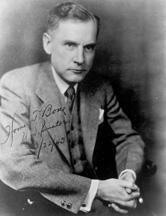
Here you will find contact information for Senator Homer Truett Bone, including email address, phone number, and mailing address.
| Name | Homer Truett Bone |
| Position | Senator |
| State | Washington |
| Party | Democratic |
| Status | Former Representative |
| Term Start | March 9, 1933 |
| Term End | November 13, 1944 |
| Terms Served | 2 |
| Born | January 25, 1883 |
| Gender | Male |
| Bioguide ID | B000614 |
About Senator Homer Truett Bone
Homer Truett Bone (January 25, 1883 – March 11, 1970) was an American attorney, legislator, United States senator, and federal judge who became a prominent figure in Washington state politics and national public power policy. Born in Franklin, Johnson County, Indiana, he attended local public schools and as a young man worked for the United States Postal Service and in the accounting and credit department of a furniture company. In 1899 he moved with his parents and family to Tacoma, Washington, not long after Washington’s admission to the Union, and there he established the base of his legal and political career.
Bone pursued legal studies in Tacoma and graduated from the Tacoma Law School (now defunct) in 1911. He was admitted to the Washington bar that same year and entered private practice in Tacoma, where he practiced law continuously from 1911 to 1932. Early in his legal career he also entered public service at the local level. In 1912 he served as a special deputy prosecutor for Pierce County, Washington, and from 1918 to 1932 he was corporation counsel for the Port of Tacoma, representing the port authority during a period of expanding maritime and commercial activity.
Politically, Bone’s early affiliations reflected the ferment of progressive and labor politics in the Pacific Northwest. Initially a member of the Socialist Party of America, he ran unsuccessfully for prosecuting attorney and for Mayor of Tacoma under that banner. He later aligned with the Farmer–Labor movement and was elected to the Washington House of Representatives as a Farmer–Laborite, serving one term from 1923 to 1925. During his tenure in the state legislature he became a leading advocate for public ownership of utilities, pressing for county governments to have authority to form public utility districts. Although his proposals initially met resistance, the political battle was ultimately won when Washington voters approved an initiative he helped spearhead, authorizing the creation of such districts and laying groundwork for broader public power development in the state.
Bone sought federal office several times before his eventual election to the United States Senate. In 1920 he ran unsuccessfully for the United States House of Representatives as a Farmer–Labor Party candidate. In 1928 he again sought a congressional seat, this time as a Republican, but lost in the primary. With the onset and deepening of the Great Depression and a shift in political attitudes among voters, Bone joined the Democratic Party. Running as a Democrat in 1932, he defeated multi-term Republican incumbent Wesley L. Jones for a United States Senate seat from Washington. He was reelected in 1938, and served two terms in the Senate from March 4, 1933, until his resignation on November 13, 1944, when he left Congress to accept a federal judgeship.
During his Senate career, Bone was a member of the Democratic Party and served in Congress during a transformative period in American history marked by the New Deal and World War II. He served as Chairman of the Committee on Patents in the 76th, 77th, and 78th Congresses, where he dealt with issues related to intellectual property and innovation. Consistent with his long-standing progressive views, he continued to champion publicly owned power and other reform causes. He strongly supported the construction of the Bonneville Dam and the Grand Coulee Dam in Washington state, major New Deal projects that advanced hydropower generation, flood control, and irrigation in the Pacific Northwest. He also opposed United States involvement in World War II prior to American entry into the conflict. In the field of public health, Bone, together with Senator Matthew Neely and Representative Warren Magnuson, coauthored the legislation that created the National Cancer Institute, which became a key component of the National Institutes of Health and a central institution in the federal government’s effort to combat cancer.
In 1944 Bone transitioned from the legislative to the judicial branch. He was nominated by President Franklin D. Roosevelt on April 1, 1944, to a seat on the United States Court of Appeals for the Ninth Circuit, filling the vacancy created by the death of Judge Bert E. Haney. The United States Senate confirmed his nomination on April 1, 1944, and he received his commission the same day. In order to assume his judicial duties, he resigned from the Senate on November 13, 1944. Bone initially relocated to San Francisco, California, where the Ninth Circuit maintained a principal seat, and continued to serve actively on the court for more than a decade.
Bone assumed senior status on the Ninth Circuit on January 1, 1956, reducing his judicial workload but remaining a member of the federal bench. While in senior status, he also engaged in private legal practice in San Francisco from 1956 to 1968, combining limited judicial service with work in the private sector. In 1968 he returned to Tacoma, the city that had been his home since youth and the center of his early legal and political life. He continued in senior status on the court until his death in Tacoma on March 11, 1970. Homer Truett Bone was cremated, and his ashes were interred in Oakwood Cemetery, closing a career that had spanned local, state, and national office and left a lasting imprint on public power policy and federal public health research.