Representative Homer Peter Snyder
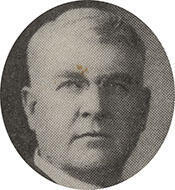
Here you will find contact information for Representative Homer Peter Snyder, including email address, phone number, and mailing address.
| Name | Homer Peter Snyder |
| Position | Representative |
| State | New York |
| District | 33 |
| Party | Republican |
| Status | Former Representative |
| Term Start | December 6, 1915 |
| Term End | March 3, 1925 |
| Terms Served | 5 |
| Born | December 6, 1863 |
| Gender | Male |
| Bioguide ID | S000666 |
About Representative Homer Peter Snyder
Homer Peter Snyder (December 6, 1863 – December 30, 1937), also known as H. P. Snyder, was an American politician, businessman, and manufacturer from New York who served as a Republican Representative in the United States Congress from 1915 to 1925. Over five consecutive terms he represented his New York district in the House of Representatives, participating in the legislative process during a significant period in American history and becoming particularly noted for his advocacy on behalf of Native Americans, including his sponsorship of the Indian Citizenship Act of 1924.
Snyder was born in Amsterdam, Montgomery County, New York, where he attended the common schools. As a young man he was employed in various capacities in knitting mills, gaining early experience in the textile industry. In 1887 he moved to Little Falls, Herkimer County, New York, a community that would remain central to his business and political life. There he continued his work in knitting mills before shifting his focus from labor to manufacturing and entrepreneurship.
By 1890 Snyder had engaged in the manufacture of knitting machinery, marking his transition from employee to industrialist. He soon expanded his interests to the burgeoning bicycle industry and other wheeled vehicles. In 1894 or 1895 he and Michael Fisher co-founded the Snyder & Fisher Bicycle Works in Little Falls, New York. Three years later, Fisher left the company, and Snyder incorporated the business as the H. P. Snyder Manufacturing Company. Under his leadership, the firm produced bicycles and related products and became a notable presence in the American bicycle industry. Snyder led the company until 1913, and the H. P. Snyder Manufacturing Company continued manufacturing bicycles until the mid-1970s, long after his death.
Snyder’s business activities extended beyond manufacturing. He served as director and vice president of the Little Falls National Bank, reflecting his growing prominence in local commercial affairs. He also entered public service at the municipal and county levels, serving one term as school commissioner in 1895 and two terms as fire and police commissioner of Little Falls in 1910 and 1911. These early offices helped establish his reputation as a civic leader and provided a foundation for his later political career. During this period, his bicycle company developed a range of products, including early models such as the Newport Swell and the Newport Belle, and manufactured Laclede brand bicycles for E. C. Simmons, supplementing production in St. Louis, Missouri.
Snyder first sought national office as a Republican candidate for the Sixty-third Congress in 1912 but was unsuccessful. He remained active in party affairs and business, and in 1914 he successfully won election as a Republican to the Sixty-fourth Congress. He was subsequently reelected to the four succeeding Congresses, serving from March 4, 1915, to March 3, 1925. During his decade in the House of Representatives, he represented his New York constituents through World War I and the early postwar years, participating in the broader democratic process and national legislative debates of the era. He was a delegate to the Republican National Conventions in 1916 and 1920, underscoring his influence within the party at both state and national levels.
Within Congress, Snyder became best known for his work on Native American policy. He served as chairman of the Committee on Indian Affairs during the Sixty-sixth through Sixty-eighth Congresses and was also a member of the Committee on World War Veterans’ Legislation in the Sixty-eighth Congress. His most significant legislative achievement on the Indian Affairs Committee was sponsoring the landmark Indian Citizenship Act of 1924, commonly known as the Snyder Act, which granted United States citizenship to all of the nation’s Native American population. His contemporaries recognized his role in this reform; an obituary in The New York Times later described him as “one of the outstanding and outspoken champions” of Native Americans. He chose not to be a candidate for reelection in 1924 and concluded his congressional service at the end of his fifth term in 1925.
After leaving Congress, Snyder resumed his former manufacturing pursuits in Little Falls. The H. P. Snyder Manufacturing Company continued to expand its bicycle operations in partnership with other firms. In the early 1900s, D. P. Harris Hardware and Manufacturing Company had originated the “Rollfast” bicycle name, and Harris later teamed up with Snyder, with Snyder’s company serving as the primary manufacturer and Harris providing some parts and handling marketing. Shortly after World War I, Harris ceased making complete bicycles, and Snyder agreed to purchase hardware such as cranks and stems from Harris. Together they began acquiring struggling bicycle companies, including Peerless, Great Western, Pioneer, Overland, and possibly others. In recognition of the 1924 Indian Citizenship Act, Snyder ordered the construction of the Mohawk bicycle, named for the Mohawk people whose historic homeland included the Mohawk River valley running just south of Little Falls, the site of Snyder’s main plant. Mohawk bicycles were built by Snyder between 1925 and 1972.
The company’s products became widely distributed across the United States. During the Great Depression, Snyder began manufacturing bicycles for other retailers, including Montgomery Ward, which sold them under the “Hawthorne” name. A 1927 Snyder boy’s bicycle, styled to resemble a contemporary motorcycle, was later placed on display at the Smithsonian National Museum of American History, illustrating the firm’s role in American consumer and industrial history. In 1938, after Snyder’s death, the company acquired the Excelsior Manufacturing Company cycling firm in Michigan City, Indiana (distinct from the Chicago-based Excelsior company owned by Schwinn) and used it as an assembly plant and Midwestern shipping hub for bicycles made for D. P. Harris (Rollfast), Montgomery Ward, and others, including Rollfast Hopalong Cassidy bicycles. In early 1973, Mossberg purchased the stock of the H. P. Snyder company; at that time Snyder’s firm was primarily producing bicycles for D. P. Harris under the Rollfast name and on contract for Montgomery Ward. Mossberg subsequently sold bicycles to Western Auto, Sears, and other distributors. Around 1976, after Mossberg lost its contracts with D. P. Harris and Montgomery Ward, Snyder’s bicycle production was terminated on May 7, 1976, ending 81 continuous years in business.
Homer Peter Snyder died at his home in Little Falls, New York, on December 30, 1937. He was interred in Church Street Cemetery in Little Falls. His career combined local civic service, national legislative leadership, and long-term industrial enterprise, and his name remains particularly associated with the Indian Citizenship Act of 1924 and with the bicycle manufacturing company that bore his initials and continued to operate for decades after his death.