Representative Horace Binney
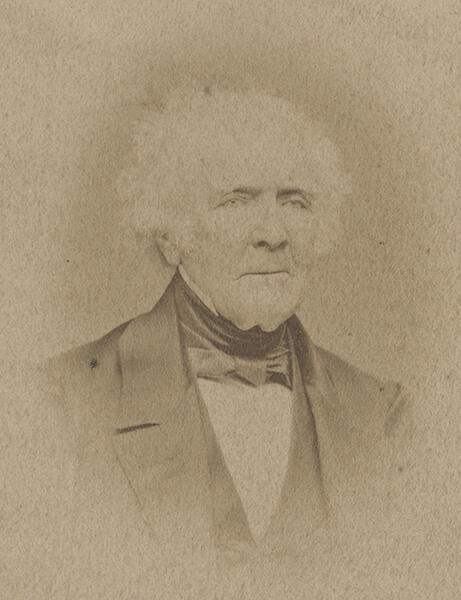
Here you will find contact information for Representative Horace Binney, including email address, phone number, and mailing address.
| Name | Horace Binney |
| Position | Representative |
| State | Pennsylvania |
| District | 2 |
| Party | Anti Jacksonian |
| Status | Former Representative |
| Term Start | December 2, 1833 |
| Term End | March 3, 1835 |
| Terms Served | 1 |
| Born | January 4, 1780 |
| Gender | Male |
| Bioguide ID | B000475 |
About Representative Horace Binney
Horace Binney (January 4, 1780 – August 12, 1875) was an American lawyer, author, public speaker, and Anti-Jacksonian member of the United States House of Representatives from Pennsylvania. He was born in Philadelphia, Pennsylvania, the son of Dr. Barnabas Binney (1751–1787), a prominent Philadelphia physician noted for his care of Revolutionary War figure Deborah Sampson. Through his family, Binney was connected to a number of notable literary and legal figures. By his sister Susan Binney Wallace, he was the uncle of Horace Binney Wallace (1817–1852), a legal critic, and through his sister Mary Sarah Binney Sargent (d. 1824), wife of author and temperance advocate Lucius Manlius Sargent (1786–1867), he was the uncle of Civil War veteran and author Horace Binney Sargent (1821–1908).
Binney pursued higher education at Harvard College, from which he graduated in 1797. During his time at Harvard he helped to found the Hasty Pudding Club in 1795, an organization that would become one of the college’s most enduring social and literary societies. After completing his undergraduate studies, he read law in Philadelphia in the office of Jared Ingersoll (1749–1822), a distinguished lawyer who had been a member of the Constitutional Convention of 1787 and who served as attorney general of Pennsylvania from 1791 to 1800 and again from 1811 to 1816. Binney was admitted to the Philadelphia bar in 1800 and quickly established himself in practice.
Over the next half century, Binney practiced law in Philadelphia with great success and came to be recognized as one of the leaders of the bar in both Pennsylvania and the United States. Between 1806 and 1807, he served in the Pennsylvania legislature, marking his first formal entry into public life. In 1808 he was elected a member of the American Philosophical Society, reflecting his growing reputation in legal and intellectual circles. Among his most notable legal cases were Lyle v. Richards (1823) and Vidal et al. v. Philadelphia et al. (1844). The latter case, involving the disposition of the fortune of philanthropist Stephen Girard, pitted Binney against Daniel Webster; although Webster opposed him unsuccessfully, it was Binney’s argument that prevailed and significantly influenced the interpretation of the law of charities in the United States.
Horace Binney served as a Representative from Pennsylvania in the United States Congress from March 4, 1833, to March 3, 1835, during the Twenty-third Congress. A member of the Anti-Jacksonian Party, often associated with the emerging Whig movement, he is also described as having served as a Whig member of the House of Representatives during this period. His single term in Congress occurred during a significant phase of the Second Party System and the presidency of Andrew Jackson, a time marked by intense national debate over executive power and economic policy. In the House of Representatives, Binney defended the Second Bank of the United States and opposed the policies of President Jackson, particularly Jackson’s efforts to dismantle the Bank. As a member of the House, he participated in the legislative process and represented the interests of his Pennsylvania constituents, contributing to the broader national dialogue over banking, constitutional interpretation, and federal authority. After the expiration of his term in 1835, he did not seek reelection and returned to his legal practice in Philadelphia.
In addition to his legal and congressional work, Binney was an accomplished author and public speaker. He delivered many public addresses, the most noteworthy of which, “Life and Character of Chief Justice Marshall,” was published in 1835 and became an important contemporary appraisal of Chief Justice John Marshall and the early Supreme Court. He later published “Leaders of the Old Bar of Philadelphia” in 1858, offering sketches of prominent lawyers of his era, and “An Inquiry into the Formation of Washington’s Farewell Address” in 1859, a historical and textual study of one of the nation’s foundational political documents. Earlier, in 1827, he had published “An Eulogium upon the Hon. William Tilghman, Late Chief Justice of Pennsylvania,” further cementing his reputation as a leading commentator on the judiciary and legal profession.
During the American Civil War, Binney continued to engage in public debate on constitutional questions. He issued three pamphlets, in 1861, 1862, and 1865, discussing the privilege of the writ of habeas corpus under the United States Constitution and defending President Abraham Lincoln’s suspension of the writ in certain circumstances. These writings, including “The Privilege of the Writ of Habeas Corpus Under the Constitution,” became part of the broader national discussion over civil liberties and executive power in wartime, particularly in the context of cases such as Ex parte Merryman. In recognition of his intellectual and civic contributions, he was elected an Associate Fellow of the American Academy of Arts and Sciences in 1867. For his support of the Union cause during the Civil War, he was also elected in 1865 as a Companion of the Third Class in the Commandery of Pennsylvania of the Military Order of the Loyal Legion of the United States.
Binney’s personal life was closely tied to prominent families in the Mid-Atlantic region. He married Elizabeth Cox (1783–1865), one of six daughters of John Cox, Esq., of Bloomsbury, New Jersey, descendants of the Langeveldts who originally settled in New Brunswick, New Jersey. Elizabeth’s sister Mary Cox was married to the inventor John Stevens III (1749–1838), a pioneer in steam transportation. Horace and Elizabeth Binney were the parents of several children who themselves married into notable families or achieved distinction. Their daughter Mary (1805–1831) was the first wife of Judge and Congressman John Cadwalader. Their son Horace Binney Jr. (1809–1870), a member of the American Philosophical Society, married Eliza Frances Johnson. Their daughter Esther Coxe Binney (1817–1902) married attorney John Innes Clark Hare (1816–1905). Another daughter, Elizabeth Binney (1820–1910), married Richard Roger Montgomery (1818–1888), son of William M. Montgomery and Marie d’Elincourt; Elizabeth and Richard Montgomery were grandparents of social figure Helen Hope Montgomery Scott. The couple’s daughter Susan Binney (1822–1887) and their son William Binney (1825–1909), a prominent banker in Providence, Rhode Island who married Charlotte Hope Goddard in 1848, further extended the family’s influence into finance and New England society.
Horace Binney lived through the Era of Good Feelings, the rise of the Second Party System, the sectional crises of the mid-nineteenth century, and the Civil War, remaining an active commentator on legal and constitutional issues across these transformative decades. He died on August 12, 1875, at the age of 95 in Philadelphia, the city of his birth. He was buried in the churchyard of the Church of St. James the Less in Philadelphia, closing a life that spanned from the early years of the republic to the post–Civil War era and left a lasting imprint on American law, legal thought, and congressional history.