Representative Horace Francis Clark
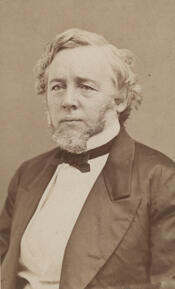
Here you will find contact information for Representative Horace Francis Clark, including email address, phone number, and mailing address.
| Name | Horace Francis Clark |
| Position | Representative |
| State | New York |
| District | 8 |
| Party | Anti-Lecompton Democrat |
| Status | Former Representative |
| Term Start | December 7, 1857 |
| Term End | March 3, 1861 |
| Terms Served | 2 |
| Born | November 29, 1815 |
| Gender | Male |
| Bioguide ID | C000435 |
About Representative Horace Francis Clark
Horace Francis Clark (November 29, 1815 – June 19, 1873) was an American politician, lawyer, and railroad executive who served two terms as a U.S. Representative from New York from 1857 to 1861. A Democrat who was reelected as an Anti-Lecompton Democrat, he participated in the legislative process during a pivotal period in the nation’s history, representing the interests of his New York constituents in the House of Representatives.
Clark was born in Southbury, Connecticut, on November 29, 1815, the son of Reverend Daniel Atkinson Clark (1779–1840) and Eliza (Barker) Clark (1787–1864). Raised in New England in the household of a clergyman, he grew up in an environment that emphasized education, public service, and moral responsibility, influences that would shape his later professional and political life.
In 1833, Clark graduated from Williams College in Williamstown, Massachusetts. After completing his collegiate studies, he pursued the law, studying in preparation for the bar. He was admitted to the bar in 1837 and commenced the practice of law in New York City. Establishing himself in the nation’s leading commercial center positioned him at the intersection of law, finance, and emerging transportation enterprises, and laid the groundwork for his later involvement in major business ventures.
In 1848, Clark married Maria Louisa Vanderbilt, daughter of Cornelius Vanderbilt, one of the most prominent transportation and financial magnates of the era. The marriage linked Clark to the Vanderbilt family’s extensive business interests in shipping, banking, and railroads. The couple had a daughter, Mary Louise, who later married Clarence Lyman Collins, a Wall Street cotton broker. Mary Louise Collins became the mother of Edith Lyman Collins, who in 1897 became the Polish Countess Czaykowski and in 1911 the French Marquise de Maleissye. Mary Louise Clark Collins died in 1894. Through his marriage and family connections, Clark became deeply involved in Vanderbilt’s enterprises and gained significant influence in the expanding world of American transportation and finance.
Clark entered national politics in the mid-1850s. In 1856 he was elected to the United States House of Representatives from New York as a Democrat. He was reelected in 1858 as an Anti-Lecompton Democrat, reflecting his opposition to the pro-slavery Lecompton Constitution for Kansas. He served in the Thirty-fifth and Thirty-sixth Congresses from March 4, 1857, to March 3, 1861. His service in Congress occurred during a significant period in American history, as sectional tensions over slavery and the future of the Union intensified in the years immediately preceding the Civil War. As a member of the House of Representatives, Horace Francis Clark participated in the democratic process and contributed to the legislative deliberations of this critical era while representing the interests of his New York constituents.
After leaving Congress in 1861, Clark returned to and expanded his business activities, emerging as a leading figure in American railroading and finance. He served as president of the Union Trust Company, the Union Pacific Railroad, and the Michigan Southern Railroad, among other enterprises. In addition to these executive roles, he sat on the boards of directors of several major corporations, including Western Union and the New York Central and New York, New Haven and Hartford Railroads. Through these positions he played a significant part in the development of the nation’s transportation and communications infrastructure during the post–Civil War period of rapid industrial growth.
Horace Francis Clark died in New York City on June 19, 1873. He was interred at Woodlawn Cemetery in the Bronx, New York, a burial place for many of the city’s leading political and business figures.