Representative Horace Seely-Brown
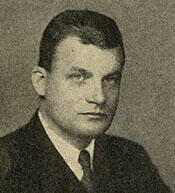
Here you will find contact information for Representative Horace Seely-Brown, including email address, phone number, and mailing address.
| Name | Horace Seely-Brown |
| Position | Representative |
| State | Connecticut |
| District | 2 |
| Party | Republican |
| Status | Former Representative |
| Term Start | January 3, 1947 |
| Term End | January 3, 1963 |
| Terms Served | 6 |
| Born | May 12, 1908 |
| Gender | Male |
| Bioguide ID | S000224 |
About Representative Horace Seely-Brown
Horace Seely-Brown Jr. (May 12, 1908 – April 9, 1982) was an American politician and educator who served as a Republican Representative from Connecticut in the United States Congress from 1947 to 1963. He was born in Kensington, Maryland, and spent his early years in the Mid-Atlantic region before pursuing his education in New York and Connecticut. Over the course of six terms in the House of Representatives, he contributed to the legislative process during a significant period in American history, representing the interests of his Connecticut constituents through the early Cold War, the postwar economic expansion, and the initial phase of the modern civil rights era.
Seely-Brown attended the Hoosac School in Hoosick, New York, and went on to Hamilton College in Clinton, New York, from which he graduated in 1929. Immediately after completing his undergraduate studies, he undertook graduate work at Yale University in New Haven, Connecticut, in 1929 and 1930. His early academic and professional life was closely tied to education, and his training at these institutions helped shape the disciplined and civic-minded approach he later brought to public service. During this period he married Rosalie Hicks; the couple would have three children: daughters Rosalie Seely-Brown Parker and Constance Seely-Brown McClellan, and a son, Horace Seely-Brown III.
Before entering national politics, Seely-Brown built a career as a teacher and school administrator. He taught at Hoosick, New York, from 1930 to 1932, and in New Lebanon, New York, from 1932 to 1934. In 1934 he moved to Pomfret, Connecticut, where he joined the faculty of the Pomfret School. There he taught, coached, and served as a dormitory parent from 1934 until 1942, becoming a well-known figure in the school community. His interest in public affairs led him into party politics at the state level; he served as a delegate to the Republican state conventions in 1938, 1940, and 1942, marking his emergence as an active participant in Connecticut’s Republican Party.
During World War II, Seely-Brown entered military service with the United States Navy. From February 1943 to January 1946 he served as an air operations officer with Carrier Aircraft Service Unit No. 2. His wartime responsibilities in naval aviation support operations reflected the broader mobilization of American professionals into the armed forces and provided him with administrative and leadership experience that would later inform his work in Congress. Following his discharge from the Navy at the end of the war, he settled permanently in Pomfret, Connecticut, where he engaged in agricultural pursuits, establishing himself as both a farmer and a community leader in Pomfret Center.
Seely-Brown’s congressional career began with his election as a Republican to the Eightieth Congress, representing Connecticut in the U.S. House of Representatives from January 3, 1947, to January 3, 1949. Although he was an unsuccessful candidate for reelection in 1948 to the Eighty-first Congress, he returned to the House after winning election to the Eighty-second Congress and was subsequently reelected to the Eighty-third, Eighty-fourth, and Eighty-fifth Congresses, serving continuously from January 3, 1951, to January 3, 1959. A member of the Republican Party throughout his tenure, he participated actively in the legislative process during a period marked by the Korean War, the Eisenhower administration, and the early stages of the civil rights movement. He was defeated in his 1958 bid for reelection to the Eighty-sixth Congress, but his standing in Connecticut politics remained strong.
Seely-Brown returned to Congress once more after winning election in 1960 to the Eighty-seventh Congress, serving from January 3, 1961, to January 3, 1963. Over the course of these nonconsecutive terms, he served a total of six terms in the House of Representatives between 1947 and 1963. His voting record reflected engagement with key national issues of the era. He voted in favor of the Civil Rights Act of 1957, supporting the first major civil rights legislation enacted since Reconstruction, and later voted “present” on the proposed Twenty-fourth Amendment to the U.S. Constitution, which would abolish the poll tax in federal elections. His congressional service coincided with major developments in domestic and foreign policy, and he consistently represented the interests of his Connecticut constituents within the broader national debate.
After leaving the House in 1963, Seely-Brown remained active in electoral politics for a time. In 1962, while still serving in Congress, he was the Republican candidate for the United States Senate seat being vacated by retiring Republican Senator Prescott Bush. In a closely contested race, he was defeated by Democratic former governor Abraham Ribicoff, receiving 48 percent of the vote. Following this narrow loss and the conclusion of his final term in the House, he did not return to elective office. Instead, he resumed his agricultural pursuits and continued to reside in Pomfret Center, Connecticut, where he maintained his involvement in local affairs and community life.
In his later years, Seely-Brown divided his time between Connecticut and Florida. He died at his winter home in Boca Raton, Palm Beach County, Florida, on April 9, 1982, at the age of 73 years and 332 days. He was interred at Christ Episcopal Church Cemetery in Pomfret Center, Pomfret, Connecticut, reflecting his long association with the town that had been his home for nearly half a century.