Representative Horace Mann Towner
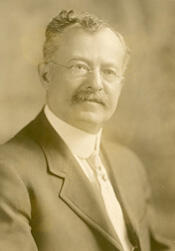
Here you will find contact information for Representative Horace Mann Towner, including email address, phone number, and mailing address.
| Name | Horace Mann Towner |
| Position | Representative |
| State | Iowa |
| District | 8 |
| Party | Republican |
| Status | Former Representative |
| Term Start | April 4, 1911 |
| Term End | March 3, 1925 |
| Terms Served | 7 |
| Born | October 23, 1855 |
| Gender | Male |
| Bioguide ID | T000325 |
About Representative Horace Mann Towner
Horace Mann Towner (October 23, 1855 – November 23, 1937) was an American politician, educator, and jurist who served as a member of the United States House of Representatives from Iowa’s 8th congressional district and was later appointed governor of Puerto Rico. A member of the Republican Party, he was an early national leader in efforts to expand the federal government’s role in health and education at a time when that role was limited, and he contributed to the legislative process during seven terms in Congress from 1911 to 1925.
Towner was born on October 23, 1855, in Belvidere, Boone County, Illinois. He spent his early years in the Midwest and pursued teaching at a young age, reflecting a lifelong interest in education that would later shape his legislative priorities. After attending local schools, he studied at the University of Chicago and then at the Union College of Law in Chicago (a predecessor of Northwestern University School of Law), where he prepared for a legal career. His early experience as a teacher and his formal legal training combined to give him a strong grounding in both pedagogy and jurisprudence.
After completing his legal studies, Towner was admitted to the bar and began practicing law. He moved to Corning, Adams County, Iowa, where he established himself as an attorney and quickly became active in public affairs. In addition to his legal practice, he served as superintendent of schools in Corning, demonstrating his continued commitment to education at the local level. He later held judicial office as a judge of the circuit court and then of the district court in Iowa, gaining a reputation for careful legal reasoning and public service. These roles in law and education provided the foundation for his subsequent political career.
Towner entered national politics as a Republican and was elected to the United States House of Representatives from Iowa’s 8th congressional district in 1910, taking office on March 4, 1911. He served continuously in the House from 1911 to 1925, a period that encompassed the Progressive Era, World War I, and the early postwar years. During his seven terms in office, he participated actively in the democratic process and represented the interests of his Iowa constituents while also engaging with broader national issues. He became particularly known for his work on legislation related to public health and education, reflecting his professional background and long-standing interests.
In Congress, Towner emerged as a leading advocate for increased federal involvement in social welfare, especially in the fields of maternal and child health and public education. He was closely associated with the Sheppard–Towner Maternity and Infancy Act of 1921, landmark legislation that provided federal funds to states for programs aimed at reducing maternal and infant mortality. This act, often cited as one of the first major federal social welfare measures, embodied his belief that the national government had a responsibility to support the health and well-being of its citizens. His efforts helped to establish a precedent for later federal initiatives in public health and education.
Towner’s congressional service also coincided with major national debates over war, economic policy, and the evolving role of the federal government. As a member of the House of Representatives, he contributed to deliberations on wartime measures during World War I and on postwar reconstruction and reform. While representing Iowa’s 8th district, he balanced local agricultural and economic concerns with his broader interest in national policy, reinforcing his reputation as a thoughtful and reform-minded legislator.
In 1923, while still a prominent figure in national politics, Towner was appointed governor of Puerto Rico by President Warren G. Harding, a post he assumed after concluding his service in the House. As governor, he brought his administrative experience and interest in education and public health to the island’s governance, working within the framework of U.S. territorial policy during the 1920s. His tenure in Puerto Rico extended his public service beyond the mainland United States and reflected the trust placed in him by the national administration.
After completing his term as governor of Puerto Rico, Towner returned to private life, remaining a respected elder statesman of the Republican Party and a figure associated with early federal initiatives in health and education. He lived out his later years in relative retirement, his public career having spanned local educational administration, judicial service, seven terms in Congress, and territorial governance. Horace Mann Towner died on November 23, 1937, leaving a legacy as an influential advocate for a more active federal role in promoting the welfare of American families and children.