Representative Horace Worth Vaughan
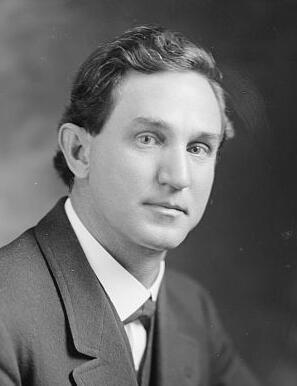
Here you will find contact information for Representative Horace Worth Vaughan, including email address, phone number, and mailing address.
| Name | Horace Worth Vaughan |
| Position | Representative |
| State | Texas |
| District | 1 |
| Party | Democratic |
| Status | Former Representative |
| Term Start | April 7, 1913 |
| Term End | March 3, 1915 |
| Terms Served | 1 |
| Born | December 2, 1867 |
| Gender | Male |
| Bioguide ID | V000075 |
About Representative Horace Worth Vaughan
Horace Worth Vaughan (December 2, 1867 – November 10, 1922) was an American lawyer, jurist, and Democratic politician who served in the Texas Senate, represented Texas in the United States House of Representatives from 1913 to 1915, and later became a federal judge for the Territory of Hawaii. He was born on December 2, 1867, in Marion County, Texas, to attorney George T. Vaughan and Tippah Leary Vaughan. Of English ancestry, he was descended from early Jamestown, Virginia, settler John Vaughn. Raised in a legal household, he was largely self-taught, reading law from his father’s books rather than attending formal law school. He was admitted to the bar in 1885 and began an active law practice the following year.
Vaughan married Pearl Lockett on November 21, 1888. The couple had three children: daughters Aileen and Jean, and a son, Robert Louis. Their oldest daughter, Aileen V. Eppler (1890–1976), later married Texas financial consultant William E. Eppler; the Eppler family eventually moved to New Jersey, where Aileen died at age 85. Their youngest daughter, Jean Vaughan Gilbert (1904–1975), became one of the first women lawyers in Hawaii and later served as city attorney of Honolulu, remaining there until her death in 1975. Their only son, U.S. Navy Lieutenant Robert Louis Vaughan (1892–1920), died in a plane crash related to his military service. Vaughan was active in fraternal organizations, including the Freemasons, the Independent Order of Odd Fellows, and Woodmen of the World.
Vaughan’s early professional career was rooted in municipal law and local public service. From 1890 to 1898, he served as city attorney for Texarkana, Texas, while maintaining his private practice. During these years he developed a reputation as a capable lawyer and civic figure in northeast Texas. His legal work and growing prominence in Democratic Party circles laid the groundwork for his entry into state-level politics in the early twentieth century.
By 1911, Vaughan had advanced to state office, serving as a member of the Texas State Senate from 1911 until 1912. In the Senate he aligned with traditional Democratic principles of the era, including a strong emphasis on states’ rights. Vaughan was particularly known for his opposition to a national prohibition on the manufacture, transportation, sale, possession, and consumption of alcoholic beverages. He believed that each state should determine its own policy on alcohol regulation, a stance that would later have significant political consequences for his congressional career.
In 1912, Vaughan was elected as a Democrat to the United States House of Representatives to fill the vacancy caused by the election of Morris Sheppard to the United States Senate. He took his seat in the House as the representative of a Texas district and served one full term in Congress from 1913 to 1915. His service in Congress occurred during a significant period in American history, at the outset of the Woodrow Wilson administration and amid rising national debates over progressivism, regulation, and prohibition. As a member of the House of Representatives, Horace Worth Vaughan participated in the legislative process, represented the interests of his Texas constituents, and contributed to the work of the Democratic majority. However, his firm conviction that prohibition should be decided at the state level became a central issue in his 1914 campaign. Eugene Black, his opponent, made Vaughan’s anti-national-prohibition stance a focal point, and Vaughan was defeated in his bid for reelection, ending his congressional service in 1915 after one term in office.
Following his departure from Congress, Vaughan’s career shifted to the federal judiciary and territorial administration. On October 1, 1915, he relocated to Honolulu in the Territory of Hawaii upon his appointment as assistant United States district attorney. His abilities were quickly recognized, and on December 22, 1915, following the retirement of district attorney Sanford B. Dole, Vaughan was appointed United States district attorney for the Territory of Hawaii. A political supporter of President Woodrow Wilson, Vaughan was subsequently nominated by Wilson and appointed on May 15, 1916, as judge of the United States District Court for the Territory of Hawaii. In this capacity he presided over federal cases in the islands and became a prominent figure in the territorial legal community, remaining in Hawaii for the rest of his life.
Vaughan’s later years were marked by both professional distinction and personal tragedy. The death of his son, Lieutenant Robert Louis Vaughan, in a military-related plane crash in 1920 deeply affected him. Believed to be despondent over the loss, Horace Worth Vaughan was found in his Honolulu home on November 10, 1922, with a bullet wound to his neck and a gun by his side, an apparent suicide. He was buried in Oahu Cemetery in Honolulu. His widow, Pearl Lockett Vaughan, survived him by several decades and died in 1960. Through his varied service as a city attorney, state senator, United States Representative from Texas, federal prosecutor, and territorial judge in Hawaii, Vaughan left a complex legacy that bridged the legal and political institutions of both the mainland United States and its Pacific territory.