Representative Horatio Bisbee
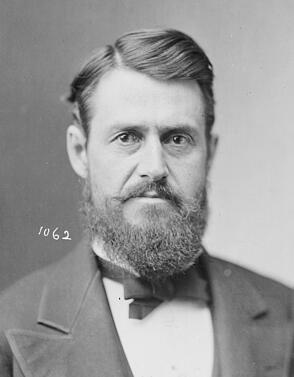
Here you will find contact information for Representative Horatio Bisbee, including email address, phone number, and mailing address.
| Name | Horatio Bisbee |
| Position | Representative |
| State | Florida |
| District | 2 |
| Party | Republican |
| Status | Former Representative |
| Term Start | October 15, 1877 |
| Term End | March 3, 1885 |
| Terms Served | 4 |
| Born | May 1, 1839 |
| Gender | Male |
| Bioguide ID | B000485 |
About Representative Horatio Bisbee
Horatio Bisbee Jr. (May 1, 1839 – March 27, 1916) was an American attorney and Republican politician who served as a U.S. Representative from Florida from 1877 to 1885. Over the course of four terms in the United States Congress, he represented Florida’s 2nd congressional district during a turbulent period in post–Civil War American politics and contributed to the legislative process as a member of the House of Representatives.
Bisbee was born on May 1, 1839, in Canton, Oxford County, Maine. He was educated in local schools and later began attending Tufts College in Medford, Massachusetts. His studies were interrupted in 1861 by the outbreak of the American Civil War, which drew him into military service before he completed his degree.
With the onset of the Civil War, Bisbee enlisted in the Union Army as a private in the 5th Massachusetts Militia. In July 1861 he was appointed a captain in the 9th Maine Infantry, marking the beginning of a rapid rise through the ranks. He eventually attained the ranks of lieutenant colonel and then colonel. Bisbee retired from the army in March 1863 and returned to Tufts College, where he completed his studies and graduated later that year, resuming civilian life with both military and academic credentials.
Following his graduation, Bisbee moved to Chicago, Illinois, in late 1863 and pursued the study of law. He was admitted to the Illinois bar in 1864 and commenced legal practice. After the Civil War ended in 1865, he relocated to Jacksonville, Florida, where he established a law practice and became involved in the state’s Reconstruction-era legal and political affairs. In 1869 President Ulysses S. Grant appointed him United States Attorney for the Northern District of Florida. In this capacity, Bisbee, a Republican, developed relationships with leading Florida figures, including Governor Harrison Reed and Joseph E. Lee, one of the most prominent Black Republicans in the state. In 1872 Reed temporarily appointed Bisbee as the eleventh Attorney General of Florida. Bisbee held the attorney generalship while still serving as U.S. Attorney, stepping down from the state post when J. P. C. Emmons was selected as the permanent attorney general. He resigned as U.S. Attorney in 1873, having firmly established himself in Florida’s legal and political circles.
Bisbee’s congressional career began with the closely contested elections of the Reconstruction era. In 1876 he was elected to the U.S. House of Representatives from Florida’s newly created 2nd congressional district, defeating Democratic incumbent Jesse J. Finley by a margin of just three votes. Bisbee took his seat and served as a Republican member of the House, representing the interests of his constituents during a significant period in American history. However, Finley successfully contested the election, and on February 20, 1879, less than a month before the term expired, Finley was seated in Bisbee’s place. Because Finley was not seated until after the 1878 election, Bisbee was technically the incumbent going into that contest. In the 1878 election he was narrowly defeated by Democratic Lieutenant Governor Noble A. Hull by 22 votes, but Bisbee in turn contested that result and was declared the winner, taking the seat on January 22, 1881, about six weeks before the term ended.
The pattern of disputed elections continued into the 1880 cycle. Hull, the technical incumbent at that point, did not seek reelection, and Bisbee again faced Jesse J. Finley as the Republican and Democratic nominees, respectively. Finley was initially declared the winner, but Bisbee contested the outcome. On June 1, 1882, the House declared Bisbee the duly elected representative, making him the incumbent heading into the 1882 election. In that 1882 race, Bisbee secured a clear and undisputed victory over Finley, finally winning the seat without subsequent contest. He ran again in 1884 but was defeated by Democrat Charles Dougherty, the former Speaker of the Florida House of Representatives. Bisbee’s service in Congress, spanning from 1877 to 1885 through these successive and often contested terms, placed him at the center of the era’s partisan struggles over Reconstruction, representation, and electoral legitimacy in Florida.
After his defeat in 1884, Bisbee retired from active politics and returned to private legal practice, focusing once more on his profession as an attorney. At some point following his withdrawal from public office, he married Charlotte Randolph. The couple had one daughter, Florence, born in 1885 in Jacksonville. Later in life, Bisbee and his wife returned to Maine, while their daughter remained in Jacksonville with her husband and his family, maintaining the family’s connection to Florida even after Bisbee’s departure from the state.
Horatio Bisbee Jr. died in Dixfield, Maine, on March 27, 1916. He was interred in Greenwood Cemetery in Dixfield. His wife, Charlotte Randolph Bisbee, died twelve years later and was buried beside him. His career, marked by military service, legal practice, high federal and state legal offices, and a notably contentious series of congressional elections, reflected the complexities of Reconstruction and post-Reconstruction politics in Florida and the broader United States.